Books Like The Boy, the Mole, the Fox and the Horse
Introduction: What Readers Mean by “Books Like The Boy, the Mole, the Fox and the Horse”
When readers ask for books like The Boy, the Mole, the Fox and the Horse, they are rarely asking for just any book. They are asking for something more specific: gentle wisdom delivered in short, memorable lines, animal companions who speak the truths, and a book that can be read in a sitting and carried for a lifetime. The Boy, the Mole, the Fox and the Horse (2019) has all three: a boy who asks if it is a good thing to be lost; a mole who loves cake and knows that asking for help is brave; a fox who has learned not to trust; and a horse who knows that home is not a place but a person. The books that come closest are the ones that find their own way to the same combination.
This guide gathers the strongest readalikes, old and new, with honest content notes and a clear sense of what each book shares with Mackesy’s book and where it departs from it.
The Gentle Fables
The books that come closest to The Boy, the Mole, the Fox and the Horse’s heart are the ones about the gentle fable and the wisdom.
The Little Prince by Antoine de Saint-Exupéry (1943) is the essential companion: a pilot stranded in the desert meets a little prince, in the fable of the essential things invisible to the eye. It shares The Boy, the Mole, the Fox and the Horse’s wisdom, its gentle form and its conviction that the heart sees rightly, with the register deepened. Content note: a classic fable; for readers from around age ten upward.
The Tao of Pooh by Benjamin Hoff (1982) is the essential companion about the animals and the philosophy: the wisdom of Taoism explained through the characters of Winnie-the-Pooh. It shares The Boy, the Mole, the Fox and the Horse’s animals and its simplicity, with the message made explicit. Content note: accessible philosophy; for readers from around age fourteen upward.
Jonathan Livingston Seagull by Richard Bach (1970) is the essential companion about the flight: Jonathan, a seagull who loves flying for its own sake, in the fable of the perfection and the return. It shares The Boy, the Mole, the Fox and the Horse’s fable and its message, with the register more elevated. Content note: a fable; for readers from around age twelve upward.
The Kindness in Full-Length Form
A second branch of the family is the novel about the kindness delivered in full-length form - the wisdom made into a story.
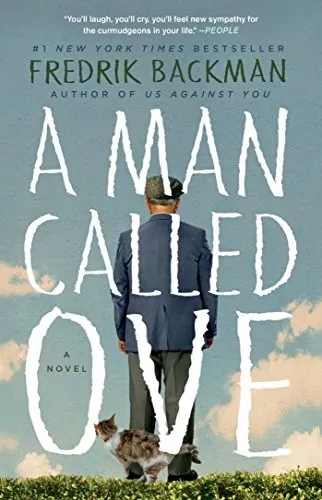
A Man Called Ove by Fredrik Backman (2012) is the essential companion: Ove, a bitter old man whose plans to end his life keep being interrupted by his neighbors, in the novel of the community that refuses to let him go. It shares The Boy, the Mole, the Fox and the Horse’s kindness and its message, with the fable expanded into the novel. Content note: a gentle novel dealing with grief and suicide; for readers from around age fifteen upward.
The Readers of Broken Wheel Recommend by Katarina Bivald (2016) is the essential companion about the kindness of the community: Sara, a Swedish bookshop worker who visits a small American town and accidentally builds a book club that revives it. It shares The Boy, the Mole, the Fox and the Horse’s kindness, with the wisdom delivered through the town. Content note: a gentle novel; for readers from around age fourteen upward.
Eleanor Oliphant Is Completely Fine by Gail Honeyman (2017) is the essential companion about the lonely woman: Eleanor, a socially isolated woman whose careful routine is disrupted by a colleague’s kindness. It shares The Boy, the Mole, the Fox and the Horse’s message that asking for help is brave, with the register deepened. Content note: a novel dealing with trauma and loneliness; for readers from around age sixteen upward.
The Animals and the Children
A third branch is the novel about the animals and the children - the companions who speak the truths.
Charlotte’s Web by E. B. White (1952) is the essential companion: Wilbur the pig and Charlotte the spider, in the novel of the friendship and the message in the web. It shares The Boy, the Mole, the Fox and the Horse’s animals, its child and its quiet wisdom, with the register warm. Content note: a classic children’s novel; for readers from around age eight upward.
The Wind in the Willows by Kenneth Grahame (1908) is the essential companion about the animals and the river: Mole, Rat, Toad and Badger, in the classic of the riverbank and the wild wood. It shares The Boy, the Mole, the Fox and the Horse’s animals and its gentle wisdom, with the register English. Content note: a classic children’s novel; for readers from around age nine upward.
The Giving Tree by Shel Silverstein (1964) is the essential companion about the giving: a tree and a boy, in the picture book of the love that gives everything. It shares The Boy, the Mole, the Fox and the Horse’s simplicity and its emotional weight, with the register even sparer. Content note: a picture book; for readers from around age six upward.
Themes and Values That Hold the Readalikes Together
Once you have read a few of these books side by side, the shared themes become clear, and they are worth naming because they are what make the category cohere.
The kindness as the wisdom runs through every one of them. The Boy, the Mole, the Fox and the Horse’s central claim - that kindness is the wisdom, and that asking for help is brave - is the load-bearing structure of the whole family. The books are united by the conviction that the kindness is the point, and that the kindness is the craft.
The animal as the truth-teller is the second shared shape. The family is united by the mole, the fox, the horse, the spider, the seagull - the animals who speak the truths the humans need - and by the conviction that the animal is the truth-teller. The books agree that the simplest speakers carry the deepest truths.
The short form as the depth is the third shared theme. The family is united by the book that can be read in a sitting and carried for a lifetime - and by the conviction that the brevity is not a reduction but the depth. The books agree that the shortest form is the deepest.
What to Read Next Depends on Why You Loved It
If you loved the fable, read The Little Prince and Jonathan Livingston Seagull.
If you loved the animals, read Charlotte’s Web and The Wind in the Willows.
If you loved the philosophy, read The Tao of Pooh.
If you loved the kindness in full form, read A Man Called Ove and The Readers of Broken Wheel Recommend.
If you loved the sparest register, read The Giving Tree.
Content Notes: What These Books Contain
The Boy, the Mole, the Fox and the Horse is a book for all ages, most naturally from around age eight upward. The Little Prince is a classic fable. The Tao of Pooh is accessible philosophy. Jonathan Livingston Seagull is a fable. A Man Called Ove deals with grief and suicide. The Readers of Broken Wheel Recommend is a gentle novel. Eleanor Oliphant deals with trauma and loneliness. Charlotte’s Web and The Wind in the Willows are classic children’s novels. The Giving Tree is a picture book. None contain gratuitous content; the weight is gentle and wise. Our best historical fiction list and our historical fiction themes and notes offer related reading paths for the craft and the wisdom behind these books.
Why These Books Work as a Set
Read together, these readalikes form a coherent shelf rather than a random pile, and the coherence is worth naming for anyone building a reading list. They are bound by the conviction that the kindness is the wisdom, that the animal is the truth-teller, and that the short form is the depth. They are also bound by tone: nearly every title here speaks in the gentle register that carries the deepest message. That shared DNA means the shelf rewards reading in almost any order - the books talk to each other. The Little Prince deepens the wisdom; A Man Called Ove expands the kindness into the novel; Charlotte’s Web carries the animals to the barn. For a reader working through the family, the pairings are as instructive as the individual titles, which is why the reading plan below suggests specific combinations rather than a single sequence.
A Reading Plan for Book Clubs
The Boy, the Mole, the Fox and the Horse generates conversation on every level: the lines, the animals, the question of what home actually is. Some of the best discussion questions come from pairing it with a book that shares or challenges it: read it with The Little Prince, and compare the two wisdoms and the two registers; read it with A Man Called Ove, and ask how the kindness expands into the novel; read it with The Tao of Pooh, and discuss the two philosophies and the two animals.
Conclusion: The Companions That Keep Giving
The Boy, the Mole, the Fox and the Horse endures because it is about something permanent: the conviction that the kindness is the wisdom, that the animal is the truth-teller, and that the short form is the depth. Every book on this list takes one piece of that - the kindness, the animal, the brevity - and builds its own account around it. The joy of reading them is the joy of watching the same wisdom practiced in different fields, different rivers, different registers. Start with whichever line you loved most, and let the comparison teach you what the kindness is really made of. For the full collection of reading paths, start at the Worlds section of our site.