Best Historical Fiction to Read
Introduction: The Past as a World, Not a Backdrop
The best historical fiction does something no history book can: it makes the past feel like a world you could walk into. The characters are not people with modern minds wearing old clothes - they are people whose choices are shaped by their era, whose beliefs, fears and possibilities belong to their time. A great historical novel teaches history through story, and it stays with the reader as a place visited rather than a lesson learned.
This guide gathers the strongest historical fiction across the eras, with honest content notes and a clear sense of what each book does best, so you can choose the era and the register that suit you.
The Essential Historical Novels
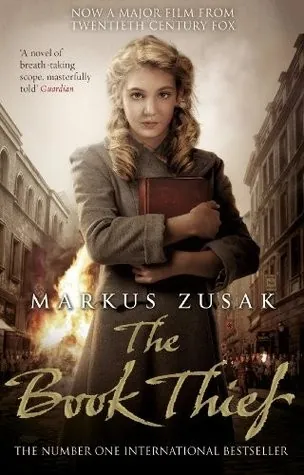
The Book Thief by Markus Zusak (2005) is the essential starting point for most readers: Liesel, a girl in Nazi Germany who steals books, is narrated by Death itself - a novel of the Holocaust told through a child’s eye and a narrator’s strange tenderness. It is young adult in label and universal in reach, and it is the book that has introduced more readers to historical fiction than almost any other. Content note: deals directly with the Holocaust; for readers from around age thirteen or fourteen, with discussion.
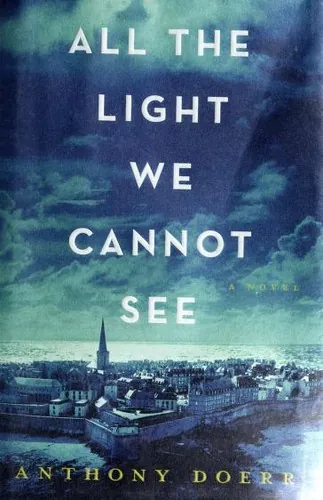
All the Light We Cannot See by Anthony Doerr (2014) is the essential adult companion: Marie-Laure, a blind French girl, and Werner, a German boy who builds radios, converge on a French town during the war - a novel of breathtaking craft that won the Pulitzer Prize. Content note: deals with war; for readers from around age fifteen upward.
The Name of the Rose by Umberto Eco (1980) is the essential pick for the medieval world: a Franciscan friar and his novice investigate a series of deaths in a fourteenth-century Italian abbey - a murder mystery, a philosophical puzzle and a complete reconstruction of medieval life. Content note: deals with religious violence and mature themes; for readers from around age seventeen upward.
Wolf Hall by Hilary Mantel (2009) is the essential pick for the Tudor world: Thomas Cromwell’s rise at the court of Henry VIII, told from inside the head of the man who made the king’s will real - the novel that won the Booker Prize and reinvented historical fiction for adults. Content note: deals with political violence and executions; for readers from around age sixteen upward.
The War Novels
World War II is the most heavily written era in historical fiction, and the strongest of those novels share a quality: they are not about battles but about the people the war carried.
The Nightingale by Kristin Hannah (2015) is the essential novel of the resistance: two sisters in occupied France - one who endures, one who fights - and the war that tests both. Content note: includes wartime violence, including sexual violence; for mature readers.
Salt to the Sea by Ruta Sepetys (2016) is the essential novel of the forgotten tragedy: four young people flee toward the Wilhelm Gustloff, the ship whose sinking killed more people than the Titanic. Content note: deals with war and the sinking; for readers from around age fourteen upward.
The Alice Network by Kate Quinn (2017) is the essential novel of the female spies: a WWI spy and a young woman after WWII converge on the story of the women who worked the real Alice Network. Content note: includes wartime violence; for mature readers.
The Ancient and Medieval Worlds
For readers who want the deep past, the strongest historical fiction rebuilds worlds that no living memory reaches.
I, Claudius by Robert Graves (1934) is the essential novel of ancient Rome: the autobiography of the stuttering Claudius, who survives the murderous imperial family and becomes emperor - history as told by its most unlikely survivor. Content note: deals with the era’s political violence; for readers from around age sixteen upward.
The Pillars of the Earth by Ken Follett (1989) is the essential novel of the medieval world: the building of a cathedral in twelfth-century England, and the struggle of the people who build it against the men who would stop them - the epic of stone and human will. Content note: includes the era’s violence; for readers from around age sixteen upward.
Memoirs of Hadrian by Marguerite Yourcenar (1951) is the essential novel of the emperor: Hadrian’s imagined autobiography, written from the end of his life - the most literary of the ancient-world novels, and the one that most fully enters a historical mind. Content note: a reflective novel; for readers from around age seventeen upward.
The Nineteenth Century and the Social Worlds
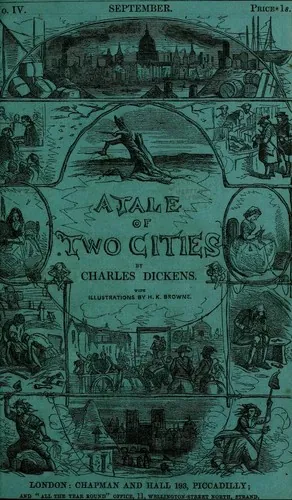
Beyond the wars and the ancient world, the nineteenth century has the form’s richest social novels - the books that build whole societies from the inside and ask how the era’s rules shaped its people. Middlemarch by George Eliot (1872) is the essential pick: the provincial town where every choice ripples outward - the novel of the ordinary lives that hold a society together, which reads as historical fiction for every modern reader. War and Peace by Leo Tolstoy (1869) is the essential pick at the largest scale: the Napoleonic wars through the lives of Russian families - the epic of history and the individual that defined the form. North and South by Elizabeth Gaskell (1855) is the essential pick for the industrial age: the gentlewoman and the mill owner across the class divide - the novel of the new industrial world and its questions of fairness. And A Tale of Two Cities by Charles Dickens (1859) is the essential pick for the revolution: London and Paris at the edge of the Terror - the era’s violence and its cost, told with Dickens’s fury and tenderness. For readers who love the nineteenth century - its houses, its rules, its questions - these are the books, and they connect the form to the great social novels that everyone should read.
Themes and Values That Hold the Best Together
Once you have read a few of these books side by side, the shared qualities become clear.
The era as a character runs through every one of them. The great historical novel makes the time - its smells, its fears, its rules - as present as any person, and the reader leaves knowing the era the way one knows a place.
History through the small is the second shared quality. The best books do not tell the reader about the war or the empire; they show one person living through it, and the large event becomes visible in the small life. The books agree that history is lived one person at a time.
The past’s questions as our own is the third. The best historical fiction is never only about the past: the questions of justice, love and survival that the characters face are the reader’s questions, and the past becomes a mirror. Our thoughtful guide to historical fiction explores these themes further, and our best justice and fairness reading list connects them to the moral questions of the present.
How to Choose Your Next Historical Novel
If you want a gripping story first, start with The Pillars of the Earth or The Alice Network - both are built to carry you.
If you want literary craft, start with All the Light We Cannot See or Memoirs of Hadrian.
If you want the medieval or ancient world, start with I, Claudius or The Name of the Rose.
If you want the war seen from the ground, start with The Book Thief or The Nightingale.
If you want gentler historical reading, our family-friendly historical fiction list gathers the era’s stories told without explicit content, and our meaningful historical fiction for adults deepens the adult picks.
Content Notes: What These Books Contain
Historical fiction reflects its era, and the strongest books do not flinch from the violence of the past: war, occupation, political execution and the era’s cruelties are part of the subject. None of the books above are gratuitous - the weight is historical - but readers should choose with awareness: The Book Thief and Salt to the Sea are for younger readers with discussion, while The Nightingale, The Alice Network and Wolf Hall are adult novels with mature content. For readers who want the eras without the heaviness, the family-friendly list offers gentler doors into the same past.
A Reading Plan for Book Clubs
Historical fiction is made for clubs: the era provides shared context, the themes provide argument, and the books reward discussion. Read The Book Thief with All the Light We Cannot See and compare the two wars seen through the young; read I, Claudius with Wolf Hall and compare the two courts; read The Nightingale with Salt to the Sea and compare the two resistances. The themes and values guide to historical fiction offers structured questions for any of these pairings, and our best biography books to read extends the shelf for readers who want the true stories behind the fiction.
Conclusion: The Past That Refuses to Stay Past
The best historical fiction endures because it is about something permanent: the conviction that the past is not a museum but a world, that history is lived one person at a time, and that the questions of the past are the questions of the present. Every book on this list builds its own era - Rome, the abbey, the war - and invites the reader to live there for a while. Start with whichever era calls to you, and let the book teach you the time the way only story can. For the full collection of reading paths, start at the Worlds section of our site.