Best Books About Science and Scholars by Walter Isaacson
Introduction: The Lives of the Geniuses
Walter Isaacson is the preeminent biographer of the great minds - the journalist and historian whose books on Einstein, Leonardo da Vinci and the creators of the digital age have made the lives of the geniuses bestsellers. His essential book on science is Einstein: His Life and Universe (2007), the biography built on Einstein’s letters and papers. This guide maps Isaacson’s books on science and scholarship, the themes that make his writing cohere, and the companions for when you want more.
The Isaacson Books in Reading Order
Einstein: His Life and Universe (2007) is the essential Isaacson on science, and the book that showed the man behind the theory. It is the biography of Albert Einstein, built on the newly available letters and papers - the personal archives that revealed his private life, his politics and his imagination. Isaacson’s argument is that Einstein’s genius was not only mathematical but creative: the thought experiments, the visual imagination, the refusal to accept the received picture of the universe. It is the key to everything else he has written.
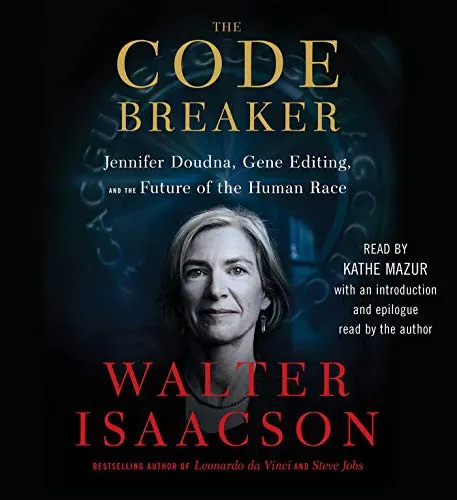
The Code Breaker: Jennifer Doudna, Gene Editing, and the Future of the Human Race (2021) is the essential companion about the present: Isaacson’s biography of the Nobel laureate and the story of CRISPR, the gene-editing tool that is changing medicine. It shares the method, with the double helix at the center.
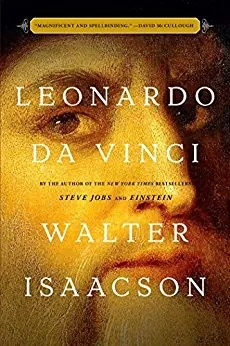
Leonardo da Vinci (2017) is the essential companion about the original genius: Isaacson’s biography of the painter, inventor and anatomist, built on Leonardo’s notebooks. It shares the creativity, with the intersection of art and science at the center.
The Innovators: How a Group of Hackers, Geniuses, and Geeks Created the Digital Revolution (2014) is the essential companion about the collaboration: the group biography of the people who created the computer and the internet. It shares the method, with the teamwork at the center.
Content Notes for Each Book
Einstein deals with the personal and political life of the physicist - his marriages, his politics, his response to the atomic age; it is best for readers from around age sixteen upward.
The Code Breaker deals with scientific rivalry and the ethics of gene editing; it is best for readers from around age sixteen upward.
Leonardo da Vinci deals with the intellectual life of the Renaissance; it is suitable for interested readers from around age fifteen upward.
The Science Themes in Isaacson’s Work
Three themes give Isaacson’s writing on science its distinctive shape.
The creativity as the genius is his central claim. Isaacson’s argument is that the great scientists - Einstein, Leonardo, Doudna - were not merely clever but creative: they combined imagination with knowledge, asked the unexpected questions and saw the connections others missed. His conviction is that creativity is the heart of scientific genius.
The whole life as the subject is the second theme. Isaacson refuses the hagiography: his scientists are shown with their personal struggles, their politics and their failures, and his conviction is that the genius cannot be understood without the whole human being. The books agree that the life is the key to the work.
The collaboration as the engine is the third theme. From the digital revolution to the CRISPR collaboration, Isaacson’s later books argue that the great breakthroughs are rarely solitary - and his conviction is that the collaboration is as important as the individual genius. The books agree that the team is part of the story.
Why Isaacson’s Science Biographies Endure
Einstein: His Life and Universe became the standard life of its subject, and its endurance rests on a simple achievement: Isaacson made the most famous scientist in history human again - the imagination, the politics, the letters - and he made the theory of relativity understandable in the process. The book became the shared doorway into the life and the science.
His influence extends beyond the books: the sequence of lives - Leonardo, Franklin, Einstein, Jobs, Doudna - forms a single argument about creativity, that it comes from the intersection of disciplines and the refusal to stop asking. But the books endure because of their conviction: that the great life is the best way to understand the great idea.
Companion Books for Every Isaacson Reader
When you have finished Isaacson’s own books, these titles extend the same territory.
A Brief History of Time by Stephen Hawking (1988) is the essential companion about the science: the survey of cosmology from the Big Bang to black holes. It shares the ambition, with the universe at the center.
Cosmos by Carl Sagan (1980) is the essential companion about the wonder: Sagan’s journey through the universe. It shares the awe, with the stars at the center.
The Intelligent Man’s Guide to Science by Isaac Asimov (1960) is the essential companion about the whole: Asimov’s survey of all of science. It shares the clarity, with the disciplines at the center.
For the fuller shelves, our best scholars and scientists list gathers the essential titles, and our family-friendly medieval history list extends the shelf into the earlier lives of the learned.
A Reading Plan for Book Clubs
Einstein generates conversation on every level: the man, the science, the question of what genius actually is. The most fertile questions are the ones the book refuses to settle: Was Einstein’s genius mathematical or creative? What does the book ask the reader to make of his politics and his private life? Can the theory of relativity be understood by anyone, or only by the specialists?
The book also generates the hardest kind of discussion: the question of what we owe the scientists whose work changed the world - and what the imagination that made the breakthroughs demands of the rest of us. Clubs should expect the conversation to range from the patent office to the atomic age, which is exactly the range Isaacson intended.
A Note on the Book’s Structure and Editions
Einstein is a long book, and readers should know that it is structured as a chronological narrative built on the archives - the letters and papers that opened the private Einstein to view. Isaacson’s method is the interweaving of the life and the science: the reader follows the man through the thought experiments and the theories, the marriages and the politics. The book is best read in generous sittings, and it rewards the patient reader with the fullest portrait of the scientist and the man in print.
What Isaacson’s Books Teach Together
Read together, Einstein and Leonardo da Vinci form a conversation about creativity: the physicist shows the imagination applied to the universe, and the Renaissance man shows the same imagination applied to nature five centuries earlier. Both are built on the same conviction - that the great science comes from creativity, from the intersection of disciplines and the unexpected question - and each one widens the claim: the physics and the art. That is why the books belong together on the same shelf, and why readers who finish one should not stop there.
The Biographer Behind the Books
Readers who enjoy Isaacson’s science biographies may want to know the biographer behind them: he was the editor of Time magazine and the CEO of the Aspen Institute, and he has written the lives of Franklin, Kissinger and Jobs as well as Einstein and Leonardo. His conviction is that the great minds are the best window onto the great ideas - that creativity is best studied through the lives that practiced it - and the science biographies are part of that larger argument. The reader who follows the thread from Einstein to The Code Breaker will see the same method at work: the biographer who believes the whole life is the key to the work.
Why Isaacson’s Science Books Matter to New Readers
Isaacson’s science biographies matter because they answer the question every curious reader asks: what was it actually like to be the person who discovered this? The physics of Einstein, the gene editing of Doudna, the notebooks of Leonardo - Isaacson makes the science clear by making the scientist human, and his conviction is that the creativity is the heart of the genius. New readers who are daunted by the science should start with his books: they will come away understanding both the discovery and the discoverer.
Where to Begin and What to Read Next
For readers new to Isaacson’s science books, Einstein is the essential starting point - it is his science masterpiece, and it shows every element of his method at its best. Readers who want the present should follow with The Code Breaker; readers who want the original genius should read Leonardo da Vinci; and readers who want the collaboration should move to The Innovators. And because Isaacson is best read beside the other great popularizers, the natural next shelf pairs him with the wonder of Sagan, the frontier of Hawking and the clarity of Asimov - the lives, the cosmos, the edge and the whole, together forming the full picture of what science writing can do.
Conclusion: The Genius Still Imagining
Walter Isaacson’s contribution to the literature of science is a single achievement, and it has entered the language of readers everywhere: the creative mind. He wrote it into the thought experiments of Einstein and the notebooks of Leonardo, and it has outlasted every attempt to reduce the great scientists to a list of equations. His scientists are the imaginers; his method is the whole life; his craft is the clarity. Read him, and let the geniuses show you what science was really made of. For more reading paths, explore the Worlds section of our site, or continue with our family-friendly scholars and scientists list.