A Thoughtful Guide to Ethical Leadership
Introduction: Effectiveness Is Not the Same as Worth
Leadership is one of the most written-about subjects in the world, and most of the writing is about effectiveness: how to get people to do things, how to align teams, how to drive results. Effectiveness is not the same as worth. A leader can be supremely effective and profoundly wrong - the century’s worst leaders were often its most effective - and the difference between them is ethics. Ethical leadership is the harder subject: not how to lead, but what leadership is for, what it owes, and what a leader does when doing the right thing is costly.
This guide is a thoughtful introduction to the ideas of ethical leadership: the key concepts, the essential books, the content notes, and the questions worth discussing.
The First Distinction: Management, Leadership, Ethics
The literature of leadership rests on two distinctions, and ethical leadership is built on the second. The first is between management and leadership: management is doing things right, leadership is doing the right things. A manager runs the system; a leader decides what the system is for.
The second distinction is between effective leadership and ethical leadership. Effectiveness answers the question “did it work?”; ethics answers the question “was it right?” - and the two can come apart. The books that matter on ethical leadership are the ones that refuse to let them come apart, that insist the question of what leadership is for is part of the work itself.
The Key Concept: Technical Problems and Adaptive Challenges
The most useful idea in the modern literature is Ronald Heifetz’s distinction, from Leadership Without Easy Answers (1994), between technical problems and adaptive challenges.
A technical problem has a known solution: the answer exists, and the work is to apply it. An adaptive challenge has no known solution: it requires people to change - their values, their habits, their expectations - and the work is to hold them in the discomfort of real change rather than to give them an answer.
Ethical leadership, in Heifetz’s account, is the leadership of adaptive challenges: the activity of mobilizing people to face hard problems they would rather avoid. This is why it is costly - the adaptive leader must deliver truths people do not want, and must survive the anger that follows. The books of history are full of the pattern: Lincoln holding the Union to the meaning of the war, Mandela holding South Africa to reconciliation, the leaders who told their people what they needed to hear rather than what they wanted.
The Second Key Concept: The Authority Trap
The second key concept is the authority trap: the temptation to lead by giving answers. When people are anxious, they demand certainty, and the leader who supplies it is rewarded - until the answers fail. Ethical leadership, in the modern literature, is the refusal of the authority trap: the willingness to say “I don’t know,” to hold the question open, and to ask people to bear the discomfort of not knowing.
This is where the literature of ethical leadership connects to the literature of courage. The leader who refuses the authority trap must be willing to be disliked - which is why the books on this subject so often pair leadership with courage. Our family-friendly courage reading guide connects the two.
The Third Key Concept: Character Before Technique
The oldest strand of the literature insists that ethical leadership is built on character, not technique. Aristotle’s Nicomachean Ethics is the foundation: virtue as the habit of choosing well, and practical wisdom as the ability to see what a situation requires. Stephen R. Covey’s The 7 Habits of Highly Effective People (1989) is the modern version: the argument that effectiveness is built on character - integrity, trust, the keeping of promises - and its famous ordering, private victory before public victory, is the clearest statement that ethical leadership begins with leading oneself.
The reading note worth taking: the books of character argue that the leader’s first responsibility is internal - the habits, the promises, the integrity that hold when no one is watching. The ethical leader is the person who cannot be corrupted by the authority they hold, because the character was built before the authority arrived.
The Essential Books: Theory, History, Lived Experience
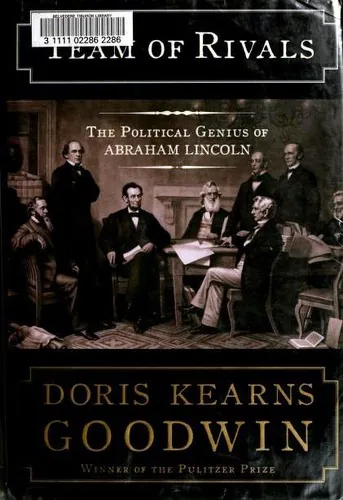
The essential books of ethical leadership fall into three registers. The theory: Leadership Without Easy Answers by Heifetz (1994), Start with Why by Simon Sinek (2009), and the Nicomachean Ethics of Aristotle. The history: Team of Rivals by Doris Kearns Goodwin (2005), the story of Lincoln’s leadership of a cabinet of rivals, and Long Walk to Freedom by Nelson Mandela (1994), the memoir of leadership tested at the greatest scale. The lived experience: Just Mercy by Bryan Stevenson (2014), leadership from the margins, and Man’s Search for Meaning by Viktor E. Frankl (1946), leadership under the worst conditions.
Each register teaches something the others cannot. The theory gives the concepts; the history shows them at scale; the lived experience shows them at cost. Reading all three is the education.
Content Notes: Choosing the Right Book
The books of ethical leadership span every age range. For younger readers: The Boy Who Harnessed the Wind by William Kamkwamba (from around age ten) and I Am Malala by Malala Yousafzai (from around age twelve). For general readers: Start with Why and The 7 Habits of Highly Effective People are clean and accessible. For mature readers: Leadership Without Easy Answers, Team of Rivals, Long Walk to Freedom (which includes the harshness of prison and apartheid), A Promised Land, Just Mercy (about the justice system’s cruelties), Man’s Search for Meaning (devastating in parts) and the Nicomachean Ethics (demanding in places). None contain explicit content; the notes are about length, intellectual demand and emotional weight. Our meaningful ethical leadership for adults guide extends the list for adult readers, our knowledge and education guide connects leadership to learning, and our cultural heritage reading shows leadership across cultures.
Leadership in Everyday Life
It is easy to think of leadership as a matter for presidents and generals, but the literature of the subject insists that it is lived in ordinary places: the workplace, the classroom, the family, the moment when someone decides to hold the group to what matters rather than what is easy.
The biographies make the point at scale: Lincoln’s leadership was exercised in a cabinet of rivals, but it was the same leadership a parent exercises in a divided family - the patience, the refusal to carry grudges, the willingness to hold people to their better selves. Mandela’s leadership was exercised across a nation, but it was the same leadership a teacher exercises in a divided classroom. The books argue that ethical leadership is a craft practiced everywhere, and that the scale changes the stakes but not the skill.
The fiction makes the point for everyday readers. To Kill a Mockingbird is the essential novel: Atticus Finch leads not from any position but from principle - he takes the case no one else will take, and his children watch him do it, which is the deepest form of leadership there is. The Book Thief shows the same leadership in ordinary German lives during the war: the couple who hide a Jewish man in their basement are leading - their household, their street, their conscience - by the daily, costly choice of doing right.
The reading note worth taking: in every book, identify the ordinary leader - the parent, the teacher, the neighbor, the friend - and note what they do that makes people able. The literature of ethical leadership argues that the craft is the same at every scale, and that the everyday practice is where the great leadership is learned.
Discussion Questions Worth Asking
The best discussions of ethical leadership start from the concepts and push to the reader’s own experience. What is the difference between a leader you respect and a leader you merely obey? When have you seen a leader refuse the authority trap - and what did it cost them? What is the adaptive challenge in your own life or work, and who is holding people in its discomfort? What would you be unwilling to trade for authority - the question that separates effectiveness from ethics?
For the history: What made Lincoln’s leadership ethical, and what made it effective - were they the same thing? For the memoirs: What did Mandela give up, and what did he refuse to give up? For the theory: What is leadership for, in Heifetz’s account - and do you agree?
The Essential Books of Courage in Leadership
No treatment of ethical leadership is complete without the books of courage, because the two subjects are inseparable: ethical leadership is the point at which courage becomes visible, and the deepest books about leadership are the ones that show the courage the role requires.
To Kill a Mockingbird by Harper Lee is the essential novel: Atticus Finch takes the case no one else will take, and his famous definition of courage - “when you know you’re licked before you begin but you begin anyway and see it through no matter what” - is the working definition of ethical leadership under pressure. He is the literary archetype of the leader who acts from principle rather than position, and the book remains the most effective introduction to the subject ever written.
Just Mercy by Bryan Stevenson is the real-world version: a lawyer who leads from service rather than power, taking the cases no one else will take and losing most of them - and the book’s argument is that the courage is in the taking, not the winning. Long Walk to Freedom shows the same courage at the greatest scale: twenty-seven years in prison, and the choice to emerge without bitterness.
The reading note worth taking: courage in the leadership books is never the absence of fear but the presence of the standard - the leader who knows the odds and acts anyway. Our courage reading for families guide connects the two subjects for younger readers, and our knowledge and education guide shows the learning the courage requires.
Conclusion: The Question Leadership Must Ask
Ethical leadership is the subject that asks what leadership is for: not how to get people to do things, but what things are worth doing, what leadership owes, and what a leader does when doing the right thing is costly. The key concepts are the ones that separate ethics from effectiveness - the difference between technical problems and adaptive challenges, the refusal of the authority trap, and the priority of character over technique - and the essential books teach them in three registers: theory, history and lived experience. Bring the question to every leader you read about, and to every leadership you hold: what is this for, what does it owe, and what am I willing to pay to do the right thing? For more reading paths, explore the Ideas section of our site.