Meaningful Ethical Leadership for Adults
Introduction: Leadership Tested by Cost
Adults meet the question of ethical leadership the way they meet most hard questions: at a cost. At some point in every adult life, the moment arrives when doing the right thing is expensive - professionally, personally, socially - and the question becomes whether the right thing is still worth doing. The most meaningful books about ethical leadership for adults are the ones that take that moment seriously: they do not promise that ethics pays; they show leaders who paid, and who decided the price was worth it. They are biographies of leaders tested at the highest scale, memoirs of people who led from the margins, and works of theory that ask what leadership is actually for.
This guide gathers the books that do that work best, with content notes and discussion guidance for adult readers.
The Essential History
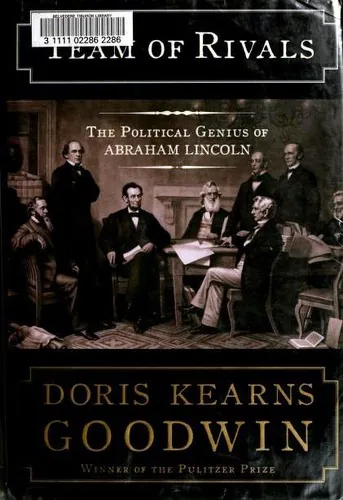
Team of Rivals by Doris Kearns Goodwin (2005) is the essential book about ethical leadership in history: Abraham Lincoln’s leadership of a cabinet filled with the men who had run against him for the presidency - his rivals - and his conversion of them into allies. It is the book that shows ethical leadership as a craft practiced at the highest level of power: the patience that waited for the right moment, the generosity that refused to carry grudges, the moral clarity that held the Union to the meaning of the war, and the humility that let the greatest men of the era serve him. It is the book to read first, because it shows the subject at full scale.
Long Walk to Freedom by Nelson Mandela (1994) is the essential memoir of ethical leadership: Mandela’s account of the struggle against apartheid, the twenty-seven years in prison, the negotiation that ended the regime, and the presidency that followed. It is the book that shows ethical leadership tested by the greatest cost and the greatest temptation: the temptation to emerge from prison bitter, and the choice to emerge reconciled. Its famous argument - that the oppressor is also imprisoned, and that freedom is for both - is the deepest statement of what ethical leadership can be.
A Promised Land by Barack Obama (2020) is the essential modern memoir of leadership: Obama’s account of his first term as president - the decisions, the limits, the costs. It is the book that shows ethical leadership in the ordinary machinery of power: not the dramatic choice but the daily pressure, the compromise, the attempt to keep faith with principles inside institutions that resist change. It is the book for adults who want to see leadership without the myth.
The Essential Theory
Leadership Without Easy Answers by Ronald Heifetz (1994) is the essential work of theory: the book that redefined leadership as the activity of mobilizing people to face hard problems - not giving answers, but holding people in the discomfort of real change. Its distinction between technical problems (which have known solutions) and adaptive challenges (which require people to change) is the most useful idea in the field, and its argument that leadership is an activity, not a position, is the foundation of ethical leadership. It is the book that gives adults the vocabulary for what they have already seen in their own lives and work.
The Nicomachean Ethics by Aristotle (c. 350 BCE) is the essential foundation: the oldest systematic account of what makes a person good, of virtue as the habit of choosing well, and of practical wisdom as the ability to see what a situation requires. It is the ancestor of every modern theory of ethical leadership, and reading it gives the whole field its context.
The 7 Habits of Highly Effective People by Stephen R. Covey (1989) is the essential modern argument that leadership is built on character: integrity, trust, the keeping of promises. Its famous ordering - private victory before public victory - is the clearest statement that ethical leadership begins with leading oneself.
The Essential Lived Experience
Just Mercy by Bryan Stevenson (2014) is the essential book about leadership from the margins: a lawyer who founded the Equal Justice Initiative and spent decades defending the wrongly condemned, the poor and the young on death row. It is the book that shows ethical leadership when no one is watching and the work is unwinnable: Stevenson takes the cases no one else will take, loses most of them, and keeps going. Its argument - that the true measure of a society is how it treats the powerless - is the deepest standard by which leadership can be judged.
Man’s Search for Meaning by Viktor E. Frankl (1946) is the essential book about leadership under the worst conditions: Frankl’s account of surviving the Nazi camps and the psychological system he built from the experience. It is the book that shows the deepest form of ethical leadership: the leadership of meaning - the refusal to surrender the will to find purpose in suffering, and the insistence that a person can choose their attitude in any circumstances. It is the book to read when the other books leave you wanting the question turned inward.
The Boy Who Harnessed the Wind by William Kamkwamba (2009) is the essential book about leadership in the absence of all resources: a boy in Malawi who, during a famine, taught himself engineering from library books and built a windmill that powered his village. It is the book that shows what leadership looks like when there is no position, no authority and no money - only the resourcefulness and the service.
How These Books Speak to Each Other
The adult literature of ethical leadership is a conversation across centuries and scales. Heifetz’s theory asks what leadership is for; Goodwin’s Lincoln shows the answer in the machinery of the presidency; Mandela’s memoir shows it at the greatest cost; Stevenson’s book shows it from the margins; Frankl’s shows it under the worst conditions. Aristotle asks what makes a leader good; Covey answers that it is character; the memoirs show the character being tested. The essential question running through all of them is the one every adult leader must answer: what are you willing to pay to do the right thing - and what will you refuse to trade for authority?
The Everyday Practice of Ethical Leadership
It is easy to think of ethical leadership as a matter for presidents and generals, but the most useful books on the subject insist that it is a craft practiced in ordinary adult life: the workplace, the family, the community - the moments when an adult decides to hold the group to what matters rather than what is easy.
Team of Rivals makes the point at scale: Lincoln’s craft - patience, generosity, the refusal of grudges, the holding of rivals to their better selves - is the same craft a manager practices with a difficult team or a parent with a divided family. Long Walk to Freedom makes it at the greatest scale, and the same skills appear: the willingness to listen, the refusal of bitterness, the ability to hold people to the future rather than the past.
The fiction makes it for everyday readers. To Kill a Mockingbird is the essential novel: Atticus Finch leads from principle rather than position, and the deepest lesson of the book is not the trial but the daily integrity his children watch - the way he treats everyone with the same respect, the way he does the right thing when it is costly. A Time to Kill and The Kite Runner carry the same theme: leadership tested by the cost of doing right.
The reading note worth taking: for each book, identify the ordinary leader - the manager, the parent, the neighbor - and note the specific practices: the listening, the patience, the refusal of the cheap answer, the willingness to be disliked. The literature of ethical leadership argues that these practices are the real content of the subject, and that the great leaders are the ones who practiced them daily long before anyone was watching.
Content Notes: Choosing the Right Book
All of these books are for adult readers, and none contain explicit content; the notes are about length, intellectual demand and emotional weight. Team of Rivals is long and contains the realities of the Civil War and Lincoln’s assassination. Long Walk to Freedom includes the harshness of prison and the violence of apartheid. A Promised Land is long and reflects the pressures of the presidency. Just Mercy is about the justice system’s cruelties and is emotionally heavy. Man’s Search for Meaning contains Frankl’s account of the camps and is devastating in parts. Leadership Without Easy Answers and The 7 Habits are accessible; the Nicomachean Ethics is demanding in places. None of these are books to rush, and all of them reward discussion. Our family-friendly ethical leadership guide offers gentler alternatives, our knowledge and education for adults guide connects leadership to learning, and our cultural heritage reading shows leadership across cultures.
A Reading Plan for Adult Readers
For the reader who wants a single book: Team of Rivals. For the reader who wants the memoir: Long Walk to Freedom. For the reader who wants the theory: Leadership Without Easy Answers. For the reader who wants leadership from the margins: Just Mercy. For the reader who wants the question turned inward: Man’s Search for Meaning. For the book club: read Team of Rivals with Leadership Without Easy Answers, and let the history and the theory argue with each other about whether Lincoln was a leader or the product of his moment - and what the difference means.
Conclusion: The Price of Doing Right
Adults meet the question of ethical leadership at a cost, and the most meaningful books about it are the ones that take the cost seriously: they do not promise that ethics pays; they show leaders who paid, and who decided the price was worth it. From Lincoln holding his cabinet of rivals, to Mandela emerging from prison without bitterness, to Stevenson taking the cases no one else will take, to Frankl choosing meaning in the camps, the books show ethical leadership tested at every scale - and the question they all answer is the one every adult must answer: what are you willing to pay, and what will you refuse to trade? Start with Team of Rivals, and let the conversation carry you deeper. For more reading paths, explore the Ideas section of our site.