Books Like The Prophet

There is a specific feeling that comes from finishing The Prophet: you have been given the essential truths, and you want to keep them. Kahlil Gibran’s collection of poetic essays - on love, work, joy, sorrow, friendship, freedom, death - spoken by the prophet Almustafa as he prepares to leave the city where he has lived for twelve years, has been a beloved source of wisdom for over a century, and it is one of the best-selling books of all time.
The book’s power is its form: the teaching delivered as poetry, each chapter a complete meditation on one aspect of being human, the kind of book you return to the way you return to a favorite page. The problem after finishing it is the one every great book creates: you want more of the feeling - the wisdom, the beauty, the essential. This guide collects the books that genuinely belong on that shelf.
What Made The Prophet Special
Before the recommendations, it is worth naming what you are actually looking for, because the right next book depends on which part of the book stayed with you.
If the wisdom stayed with you - the teachings, the chapters, the essential truths - then the wisdom collections will fit. If the poetry stayed with you - the language, the beauty, the music of it - then the wisdom poetry will be your natural next step. And if the gentleness stayed with you - the tone, the love, the peace - then the gentle wisdom books will carry it forward.
Most readers are looking for all three, and the books below cover the range.
More from Kahlil Gibran
The Garden of the Prophet by Kahlil Gibran
If there is one book that the Prophet reader should pick up next, it is The Garden of the Prophet. The sequel to The Prophet - Almustafa returns to his island and continues his teachings - is the natural continuation, less famous than its predecessor and carrying the same voice.
The book delivers what the first book’s readers most want: more of the prophet, more of the teachings, more of the voice. For readers who loved The Prophet, this is the essential next step.
Content notes: Wisdom literature, accessible and suitable for a wide range of readers.
Sand and Foam by Kahlil Gibran
For readers who want the wisdom in its most distilled form, Sand and Foam is the book. Gibran’s collection of aphorisms and short meditations - “Sand and foam” - is the essence of his wisdom, one line at a time.
The book is the most portable of Gibran’s works, and it is the book to keep in a pocket and open at random.
Content notes: Wisdom literature, accessible and suitable for a wide range of readers.
The Wisdom Collections
Meditations by Marcus Aurelius
For readers who want the wisdom in its oldest form, Meditations is the essential book. Written as a private notebook by a Roman emperor, it is the record of a man practicing the inner life - auditing his judgments, accepting what he cannot control, doing his duty.
The book shares The Prophet’s character: the wisdom delivered as teaching, the reader invited into the inner life. Where Gibran is poetry, Marcus is prose - and both are the wisdom of a lifetime, distilled.
Content notes: A classical text, accessible and suitable for a wide range of readers.
The Wisdom of the Desert by Thomas Merton
For readers who want the wisdom from the desert tradition, The Wisdom of the Desert is the book. Merton’s translations of the sayings of the desert fathers and mothers - the early Christian hermits - collect the distilled teachings of people who spent their lives seeking the essential.
The book shares The Prophet’s format of distilled wisdom, and it is the book for readers who want the teaching in its most concentrated form.
Content notes: Spiritual wisdom, accessible and gentle.
The Wisdom Poetry
The Essential Rumi by Coleman Barks
For readers who want the wisdom in poetry at its most beloved, The Essential Rumi is the essential book. The translation by Coleman Barks collects the poems that have made Rumi the best-selling poet in America - the love, the longing, the transformation, the divine.
The book shares The Prophet’s beauty and its depth, and it is the book for readers who want the wisdom in full poetic voice. Where Gibran teaches, Rumi sings - and both reach the same truths.
Content notes: Spiritual poetry, accessible and suitable for a wide range of readers.
The Prophet’s Form of the Teaching
One of the reasons The Prophet endures is its form: the teaching delivered in the voice of a prophet, to a people, as a farewell. The form gives the wisdom its authority - this is not advice from a friend but teaching from a sage - and it gives the reader a relationship to the text: the prophet is speaking to you, and the teaching is for you. The chapters are short enough to hold and deep enough to return to, and the return is the practice.
This is the gift the wisdom shelf keeps giving: the teaching that can be returned to, the page that is different at every age, the wisdom that grows with the reader. The books on this list are all, in different ways, the same gift.
The Gentle Wisdom Books
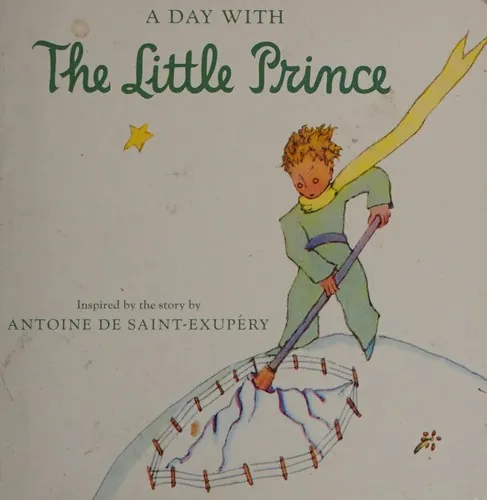
The Little Prince by Antoine de Saint-Exupéry
For readers who want the distilled wisdom in fable form, The Little Prince is the essential book. The pilot stranded in the desert, the small prince from a tiny planet, the rose, the fox, the taming - the book delivers more wisdom per page than almost anything ever written.
The two books are companions: the distilled wisdom, the essential truths, the form simple enough to carry. Where The Prophet teaches, The Little Prince tells - and both arrive at the same place: what is essential is invisible to the eye.
Content notes: A gentle fable, suitable for readers of all ages.
The Boy, the Mole, the Fox and the Horse by Charlie Mackesy
For readers who want the gentle wisdom in its most contemporary form, The Boy, the Mole, the Fox and the Horse is the essential book. The ink drawings and handwritten wisdom - “What is the bravest thing you’ve ever said? Help” - have made it one of the most beloved books of recent years.
The book shares The Prophet’s gentleness and its distilled wisdom, and it is the book for readers who want the teaching in a form they can give to anyone.
Content notes: A gentle book, suitable for readers of all ages.
The Wisdom of the Pause
Reading The Prophet is a different experience from reading almost anything else, because the book asks you to slow down. Gibran’s chapters are short, his sentences are unhurried, and the temptation to skim is exactly what the book is designed to resist. Each answer Almustafa gives is a small meditation, and the reader who pauses over a single passage - over what is said about love, or work, or grief - will get more from the book than someone who races to the end. The Prophet is less a story to finish than a practice to keep, and that is the secret of its longevity.
The books on this shelf share that quality of asking for patience. Some are collections of aphorisms or letters, arranged so that a reader can open them anywhere and find something worth sitting with. Others are fables and parables whose brevity is the point: the story is short enough to hold in the mind, and long enough to change it. What unites them is a conviction that wisdom cannot be hurried, that the deepest truths are the ones that arrive slowly and stay quietly, and that a book can be a place of retreat rather than a thing to be consumed.
There is also a particular pleasure in reading these books alongside ordinary novels. A story gives you a world; a book like The Prophet gives you a way of looking at it, and the two work beautifully in conversation. Read one chapter of Gibran before bed, or keep a collection of short wisdom on the shelf for the days when you need a sentence to hold onto. The books on this shelf are the ones that repay that kind of attention, and they will keep their place in your life long after faster books have been forgotten. For more titles that reward slow, contemplative reading, our guide to gentle wisdom and reflection collects the classics that speak softly and last.
How to Choose Your Next Read
The right next book depends on what you are ready for. If you want more of Gibran: The Garden of the Prophet or Sand and Foam. If you want the wisdom in its oldest form: Meditations. If you want the desert wisdom: The Wisdom of the Desert. If you want the wisdom in poetry: The Essential Rumi. If you want it in fable: The Little Prince. If you want it in drawings: The Boy, the Mole, the Fox and the Horse.
There is no wrong order, but there is a sensible one: start with The Garden of the Prophet for more of the voice, then Meditations for the ancient version, then The Essential Rumi for the poetry, and let the gentle books carry the feeling forward.
Reading The Prophet at Different Times of Life
One of the truest tests of a wisdom book is whether it changes as the reader changes, and The Prophet passes it completely. A teenager reads the chapter on love as a promise; a young adult reads it as a warning; someone who has loved and lost reads it as an elegy. The words on the page do not move, but the reader’s life does, and so the book is never quite the same book twice. This is the signature of genuine wisdom literature: it does not tell you what you already know, and it does not date. It simply keeps its place on the shelf, patient, waiting for the day when one of its sentences finally means something to you.
That is why the books on this shelf are worth owning rather than borrowing. A collection of aphorisms or parables is not a thing to finish; it is a thing to return to, and each return is a different reading. The passage that seemed like pleasant advice at twenty can become, at forty, the exact words you needed. The fable that felt like a children’s story can reveal itself, decades later, as the most grown-up thing you have ever read. Wisdom literature pays its dividends slowly, over the whole span of a life, and the reader who keeps these books close is making an investment they will keep collecting on.
There is a practical side to this as well. Because the chapters are short and self-contained, The Prophet and its companions are perfect for the kind of reading that fits around a busy life - a page in the morning, a passage before sleep, a paragraph returned to in a difficult moment. The books on this shelf are designed for that rhythm, and they reward it. If you have read The Prophet once and put it away, the recommendation here is simple: read it again, in a different season of your life, and notice what has changed. The book has been waiting for you.
The Resilience and Purpose Shelf
The Prophet is, at its core, a book about the essential truths - the wisdom of a lifetime, delivered as teaching - and it belongs on the wider growth shelf, alongside the books that explore those truths. Our notes on resilience themes, values and reading notes explore the ideas that run through the wisdom shelf, and they pair naturally with this reading - because the prophet’s teachings on sorrow and joy and work are, at heart, teachings on resilience: the capacity to hold the essential through everything.
The shelf also connects to purpose, in a specific way: the prophet’s teaching on work - “work is love made visible” - is the purpose teaching, and the question of what your life is for runs through the whole book. Our guide to family-friendly purpose explores that question in the family context, and it belongs with this reading because the essential truths are, at heart, the purpose truths. Together they form part of the growth section of our library, where the whole shelf of wisdom is gathered.
Conclusion
The Prophet has been a beloved source of wisdom for over a century because it delivers the essential truths of human life - love, work, joy, sorrow, friendship, death - as teachings in poetry, spoken by a prophet preparing to leave. The books on this list are the honest responses to the question it leaves behind: what next?
The continuations of Gibran himself, the ancient wisdom of Marcus and the desert, the poetry of Rumi, and the gentleness of the little prince and the mole - together they carry the same truth in different voices: the wisdom is the return, the teaching is the practice, and what is essential is invisible to the eye. Read the notes, choose where you are, and let the books take their time.
Frequently Asked Questions
What should I read after The Prophet?
Is The Little Prince like The Prophet?
What is the main theme of The Prophet?
Are there other books by Kahlil Gibran like The Prophet?
Which book is the closest in tone to The Prophet?
Are these books suitable for all readers?
Featured Recommendations

Raining Book Editorial Team
The Raining Book editorial team curates the best book recommendations and reading guides for every type of reader.