Resilience: Themes, Values and Reading Notes
Read enough books about resilience and the same patterns emerge, the way they do in any mature genre. The settings differ - the research lab, the concentration camp, the family kitchen - but the core claims keep returning: resilience is recovery, not the absence of pain; it is a capacity, built not born; it is built from a recognizable set of building blocks; it is fueled by meaning; and it can produce growth, not just restoration. Naming those patterns is not an academic exercise. It is the difference between collecting resilience books and building the capacity to recover.
This guide maps the themes and values that run through the best resilience books, and offers reading notes on how to turn them into practice rather than admiration.
The Core Themes of Resilience Books
1. Recovery, Not the Absence of Pain
The foundational theme of every resilience book is that resilience is recovery, not the absence of pain. The resilient person is not the one who never struggles; they are the one who struggles and recovers. The theme does crucial work: it removes the impossible demand to be fine, and it makes resilience available to everyone, because everyone struggles.
The theme also separates resilience from its counterfeits. Suppression - the refusal to feel - is not resilience; it is freezing, and the freezing eventually fails. The person who buries the pain is not recovering; they are deferring. Resilience is the capacity to move through the pain, with support and practice, and to arrive somewhere on the other side.
2. Capacity, Not Fixed Trait
The second theme is that resilience is a capacity, built over time, not a fixed trait you either have or lack. The research is consistent: resilience develops through practices, relationships and the experience of surviving. The person who believes resilience is born is the person who never tries to build it; the person who knows it is built is the person who can.
This theme is the hopeful heart of the genre. It means that the person who has collapsed can rebuild, that the person who has never been tested can prepare, and that every recovery strengthens the capacity for the next.
3. The Building Blocks
The third theme is that resilience is built from a recognizable set of building blocks. The books converge on a similar list: honest acknowledgment of the difficulty; self-compassion in response to your own suffering; social support and the willingness to reach for it; flexible thinking that questions the catastrophic stories; small steps forward that reconnect you to functioning; and meaning that contextualizes the adversity.
The theme is practical from the first page: these are not abstract virtues but trainable practices, and the books are organized around teaching them. The reader who works the building blocks is building the capacity, whether or not a crisis is currently underway.
4. Meaning as Fuel
The fourth theme is the deepest: meaning is the fuel of resilience. Viktor Frankl’s discovery - the prisoners who survived were those with a reason to live - recurs across the genre in different forms. Meaning does not erase the pain; it contextualizes it. This happened, and it is part of a story that continues, a story with a direction and a purpose.
The theme explains why the resilience books connect so directly to the purpose books: purpose supplies the reason to recover, and resilience is the capacity that carries the purpose forward through difficulty. The two are inseparable in the literature and in life.
5. Post-Traumatic Growth
The fifth theme is the surprising gift at the heart of the genre: the resilient are not merely restored; they are often changed - deeper, stronger, more aware. Researchers call this post-traumatic growth, and the books document it consistently: the loss that deepened the person, the crisis that clarified the values, the struggle that produced wisdom.
The theme protects against the temptation to see recovery as a return to the old normal. The old normal is gone; the new life is built from the ruins, and the building can produce something the old life never had. This is the hope the resilience books offer, and it is not a cheap hope - it is earned, through the honest work of recovery.
The Values at the Heart of Resilience
Strip the themes down and a stable set of values remains. Honesty is the first - the accurate acknowledgment of the difficulty, without which recovery is impossible. Self-compassion is the second - the kindness toward your own suffering that makes recovery sustainable. Perseverance is the third - the willingness to take the small steps, day after day, through the long middle of recovery. Hope is the fourth - the belief that the future can be better and that your actions matter to it. And courage is the fifth - the willingness to feel the pain, to reach for help, and to rebuild, which is one of the bravest things a person can do.
These values explain why the resilience genre connects so directly to the character and courage genres. The resilient person has practiced the same virtues that build character, and the recovery itself is a form of courage - the willingness to move forward through what you fear.
Reading Notes: How to Read Resilience Books
The resilience genre has a specific hazard: it is easy to read about recovery and feel recovered, without building the capacity. The following reading notes system is designed to close that gap.
First, read one chapter at a time and extract one building block. Not the quote to admire - the specific practice the chapter describes, translated into a command: “This week I will respond to my own setbacks with the kindness I would offer a friend.”
Second, apply the building block to your actual life. The chapter on flexible thinking is abstract until you catch your own catastrophic story; the chapter on small steps is abstract until you take one. The application is where the reading becomes real.
Third, keep a resilience log. One entry per week: what difficulty I faced, how I responded, which building blocks I used, what I would do differently. The log is the feedback loop that turns reading into capacity, and it makes the recovery visible instead of circular.
Fourth, review monthly and reread annually. Resilience books reward rereading because they are read differently at different stages - the book that helped with one loss at forty is the book that helps with a different one at fifty. Our reading notes on purpose themes use the same method, because the two genres are one conversation.
Choosing Books by Theme
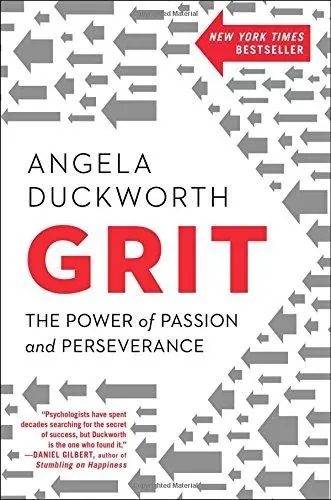
Knowing the themes makes book selection deliberate. If you are in the raw aftermath of a loss: Option B by Sheryl Sandberg and Adam Grant. If you want the systematic training: The Resilience Factor by Karen Reivich and Andrew Shatté. If you want the long-term research: Grit by Angela Duckworth. If you want resilience at the limit: Man’s Search for Meaning by Viktor Frankl or The Choice by Edith Eger. If you want it demonstrated over years: Unbroken by Laura Hillenbrand.
And if you want to see the themes working at their deepest, Man’s Search for Meaning is the complete package - recovery, capacity, the building blocks, meaning as fuel and post-traumatic growth, all demonstrated at the limit of human endurance.
A Sample Reading Note
To make the method concrete, here is what a reading note on Option B might look like after a chapter on self-compassion. The note has three parts: the mechanism, the application, and the log entry.
Mechanism: “Self-compassion is the practice of treating your own suffering with the kindness you would offer a friend. It is not self-indulgence; it is the response that makes recovery sustainable, because self-criticism prolongs the pain while self-kindness moves through it.” Application: “My problem is the voice that says I should be over this setback by now. Concrete practice: when I catch the self-critical voice, I will pause and ask what I would say to a friend in my situation - and then say that to myself.” Log: “Week 1: caught the voice repeatedly; the friend-response felt awkward but I did it. Week 2: noticed the self-criticism was strongest at night, when I was tired - adjusted the practice to the evening. Week 3: the friend-response is becoming automatic, and the setback feels less like a verdict and more like a chapter.”
The value of writing it this way is visible in the log. The mechanism is abstract until it is applied; the application is generic until it is logged; and the log is where the honest self-knowledge appears - in this case, the discovery that the self-criticism had a pattern (worse at night) and that the pattern was addressable. That observation, written down, becomes the input for the next round of practice.
This is the whole method in miniature: extract the building block, apply it to your actual life, log the results, and let the log inform the next iteration. A month of notes like this is worth more than a year of reading without them. The books supply the map; the notes are the territory you are actually walking.
The Purpose Connection
It is worth dwelling on the purpose connection, because it is the key to sustaining resilience over time. Meaning is the deepest building block, and the purpose books supply the fuel that resilience burns. The person with a sense of purpose has a reason to recover; the person without one has a harder road. This is why our purpose reading list is the natural companion to the resilience books, and why our best purpose books are the ones that connect the two.
The practical implication: if you want to build resilience, work on purpose. Articulate what your life is for, in writing; connect your daily actions to it; and let the meaning carry you through the seasons when the actions are hard. The purpose work is resilience work, done in advance.
The Moral Dimension
There is one more dimension of the resilience reading that is easy to miss when you read alone: resilience is often tested in morally difficult situations, and the recovery is entangled with questions of right and wrong. The person recovering from a betrayal must decide what justice requires; the person who caused harm must decide what repair requires; the family facing a moral dilemma must decide what integrity requires. These questions are not separate from resilience; they are part of it.
Our notes on moral dilemmas explore how these questions are worked through, and they belong with the resilience reading because the recovery from difficulty often includes the moral processing of what happened. The resilient person is not only the person who recovers; they are the person who recovers with integrity - who does not let the difficulty corrupt their values, and who rebuilds on honest ground.
A Closing Note on Reading
There is one final note for the reader of the resilience genre, and it is the most important: the books work differently when you are in the middle of something. Read in the calm seasons, the resilience books are preparation - the building blocks learned before they are needed, the practices installed in advance. Read in the middle of the storm, they are company - the recognition that you are not alone, that others have been where you are, that the process has a shape even when it does not feel like it.
Both readings are legitimate, and the genre rewards both. The reader who prepares in the calm seasons is building the capacity before the test; the reader who reaches for the books in the storm is finding the company and the map. And the deepest reading is the one that returns to the books after the recovery - to see, in retrospect, the growth that was invisible in the middle of it, and to recognize the capacity that the struggle built.
The resilience books are not a substitute for the recovery; they are the map for it. The recovery itself is the territory, and it is walked in the actual life - the honest acknowledgment, the reached-for support, the small step taken. Read accordingly, and then recover accordingly, and let the reading and the recovery inform each other across the seasons of a life.
Conclusion
The resilience genre, for all its variety, keeps returning to five themes - recovery over the absence of pain, capacity over fixed trait, the building blocks, meaning as fuel, and post-traumatic growth - and to a stable set of values: honesty, self-compassion, perseverance, hope and courage.
The reading notes that matter are the ones that turn these into practice: one building block per chapter, applied to your actual life, logged weekly, reviewed monthly. The books are the map, but resilience is built in the recovering - in the honest acknowledgment, the self-kindness, the reaching out, the reframing, the small steps and the meaning held.
And the deepest insight of the whole genre is that resilience is not the absence of pain but the capacity to move through it - and that the capacity grows with every recovery. The tree that grows through rock is not the tree that never met rock; it is the tree that kept growing anyway. Read accordingly, and then recover accordingly - the books are only the beginning.
Frequently Asked Questions
What are the main themes in resilience books?
What values do resilience books promote?
How do I take notes on a resilience book?
What is the single biggest idea in resilience books?
Why do resilience and purpose appear together so often?
How do I choose which resilience book to read first?
Featured Recommendations



Raining Book Editorial Team
The Raining Book editorial team curates the best book recommendations and reading guides for every type of reader.