Best Books About Travel and Discovery by Jules Verne

Introduction: The Voyages Extraordinaires
Jules Verne is one of the most translated authors in the history of literature - the French novelist who invented the modern adventure of science, whose Voyages Extraordinaires took readers to the center of the earth, the bottom of the sea and the moon. His essential book on travel and discovery is Around the World in Eighty Days (1872), the race around the globe that made the voyage the great adventure of the age. This guide maps Verne’s books on travel and discovery, the themes that make his writing cohere, and the companions for when you want more.
The Verne Books in Reading Order
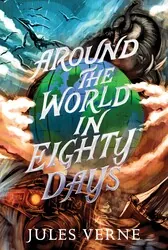
Around the World in Eighty Days (1872) is the essential Verne, and the book that defines the subject. It is the novel of Phileas Fogg, the precise English gentleman who wagers that he can circle the globe in eighty days, and his journey with his valet Passepartout through Suez, India, Hong Kong, Japan, America and back to London. The novel is a machine of geography and timing - every chapter a new country, a new delay, a new escape - and its twist ending is one of the most famous in fiction. It is the key to everything else he has written.
Twenty Thousand Leagues Under the Seas (1870) is the essential companion about the depths: the novel of Captain Nemo and the submarine Nautilus, journeying through the wonders of the ocean. It shares the voyage, with the sea at the center.
Journey to the Center of the Earth (1864) is the essential companion about the interior: the novel of Professor Lidenbrock’s descent into the earth. It shares the voyage, with the geology at the center.
From the Earth to the Moon (1865) is the essential companion about the sky: the novel of the moon shot, a century before the Apollo program. It shares the voyage, with the space at the center.
The Adventures of Captain Hatteras (1866) is the essential companion about the pole: the novel of the race to the North Pole. It shares the voyage, with the ice at the center.
Content Notes for Each Book
Around the World in Eighty Days is a pure adventure, free of violence beyond the comic; it is suitable for readers from around age twelve upward.
Twenty Thousand Leagues Under the Seas deals with the darker themes of Nemo and his war on the surface world; it is suitable for readers from around age twelve upward, with discussion.
Journey to the Center of the Earth is an adventure with prehistoric dangers; it is suitable for readers from around age twelve upward.
The Travel and Discovery Themes in Verne’s Work
Three themes give Verne’s writing on travel and discovery its distinctive shape.
The journey as the story is his signature method. Verne’s novels are journeys, and his conviction was that the journey itself - the geography, the timing, the obstacles - is the story. The books agree that the travel is the tale.
The science as the wonder is the second theme. Verne filled his voyages with the science of his age - the geology, the oceanography, the astronomy - and his conviction was that the science is not the opposite of wonder but its source. The books agree that the knowledge is the amazement.
The age as the adventure is the third theme. Verne wrote in the age of discovery - the railways, the steamships, the balloons - and his conviction was that his century was the great adventure of history. The books agree that the moment is the marvel.
Why Verne’s Travel Writing Endures
Around the World in Eighty Days has been adapted countless times and remains one of the most beloved adventure novels ever written, and its endurance rests on a simple achievement: Verne made the voyage itself the hero - a race around the globe that readers could follow country by country - and he did it with a science and a precision that made the fantasy feel real. The novel became the shared doorway into the age of discovery.
His influence extends beyond the novels: the Voyages Extraordinaires shaped the science fiction that followed, and the journey stories shaped the travel writing. But the books endure because of their conviction: that the journey is the story, and that the science is the wonder.
Companion Books for Every Verne Reader
When you have finished Verne’s own books, these titles extend the same territory.
Treasure Island by Robert Louis Stevenson (1883) is the essential companion about the island: the great novel of the treasure hunt and the sea. It shares the voyage, with the pirate at the center.
The Travels of Ibn Battuta (fourteenth century) is the essential companion about the real voyage: the account of the medieval traveler who crossed the known world. It shares the journey, with the history at the center.
The Time Traveler’s Guide to Medieval England by Ian Mortimer (2008) is the essential companion about the era: the guide to the fourteenth century. It shares the discovery, with the daily life at the center.
For the fuller shelves, our best medieval history list gathers the earlier voyages, and our best historical fiction list extends the shelf into the journeys told in fiction.
A Reading Plan for Book Clubs
Around the World in Eighty Days generates conversation on every level: the wager, the geography, the question of what the race actually proves. The most fertile questions are the ones the book refuses to settle: Is Fogg’s precision a virtue or a prison? What does the book ask the reader to make of the twist ending? Is the novel about the world or about the man who circles it?
The book also generates the harder kind of discussion: the question of what the age of discovery really was - the wonder and the empire together - and what the voyage stories owe the peoples whose worlds they crossed. Clubs should expect the conversation to range from the Suez Canal to the London fog, which is exactly the range Verne intended.
A Note on the Book’s Structure and Editions
Around the World in Eighty Days is structured as a race against the clock - each chapter a new leg of the journey, a new country, a new delay - and readers should know that the novel’s engine is the schedule: Fogg’s itinerary is printed in the book, and the reader can follow the race day by day. Verne’s method is the accumulating geography, and the twist ending - the missed day that was gained - is the payoff the whole book builds toward. The novel can be read in a few sittings, and it rewards the reader who follows the map.
What Verne’s Books Teach Together
Read together, Around the World in Eighty Days and Twenty Thousand Leagues Under the Seas form a conversation about the voyage: the first novel crosses the surface of the world, and the second descends beneath it. Both are built on the same conviction - that the journey is the story and that the science is the wonder - and each one widens the claim: the world and the sea. That is why the books belong together on the same shelf, and why readers who finish one should not stop there.
The Scholar Behind the Voyages
Readers who know Verne only as the writer of adventures should know the scholar behind them: he was a devoted student of the geography and the science of his age, and the Voyages Extraordinaires are full of the real - the actual ports, the actual routes, the actual science of the 1860s and 1870s. His conviction was that the adventure and the knowledge belong together - that the reader should come away from the voyage both delighted and informed - and his research was legendary. The reader who checks the geography of Around the World in Eighty Days against the atlas will find it accurate, which is part of the wonder.
Why Verne Still Matters to New Readers
Verne’s novels have been read for a century and a half and remain the doorway through which generations first feel the excitement of discovery. They matter because they answer a question every curious reader asks: what is beyond the horizon? Verne’s answer is the voyage - the journey to the center of the earth, the bottom of the sea, the moon - and his conviction is that the world is full of discovery for those who will travel. New readers will find the novels surprisingly modern, and they will understand why Verne is called the father of science fiction.
Where to Begin and What to Read Next
For readers new to Verne, Around the World in Eighty Days is the essential starting point - it is the most beloved of the voyages and the perfect introduction to his method. Readers who want the depths should follow with Twenty Thousand Leagues Under the Seas; readers who want the interior should read Journey to the Center of the Earth; readers who want the sky should move to From the Earth to the Moon; and readers who want the pole should read The Adventures of Captain Hatteras. And because Verne is best read beside the other great travel writers, the natural next shelf pairs him with the adventure of Stevenson, the comedy of Bryson, the observation of Theroux and the medieval road of Ibn Battuta - the voyage, the island, the walk and the caravan, together forming the full picture of what the literature of travel and discovery can do.
Conclusion: The Voyage Still Running
Jules Verne’s contribution to the literature of travel and discovery is a single achievement, and it has entered the language of readers everywhere: the voyage extraordinaire. He wrote it into the eighty days of Fogg and the leagues of Nemo, and it has outlasted every attempt to make the world small again. His journey is the story; his science is the wonder; his craft is the precision. Read him, and let the voyage show you what discovery was really made of. For more reading paths, explore the Worlds section of our site, or continue with our guide to historical fiction.