Best Books About Civilizations by Yuval Noah Harari

Introduction: The Story of Humankind
Yuval Noah Harari is the historian who made big history famous for a new generation - the Israeli professor whose books on the story of humankind have sold tens of millions of copies worldwide. His essential book is Sapiens: A Brief History of Humankind (2011), the sweeping history from the Stone Age to the present. This guide maps Harari’s books on civilization, the themes that make his writing cohere, and the companions for when you want more.
The Harari Books in Reading Order
Sapiens: A Brief History of Humankind (2011) is the essential Harari on civilization, and the book that made his name. It is a history of humankind from the emergence of Homo sapiens to the present, told in four parts - the Cognitive Revolution, the Agricultural Revolution, the Unification of Humankind and the Scientific Revolution. Harari’s central argument is that our species’ success rests on our ability to cooperate flexibly in large numbers, made possible by shared fictions - money, nations, religions, corporations - and that the same ability has brought us to a crossroads. It is the key to everything else he has written.
Homo Deus: A Brief History of Tomorrow (2015) is the essential companion about the future: Harari’s study of the twenty-first century, in which the old fears - famine, plague, war - give way to new quests for immortality, happiness and divinity. It shares the method, with the future at the center.
21 Lessons for the 21st Century (2018) is the essential companion about the present: Harari’s collection of essays on the urgent questions of our time - technology, politics, truth, education. It shares the method, with the moment at the center.
Sapiens: A Graphic History (2020) is the essential companion for the visual reader: the graphic adaptation of the original, told in a comic form. It shares the argument, with the images at the center.
Content Notes for Each Book
Sapiens deals with war, cruelty and the full sweep of human history - treated with Harari’s analytical clarity rather than graphic relish. It is best for readers from around age sixteen upward.
Homo Deus deals with the ethical questions of the future; it is best for readers from around age sixteen upward.
21 Lessons deals with the politics and technology of the present; it is best for readers from around age sixteen upward.
The Civilization Themes in Harari’s Work
Three themes give Harari’s writing on civilization its distinctive shape.
The fiction as the foundation is his signature argument. Harari’s central claim is that large-scale human cooperation rests on shared fictions - the stories we agree to believe - and his conviction is that the fictions are the deepest structures of civilization. The books agree that the story is the foundation.
The question as the method is the second theme. Harari writes history with a philosopher’s questions - what made us human, what are we becoming, what should we do - and his conviction is that the questions matter more than the answers. The books agree that the asking is the doing.
The crossroads as the moment is the third theme. Harari’s books all converge on the present: the conviction that our species has reached a crossroads where the old rules no longer hold, and that the choices we make now will shape everything. The books agree that the moment is the crisis.
Why Harari’s Civilizations Endure
Sapiens has sold tens of millions of copies in dozens of languages and remains one of the most-read histories of the century, and its endurance rests on a simple achievement: Harari told the whole story of humankind in a single readable volume, with a provocation on every page - and the provocation made the story unforgettable. The book became the shared reference point for the modern conversation about where we come from and where we are going.
His influence extends beyond the book: the sequels carried the argument into the future and the present, and the graphic history brought it to new readers. But the books endure because of their conviction: that the story of humankind is one story, and that the moment we are living in is the crossroads.
Companion Books for Every Harari Reader
When you have finished Harari’s own books, these titles extend the same territory.
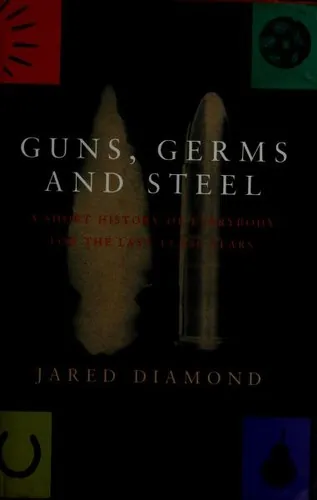
Guns, Germs, and Steel by Jared Diamond (1997) is the essential companion about the causes: the study of why some civilizations rose and others fell. It shares the sweep, with the environment at the center.
The Story of Civilization by Will Durant (1935–1975) is the essential companion about the depth: the eleven-volume history of civilization. It shares the subject, with the detail at the center.
A History of Civilizations by Fernand Braudel (1963) is the essential companion about the structures: the survey of the world’s civilizations through their deep geography. It shares the canvas, with the long duration at the center.
For the fuller shelves, our best civilizations and culture list gathers the big-picture books, and our cultural heritage reading notes extends the shelf into the traditions themselves.
A Reading Plan for Book Clubs
Sapiens generates conversation on every level: the argument, the provocation, the question of whether the story is true. The most fertile questions are the ones the book refuses to settle: Was the Agricultural Revolution really a trap? Are the shared fictions - nations, money, religions - a strength or a delusion? What does the book ask the reader to do with the crossroads it describes?
The book also generates the hardest kind of discussion: the question of whether happiness has actually increased across the history of civilization, and what we owe the species that the story leaves out. Clubs should expect the conversation to range from the Stone Age to the algorithm, which is exactly the range Harari intended.
A Note on the Book’s Structure and Editions
Sapiens is a long book, and readers should know that it is structured as four revolutions - Cognitive, Agricultural, Unification, Scientific - each one a stage in the argument. Harari’s method is the accumulating provocation: each chapter ends with a question or a claim that the next chapter builds on. The book rewards the patient reader with the fullest statement of the argument in print.
The Four Revolutions as a Reading Map
Sapiens is structured around four revolutions, and the structure is the key to reading it: the Cognitive Revolution made our species capable of shared fictions, the Agricultural Revolution made large settlements possible, the Unification of Humankind wove the settlements into empires and networks, and the Scientific Revolution made the modern world with its endless capacity for discovery. Harari’s conviction is that each revolution is a bargain - the agriculture that fed us also trapped us, the empire that united us also enslaved us - and the reader who watches the bargains accumulate will understand the argument of the whole book. The structure is not decoration; it is the argument made visible.
Why the Provocations Matter
Harari is a provocative writer on purpose. The claims that the Agricultural Revolution was the worst mistake in human history, that happiness has not increased with civilization, that the liberal story is running out of time - these are not clickbait but arguments, each one meant to force the reader to think again about something taken for granted. His conviction is that the big questions of our time cannot be answered with comfortable assumptions, and that the provocation is the way to the clarity. The reader who argues back is the reader the books were written for - the arguments are the point, and the disagreement is the beginning of the thinking.
What Harari’s Books Teach Together
Read together, Sapiens and Homo Deus form a conversation about the arc: the first book tells the story of how we got here, and the second tells the story of where we are going. Both are built on the same conviction - that the shared fictions are the foundation of civilization, and that the present is a crossroads - and each one widens the claim: the past and the future. That is why the books belong together on the same shelf, and why readers who finish one should not stop there.
Where to Begin and What to Read Next
For readers new to Harari, Sapiens is the only sensible starting point - it is the foundation on which everything else he has written builds, and it stands alone as a complete argument. Readers who want the story continued should move to Homo Deus for the future and 21 Lessons for the present; readers who found Sapiens’s length a barrier will find the graphic history a vivid and faithful entry point. And because Harari is best read in conversation with the other big historians, the natural next shelf is the one this site builds: the deep causes in Diamond, the sweep in Durant, the structures in Braudel. Read Harari first, argue with him second, and then let the other big historians extend the argument in their own directions - the story of humankind is big enough for all of them.
Conclusion: The Story Still Unfolding
Yuval Noah Harari’s contribution to the literature of civilization is a single achievement, and it has entered the language of readers everywhere: the shared fiction. He wrote it into the cognitive revolution and the algorithm of the present, and it has outlasted every attempt to tell the story of humankind as a list of dates. His civilizations are the fictions; his method is the question; his craft is the clarity. Read him, and let the story show you what civilization was really made of. For more reading paths, explore the Worlds section of our site, or continue with our scholars and scientists reading notes.