Best Books About Civilizations by Jared Diamond

Introduction: The Big Questions of Civilization
Jared Diamond is the Pulitzer Prize-winning author who made big history famous - the geographer, biologist and anthropologist whose books ask the largest questions about the rise and fall of human societies. His essential book is Guns, Germs, and Steel: The Fates of Human Societies (1997), the study of why some civilizations rose to dominance and others did not. This guide maps Diamond’s books on civilization, the themes that make his writing cohere, and the companions for when you want more.
The Diamond Books in Reading Order
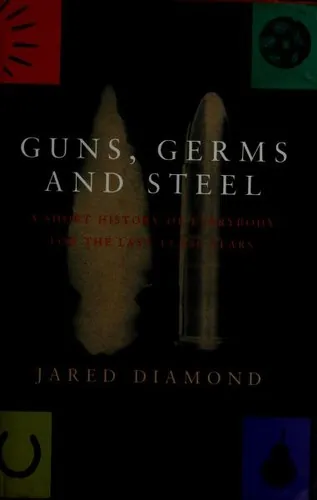
Guns, Germs, and Steel (1997) is the essential Diamond on civilization, and the book that made the big question famous. It began with a question a New Guinean friend asked Diamond: why did you white people develop so much cargo, and we New Guineans so little? The book answers by tracing the deep history of human societies - the domestication of plants and animals, the spread of farming, the development of writing, germs and guns - and arguing that geography and environment, not racial superiority, shaped the different fates of the continents. It is the key to everything else he has written.
Collapse: How Societies Choose to Fail or Succeed (2005) is the essential companion about the fall: Diamond’s study of societies that collapsed - Easter Island, the Maya, the Greenland Norse - and the lessons for our own. It shares the method, with the decline at the center.
The Third Chimpanzee: The Evolution and Future of the Human Animal (1991) is the essential companion about the species: Diamond’s study of how humans are related to the other great apes and what makes us different. It shares the long view, with the species at the center.
Upheaval: Turning Points for Nations in Crisis (2019) is the essential companion about the present: Diamond’s study of how nations cope with crisis, from Finland to Japan to the United States. It shares the method, with the recovery at the center.
Content Notes for Each Book
Guns, Germs, and Steel deals with conquest, disease and the violence of history - treated with Diamond’s analytical seriousness rather than graphic relish. It is best for readers from around age sixteen upward.
Collapse deals with environmental catastrophe and societal failure; it is best for readers from around age sixteen upward.
Upheaval deals with national crises and recovery; it is best for readers from around age sixteen upward.
The Civilization Themes in Diamond’s Work
Three themes give Diamond’s writing on civilization its distinctive shape.
The big question as the method is his signature. Diamond asks the largest questions - why did history unfold differently on different continents? - and his conviction is that the big question is the one worth asking. The books agree that the scale is the point.
The environment as the engine is the second theme. Diamond’s central claim is that geography and environment - the distribution of domesticable plants and animals - shaped the fates of societies, and his conviction is that the environment is the deepest cause. The books agree that the land is the beginning.
The pattern as the lesson is the third theme. Diamond writes the rise and fall of societies as a series of patterns - the collapses that repeat, the crises that nations survive - and his conviction is that the patterns can be learned from. The books agree that the past teaches.
Why Diamond’s Civilizations Endure
Guns, Germs, and Steel won the Pulitzer Prize and has sold millions of copies in dozens of languages, and its endurance rests on a simple achievement: Diamond gave a sweeping, readable answer to a question that had been answered with racism for centuries - why did some civilizations dominate others? - and his answer, geography rather than superiority, became the shared reference point for the debate. The book changed how the rise of civilizations is discussed.
His influence extends beyond the book: Collapse shaped the environmental debate, and the whole sequence of books formed a single argument about the deep causes of human history. But the books endure because of their conviction: that the big question is worth asking, and that the environment is the deepest answer.
Companion Books for Every Diamond Reader
When you have finished Diamond’s own books, these titles extend the same territory.
Sapiens: A Brief History of Humankind by Yuval Noah Harari (2011) is the essential companion about the species: the sweeping history of humankind from the Stone Age to the present. It shares the big history, with the ideas at the center.
The Story of Civilization by Will Durant (1935–1975) is the essential companion about the sweep: the eleven-volume history of civilization from the ancient world to the age of Napoleon. It shares the subject, with the canvas at its widest.
SPQR by Mary Beard (2015) is the essential companion about the single civilization: the history of ancient Rome. It shares the long view, with the classical world at the center.
For the fuller shelves, our best civilizations and culture list gathers the big-picture books, and our meaningful civilizations list extends the shelf into the deeper readings.
A Reading Plan for Book Clubs
Guns, Germs, and Steel generates conversation on every level: the argument, the evidence, the question of what the book’s answer actually means. The most fertile questions are the ones the book refuses to settle: Is geography really the whole story? What does the book ask the reader to make of the role of culture and ideas? Can the environment explain everything without explaining away human agency?
The book also generates the hardest kind of discussion: the question of whether the big history is too big - whether the patterns hold up to the detail - and what the lessons of the collapses mean for our own civilization. Clubs should expect the conversation to range from the Fertile Crescent to the present day, which is exactly the range Diamond intended.
A Note on the Book’s Structure and Editions
Guns, Germs, and Steel is a long book, and readers should know that it is structured as a single argument built in stages - the question, the environment, the spread of farming, the germs, the guns, the continents compared. Diamond’s method is the accumulating case: each chapter adds a layer to the explanation. The book rewards the patient reader with the fullest statement of the argument in print.
How Diamond Works: The Interdisciplinary Method
Diamond is not a historian by training - he began as a physiologist and worked for decades on the birds of New Guinea - and that is exactly what makes his books distinctive. He brings the methods of the natural sciences to the questions of history: the ecology, the geography, the biology, the archaeology, all brought to bear on a single question. His conviction is that the disciplines cannot be kept in separate boxes if the big questions are to be answered, and that the history of civilizations requires the whole toolkit. The reader who wants to understand why the books feel so different from conventional history should hold that interdisciplinary method in mind: the biologist’s eye is what lets Diamond see the patterns the historians missed.
Why the Big Questions Matter
Diamond’s books are built on questions that most historians would consider too large to ask - why did some civilizations dominate others, why do societies collapse, how do nations survive crisis - and his conviction is that the large questions are exactly the ones worth asking. He has said that the small questions can be answered with certainty and the large questions only with probability, but that the large questions are the ones that matter. The reader who reads the books in sequence will watch the same method applied to the rise, the fall and the recovery of societies - and will see why the big questions made Diamond one of the most-read historians in the world.
What Diamond’s Books Teach Together
Read together, Guns, Germs, and Steel and Collapse form a conversation about the fates of societies: the first book explains why some civilizations rose, and the second explains why some fell. Both are built on the same conviction - that the environment and the choices of societies determine their fates - and each one widens the claim: the rise and the fall. That is why the books belong together on the same shelf, and why readers who finish one should not stop there.
Where to Begin and What to Read Next
For readers new to Diamond, Guns, Germs, and Steel is the essential starting point - it is the book that made his name and the foundation of everything else he has written. Readers who want the fall should follow it with Collapse; readers who want the species should move to The Third Chimpanzee; and readers who want the present should finish with Upheaval. And because Diamond is best read beside the other big historians, the natural next shelf pairs him with the fictions of Harari, the sweep of Durant and the structures of Braudel - the environment, the ideas, the story and the deep time, together forming the fullest picture of what civilizations are made of.
Conclusion: The Fates Still Unfolding
Jared Diamond’s contribution to the literature of civilization is a single achievement, and it has entered the language of readers everywhere: the big question. He wrote it into the domestication of wheat and the collapse of Easter Island, and it has outlasted every attempt to answer the question of human inequality with race. His civilizations are the continents; his method is the environment; his craft is the synthesis. Read him, and let the deep history show you what the civilizations were really made of. For more reading paths, explore the Worlds section of our site, or continue with our guide to cultural heritage.