Books Like The No. 1 Ladies' Detective Agency

There is a specific kind of magic in The No. 1 Ladies’ Detective Agency that is almost impossible to describe without making it sound smaller than it is. Precious Ramotswe - Botswana’s first and only female private detective - solves cases that are mostly about people’s hearts: a missing husband, a wayward daughter, a deception that turns out to be kindness. There is no violence, no darkness, no locked room. There is tea, and there is wisdom, and there is a woman who believes that most people are not as different from each other as they pretend to be.
Alexander McCall Smith’s book became a global phenomenon because it offers something increasingly rare: a mystery that is gentle without being soft, wise without being preachy, and warm without being naive. If you have finished it and want more of that feeling, here is where to look.
If You Loved the Detective: Quiet Wisdom Instead of Hardboiled Grit
Ramotswe is the anti-noir detective. She does not drink, she does not brood, and she solves cases by listening - really listening - to people. These books share her method.
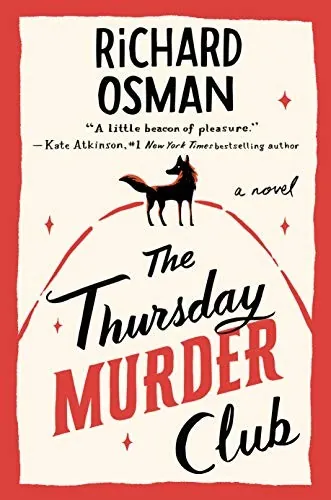
The Thursday Murder Club (Richard Osman)
Four retirees in an English retirement village meet weekly to solve cold cases, and then a real murder arrives. Elizabeth, Joyce, Ibrahim, and Ron are Ramotswe’s spiritual cousins: sharp, warm, and completely uninterested in what anyone thinks of them. They solve the case the way she would - by understanding people, by noticing the small things, by refusing to be rushed.
The comparison to McCall Smith is exact in tone: both books are funny without cruelty, warm without sentimentality, and deeply interested in the inner lives of people who are usually written off. If you loved Ramotswe’s quiet confidence, you will love the Thursday Murder Club’s cheerful audacity.
The Sweetness at the Bottom of the Pie (Alan Bradley)
Flavia de Luce is eleven years old, obsessed with chemistry, and utterly certain that she is the best detective in England. She is a very different personality from Ramotswe - where Ramotswe is patient, Flavia is impatient; where Ramotswe listens, Flavia charges ahead - but they share the core conviction that understanding people is the key to understanding crime.
The book is set in a crumbling English manor in 1950, and its mystery - a dead man in the cucumber patch, a postage stamp, a secret from her father’s past - unfolds with the same gentle confidence that animates McCall Smith’s Botswana. Flavia’s voice is one of the great comic creations of modern fiction, and the book wears its wisdom lightly.
The No. 1 Ladies’ Detective Agency, Read Again for the Method
On a re-read, the cases almost stop mattering. What you notice instead is Ramotswe’s method, which is really a philosophy. She assumes people are telling the truth until they prove otherwise, and she assumes that even liars are lying for understandable reasons. She does not judge; she understands. And because she understands, people tell her things they would never tell the police. The book’s quiet radicalism is its insistence that this - patience, empathy, the willingness to listen - is a form of intelligence, and that the person who possesses it can see further than any forensic scientist. That conviction is the heart of the book, and every book on this list shares it.
If You Loved the Setting: A Place You Want to Live In
The greatest character in McCall Smith’s book may be Botswana itself - the sky, the dust, the acacia trees, the red earth, the sense of a country finding its way. These books are set in places you will want to move to.
The No. 1 Ladies’ Detective Agency Series Itself
The first book is only the beginning. McCall Smith has written more than twenty volumes following Ramotswe, her husband Mr. J.L.B. Matekoni, and the formidable assistant detective Grace Makutsi, and the series is remarkable for how it grows without losing its voice. The cases get no darker, but the characters deepen: Matekoni’s melancholy, Makutsi’s ambitions, the slow accumulation of a life lived with attention. If you loved the first book, the great news is that there is a whole country of it waiting - and the books are best read slowly, one every few months, like visits to old friends.
The Guernsey Literary and Potato Peel Pie Society (Mary Ann Shaffer and Annie Barrows)
A novel told entirely in letters, set in the aftermath of the Second World War on the island of Guernsey - a place the war touched hard and left strange. A writer named Juliet Ashton begins corresponding with the members of a book club that was invented, in 1941, as an excuse to break curfew, and the letters reveal the island’s story: occupation, resistance, loss, and the books that kept people alive.
It is a book about community in the way McCall Smith’s is: the sense that a place is made of its people, and that its people are made of their stories. The letter form gives it the same gentle intimacy as Ramotswe’s cases - you are always overhearing conversations that were not meant for you.
The Secret Life of Bees (Sue Monk Kidd)
Set in South Carolina in 1964, The Secret Life of Bees is about a girl, a jar of honey, and a search for a mother that leads her to a beekeeping family of three sisters. Like McCall Smith’s book, it is a novel about women, community, and the small acts of care that hold a world together - and it is narrated with the same unhurried warmth.
The bees are the book’s central image: a hive is a community that works because everyone has a job and everyone matters, and the sisters’ household is a hive in exactly that sense. If you loved the way Ramotswe’s Botswana feels like a place where people take care of each other, you will recognize the same feeling on the porch of the Boatwright sisters.
If You Loved the Gentle Mysteries: Puzzles Without Darkness
The cases in McCall Smith’s books are small, and that is the point: a mystery does not need a body to be interesting. These books prove it.
The Sweetness at the Bottom of the Pie (Alan Bradley)
Flavia’s mystery has a body, but the book’s heart is gentle: it is about a girl who wants to be taken seriously, a father who is hiding a past, and a village full of people with secrets they are not ashamed of. The crime is the occasion, not the point. The point is Flavia - her voice, her confidence, her chemistry experiments, her utterly serious approach to a world that keeps underestimating her.
The Thursday Murder Club (Richard Osman)
Osman’s mysteries have bodies too, but they are solved the Ramotswe way: by listening to people, by understanding the long histories that explain the present moment, and by enjoying the process enormously. The books are cozies in the best sense - warm, funny, and humane - and they share McCall Smith’s belief that the solution to a mystery is always, in the end, a solution about people.
If You Loved the Warmth: Books That Feel Like a Hug
There is a word for the feeling McCall Smith’s book gives you, and it is the word that made the book famous: comfort. These books deliver it in different registers.
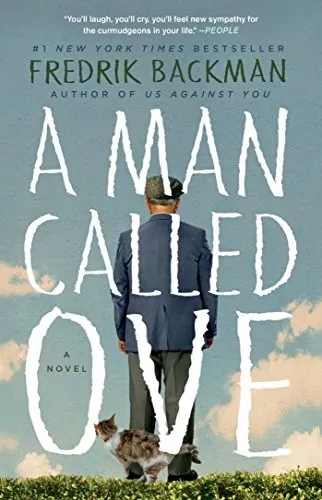
A Man Called Ove (Fredrik Backman)
Ove is a grumpy old man who has decided that the world has gone soft, and he is prepared to be angry about it until the day he dies - which he keeps trying to arrange. What follows is a comedy about a neighborhood - a cat, a pregnant woman, a series of increasingly absurd interruptions - that keeps pulling him back into life.
The connection to McCall Smith is temperamental: both books are about the discovery that other people, infuriating as they are, are also the point. Ove is the least Ramotswe-like character imaginable - he is her opposite in every way - and the book’s warmth comes from watching him be worn down by kindness. If you loved Ramotswe’s belief in people, this is the book that tests that belief from the other side.
The House in the Cerulean Sea (T. J. Klune)
Linus Baker is a by-the-book caseworker for the Department in Charge of Magical Youth, sent to a remote island to evaluate an orphanage for extraordinary children - a gnome, a sprite, a wyvern, a boy who may be the Antichrist. He expects to find problems. He finds, instead, a family.
The book is a love letter to found family, and it shares McCall Smith’s gentle conviction that people - even the most unlikely people - are worthy of care. It is the warmest book on this list, and it delivers the same feeling as the Ladies’ Detective Agency: the sense that the world is full of people doing their best, and that paying attention to them is its own reward.
The Comfort of the Ordinary
There is a reason the phrase “comfort read” gets attached to McCall Smith’s series more than almost any other. The books are built on the ordinary: cups of tea, drives in the little white van, the daily rituals of Mma Ramotswe’s life and the lives of her clients. Nothing in them is spectacular, and that is exactly the point. The mysteries are solved by paying attention to the ordinary - to what people say when they think no one is listening, to the small inconsistencies that reveal a larger truth. The books share this with the other titles on this shelf: they trust that everyday life is full of meaning, that a conversation over tea can be as revealing as an interrogation, and that the quietest person in the room often has the most interesting story. In a reading culture that often equates seriousness with darkness, these books make a radical offer: a mystery that is gentle, a wisdom that is warm, and a world you would genuinely like to live in. That offer is why they endure, and why readers return to them the way they return to old friends - the way Mma Ramotswe herself would recommend, with a pot of tea and no need to hurry.
Building Your Own Agency: A Reading Order
Here is a suggested path that moves from the closest match outward:
- Start with The Thursday Murder Club for the same tone in a different key.
- Move to The Sweetness at the Bottom of the Pie for the detective with a different personality.
- Try The Guernsey Literary and Potato Peel Pie Society for community in wartime.
- Pick up The House in the Cerulean Sea for found family and pure warmth.
- End with A Man Called Ove when you want the warmth with teeth.
For more books with this gentle spirit, our family-friendly fiction reading notes explain what makes a story work for readers of every age, and our meaningful books without explicit content list gathers more stories that are rich without being dark. The stories section of our site is full of guides like this one, so the warmth never has to end.
The Case for Gentleness
The No. 1 Ladies’ Detective Agency endures because it makes a radical argument: that kindness is a form of intelligence, that listening is a form of action, and that a mystery solved with tea and patience is worth a hundred solved with violence. Precious Ramotswe does not need to be hard to be sharp, and she does not need to be dark to be deep. The books that follow in her wake - Osman’s retirees, Backman’s Ove, Klune’s caseworker - are all trying to build the same thing: a world where people pay attention to each other, and where that attention is enough. It is a small world, but it is a real one, and it is always open for business - the office is in Zebra Drive, the tea is always on, and every case, however small, is treated with the same grave courtesy as the last.
Frequently Asked Questions
What makes a book similar to The No. 1 Ladies' Detective Agency?
Which book is closest to The No. 1 Ladies' Detective Agency?
Are there other books like The No. 1 Ladies' Detective Agency for younger readers?
What should I read after The No. 1 Ladies' Detective Agency?
Is The No. 1 Ladies' Detective Agency suitable for all readers?
Where can I find more clean reads like this?
Featured Recommendations


Raining Book Editorial
The Raining Book editorial team curates the best book recommendations and reading guides for every type of reader.