Books Like The One Hundred Year Old Man

Some books make you laugh on the first page and keep you laughing to the last, while sneaking in something more along the way. The 100-Year-Old Man Who Climbed Out the Window and Disappeared by Jonas Jonasson is exactly that kind of book. It opens on Allan Karlsson’s hundredth birthday, at his retirement home in Sweden, where the staff is preparing a party he has no intention of attending. Allan climbs out the window, boards a bus, and - through a series of increasingly absurd coincidences - finds himself at the center of a criminal caper involving a suitcase full of money, a gang of bikers and the Swedish police.
Meanwhile, the novel cuts back to Allan’s life story, and here is where the joke deepens: this ordinary Swedish man, who has never voted and never cared about politics, has somehow been present for every major event of the twentieth century. He has made explosives for Franco, dined with Churchill, met Stalin, helped develop the atomic bomb and accidentally started the Cold War. The novel is a deadpan tour of modern history, told by a man who mostly wanted to be left alone with his bottles of vodka. If that mixture of wry humor and historical mischief is what you want, the books below are kindred spirits.
Why Allan Karlsson Is So Hard to Resist
The genius of Jonasson’s novel is its narrator’s complete lack of interest in the things that drive other people. Allan does not care about politics, ideology, money or fame; he cares about vodka, friendship and the occasional good meal. So when he finds himself in the room with Mao or Truman or a mob boss, he simply behaves like himself - honest, unfazed and slightly bored - and the comedy writes itself.
The structure is also a masterstroke. By alternating Allan’s present-day caper with his century-spanning autobiography, Jonasson gets to have it both ways: the reader gets a fast, funny thriller in the present and a picaresque comedy of errors in the past. And because Allan narrates his own life with such placid matter-of-factness - “I blew up the bridge, ate some fish, and moved on” - the absurdity of twentieth-century history becomes the joke. It is history as told by a man who refused to be impressed by it.
The Accidental Further Adventures of the Hundred-Year-Old Man by Jonas Jonasson
If you finish the first book and want more of Allan, the sequel delivers. Allan and his friend Julius are back, and this time they find themselves in North Korea, where Allan’s habit of stumbling into the center of world events continues with a series of encounters that are as improbable and delightful as the first book’s.
The sequel does not break new ground - it offers more of the same deadpan comedy, the same historical name-dropping, the same vodka - but for readers who loved the first book, that is exactly what they want. Jonasson knows his character and his formula, and he executes both with evident relish. Read it immediately after the first book, while the tone is fresh in your mind.
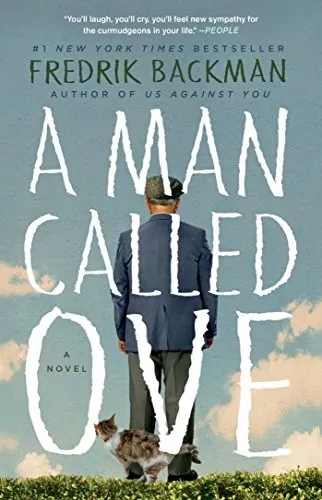
A Man Called Ove by Fredrik Backman
Ove is a grumpy, rule-obsessed widower who has decided that the world is full of idiots and that he has had enough of it. His plan to leave it keeps being interrupted by the chaotic young family next door, who need his help with everything from a broken radiator to a parking dispute - and slowly, against his will, Ove is pulled back into the world of the living.
The kinship with Allan Karlsson is real: both are elderly Swedish men who are prickly, set in their ways and secretly more lovable than they want to be. But where Allan is carried along by history’s absurdity, Ove is carried along by his own stubborn heart, and the comedy in Backman’s book is warmer and sadder. Both novels use a curmudgeon to smuggle in a story about love and community, and readers of one almost always love the other.
The Unlikely Pilgrimage of Harold Fry by Rachel Joyce
Harold Fry is a quiet, ordinary retired man whose life has shrunk to the size of his seaside town. Then a letter arrives from a dying former colleague, and Harold decides to walk six hundred miles to see her - in his yachting shoes, without a map, on the strength of a promise. The journey transforms his understanding of his own life.
Where Allan Karlsson blunders through history, Harold Fry plods through the English countryside, and the register could hardly be more different - Jonasson is a comedian, Joyce a poet. But both novels share a fascination with elderly protagonists who are anything but finished, and both are built on the same quietly radical premise: that an ordinary old man can be the hero of his own life, and that it is never too late for a new chapter. If Allan’s chaos made you smile, Harold’s quiet courage will move you.
The 100-Year-Old Man: History as Comedy
One of the great pleasures of Jonasson’s novel is its use of history. Allan is present for the Spanish Civil War, the Manhattan Project, the construction of the Berlin Wall and the fall of the Soviet Union, and in every case he treats the epochal as merely incidental. The joke is always the same and always fresh: the great men of history are just people, and the great events are just things that happened while Allan was trying to find a drink and a friend.
This is a fundamentally comic vision of history, and it is worth saying that the book is entirely in jest - Jonasson is not trying to revise history, only to have fun with it. Readers who know their twentieth century will enjoy recognizing the real figures Allan keeps bumping into; readers who do not will simply enjoy the ride. Either way, the book is a reminder that comedy is a way of looking at the world, and that looking at history with a raised eyebrow is its own kind of wisdom.
The Hundred-Year-Old Man and the Question of a Life Well Lived
Beneath the comedy, the novel asks a real question: what does a good life look like? Allan’s answer is unfashionable but oddly appealing. He has not built an empire, raised a family or left a mark on the world - the world has left marks on him, and he has mostly tried to stay out of the way. And yet he is content, loyal to his friends and entirely at peace with himself. The novel’s quiet argument is that a life measured by ambition is not the only kind of life worth living - that peace, friendship and a sense of humor are their own achievement.
If you want to read more about what makes a life feel meaningful, our collection of the best books about responsibility at home looks at the quiet virtues of showing up for the people around you, and our responsibility at home themes, values and reading notes explores the ideas behind those stories. The relationships section is full of recommendations like these.
Reading the Novel as a Companion to History
One of the quiet pleasures of The 100-Year-Old Man is how much it rewards readers who know a little history. Allan’s autobiography is a tour of the twentieth century’s biggest events and characters, and Jonasson has enormous fun placing his placid hero at the center of them. Knowing the real history makes the jokes land harder, and the book works beautifully as a light companion to a history course or a documentary binge.
But the novel also works for readers who know nothing about the period. The jokes are self-contained: you do not need to know who Franco was to laugh at Allan’s deadpan account of making explosives for him. That accessibility is part of the book’s genius - it is history for people who do not like history, comedy for people who do, and a reminder that the grandest events are always, from a certain angle, just people doing things.
The Art of the Deadpan
Jonasson’s comedy is a masterclass in deadpan delivery. The humor never raises its voice: Allan describes meeting Stalin, blowing up a bridge or accidentally starting an international incident with the same matter-of-fact tone he would use to describe a meal. The gap between the enormity of what is happening and the placidity of the narrator is where the comedy lives, and Jonasson never breaks character to wink at the reader.
That restraint is harder than it looks. Comic writing of this kind depends on absolute tonal control - one nod to the audience and the spell breaks - and Jonasson sustains it across hundreds of pages. It is the same craft that makes the best deadpan comedy in film and television work, transplanted into prose, and it is a large part of why the book has traveled so well across languages and cultures.
Choosing Your Next Read
If you want more of Allan immediately, read The Accidental Further Adventures of the Hundred-Year-Old Man. If you want a warmer, sadder Swedish curmudgeon, A Man Called Ove is the one. If you want the same elderly-protagonist energy in a quiet, English key, The Unlikely Pilgrimage of Harold Fry will carry you. And if you simply want to laugh, Jonasson’s other novels - including The Girl Who Saved the King of Sweden - deliver more of the same deadpan delight.
Conclusion
The 100-Year-Old Man Who Climbed Out the Window and Disappeared is a book that refuses to take the twentieth century seriously, and in doing so, it takes something even more important seriously: the right of an ordinary person to live life on his own terms. Allan Karlsson is the ultimate unlikely hero - a man who never wanted to change the world and somehow kept stumbling into it anyway. The books gathered here share his spirit, each in its own voice, and any of them will leave you smiling, the way Allan leaves everyone - slightly bewildered, and very glad to have met him.