Best Books About Responsibility by Stephen R. Covey
Introduction: The Space Between Stimulus and Response
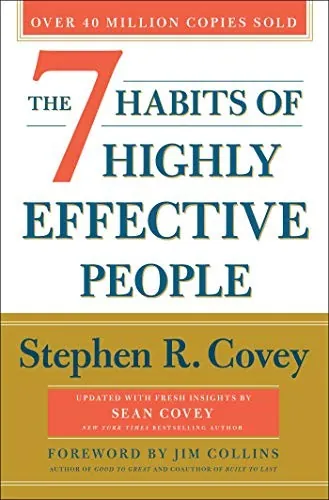
Stephen R. Covey wrote the most influential book on responsibility of the late twentieth century. The 7 Habits of Highly Effective People (1989) has sold more than forty million copies, and its first habit - be proactive - is the very definition of responsibility: the freedom to choose one’s response. Covey, drawing on the psychiatrist Viktor Frankl’s discovery in the concentration camps, made the space between stimulus and response the foundation of his whole system: we cannot always choose what happens to us, but we can always choose how we respond - and that choosing is responsibility.
This guide maps Covey’s books on responsibility, from the essential habits to the companion works that developed his theme, with a reading order, honest content notes, the themes that make his work cohere, and companions for when you want more.
The Responsibility Books in Reading Order
The 7 Habits of Highly Effective People (1989) is the essential Covey, and the book that defined the modern practice of responsibility. Its structure is famous: three habits of private victory - be proactive, begin with the end in mind, put first things first; three habits of public victory - think win-win, seek first to understand, then to be understood, synergize; and the seventh habit that renews the rest - sharpen the saw. The first habit is the hinge: Covey’s account of the space between stimulus and response, of proactive people driven by values rather than circumstances, and of the circle of concern versus the circle of influence - the insight that responsibility means working on what you can affect rather than worrying about what you cannot. The book is dense with stories from his family and his consulting, and it rewards rereading more than almost any other book in its genre.
First Things First (1994), written with A. Roger Merrill and Rebecca R. Merrill, is the essential companion about the daily practice of responsibility: the argument that effectiveness is not about doing more but about doing what matters - organizing life around the big rocks of one’s deepest values rather than the urgent noise. It is the fullest working-out of the responsibility to choose: not just to respond, but to respond to the right things. Content note: a self-management book; for readers from around age sixteen upward.
Principle-Centered Leadership (1990) is the essential companion for responsibility at scale: Covey’s application of the same principles to organizations - how to lead teams, institutions and families from a center of unchanging principles, taking responsibility for the culture rather than reacting to it. Content note: a business book; for readers from around age sixteen upward.
Content Notes for Each Book
Covey’s books are written for adults but contain nothing beyond business examples and family stories; there is no violence, no explicit content and no language. The 7 Habits is accessible to motivated readers from around age fourteen or fifteen upward and is routinely taught to teenagers in adapted form. First Things First and Principle-Centered Leadership are somewhat denser and best for readers from around age sixteen upward. Covey’s prose is earnest and repetitive by design, and the books are best read slowly, with the exercises done.
Readers choosing among Covey’s books will find our best responsibility and duty reading list helpful for matching the right book to the right reader, and our best truth and integrity reading list useful for the character questions his principles raise.
The Responsibility Themes in Covey’s Work
Three themes give Covey’s treatment of responsibility its distinctive shape.
Responsibility as the power to respond is his central claim. Covey’s definition of responsibility is literal: the ability to respond - the freedom, held in the space between stimulus and response, to choose one’s reaction rather than be driven by it. His responsibility is the argument that no circumstance can take away the choice of response.
Proactivity versus reactivity is the second theme. Covey’s great distinction is between the proactive person, driven by values, and the reactive person, driven by circumstances - the weather, the mood, the criticism. His responsibility is the practice of living from the inside out, taking ownership of one’s response and one’s life.
The circle of influence is the third theme. Covey’s practical insight is the two circles: the circle of concern, full of things we cannot control, and the circle of influence, the things we can. Responsibility is the discipline of working the inner circle - and the discovery that as the influence circle grows, the concern circle shrinks.
Why Covey’s Responsibility Endures
The 7 Habits has never gone out of print, has sold more than forty million copies, and remains one of the best-selling business books of all time. The reason is simple: Covey wrote about responsibility at the scale of one person’s daily choices, and made the largest questions of character feel like a morning’s habits. His books are the reference point for every conversation about proactivity, choice and principle-based living, and they are read by executives and parents, coaches and teachers with the same seriousness.
His influence extends far beyond business: the habits are taught in schools, the space between stimulus and response is used in therapy, and his account of responsibility has shaped a generation of leadership literature. But the books endure because of their seriousness - an earnestness that never becomes naive, a moral clarity that never becomes rigid, and a respect for the reader that never condescends. Covey wrote the essential books of responsibility, and no one has written better ones since.
Companion Books for Every Covey Reader
When you have finished Covey’s own books, these titles extend the same territory.
Man’s Search for Meaning by Viktor E. Frankl (1946) is the essential companion as the source: the psychiatrist’s account of the last human freedom - the freedom to choose one’s attitude - which is the discovery Covey’s whole system rests on.
Meditations by Marcus Aurelius (c. 180 AD) is the essential companion as the ancient practice: the emperor’s private journal of responsibility - the Stoic discipline of controlling what is up to us and accepting what is not.
Start with Why by Simon Sinek (2009) is the essential companion for the purpose side: the argument that the why - the cause - is the source of motivation, the complement to Covey’s character.
For the practical questions of duty and honesty, our a thoughtful guide to responsibility and duty and our a thoughtful guide to truth and integrity gather the framing readers need.
A Reading Plan for Book Clubs
The 7 Habits is structured to be worked through rather than merely read, which makes it an unusual and rewarding club book: each meeting can take one habit, with members reporting on the exercises between sessions. The most fertile questions are the ones the book refuses to settle: Where is each member reactive - and what would being proactive look like in that exact situation? Which items are in each member’s circle of concern but not their circle of influence, and what would it cost to release them?
The book also generates the hardest kind of discussion: the claim that responsibility is the power to respond - which challenges every reader who has blamed circumstance, weather or other people for their choices. Clubs should expect the conversation to turn inward, and should give members room to be honest - the book rewards exactly the self-examination it teaches.
Clubs preparing without spoilers will find our meaningful responsibility and duty reading list useful for framing the themes.
A Note on Reading Covey
Covey is often a reader’s first serious encounter with the character ethic, and the encounter works best with two expectations set in advance. The first is that the books are systems, not essays: the habits build on each other, the principles compound, and the value is in the working-through rather than the reading-once. The second is that Covey’s earnestness is deliberate: he wrote from a conviction that character is the foundation of everything, and the reader who finds the tone repetitive is reading the method - the repetition is the practice, the circling is the teaching. The reader who does the exercises, reports on the habits and returns to the book at different stages of life reads Covey as he intended to be read.
A Note on the Book’s Structure and Editions
The 7 Habits has a deliberate architecture: private victory before public victory, principles before techniques, and a final habit that renews the rest. Readers should know that the book is meant to be lived, not just read - each chapter ends with suggestions that are the point of the book, and the habits compound only if practiced. Covey revised the book over decades, and later editions include new material from his last years. The book rewards rereading at different stages of life: the habits mean something different at twenty-five and at fifty, which is why it remains a companion rather than a one-time read. Read it once for the framework, and again for the practice; the second reading is where the book becomes a discipline rather than a survey.
What Covey’s Books Teach Together
Read together, Covey’s books form a single curriculum in responsibility, each one supplying a layer the others assume. The 7 Habits supplies the foundation - the space between stimulus and response, the first habit of proactivity that defines responsibility itself. First Things First supplies the daily practice - the discipline of choosing the big rocks, the responsibility to respond to the right things. Principle-Centered Leadership supplies the scale - the responsibility of the leader for the culture, applied to organizations and families. Each book is a layer of the same argument, and they are best read in roughly that order, because the later books presume the earlier disciplines. That is why they belong on the same shelf: the reader who works through all three moves from the personal space of choice to the organizational practice of responsibility - from the individual habit to the leadership of a whole culture, which is exactly the arc Covey believed responsibility must travel.
Conclusion: The Space Where Freedom Lives
Stephen R. Covey’s contribution to the literature of responsibility is a single insight, and it has entered the language: between stimulus and response there is a space, and in that space is our power to choose. He wrote it into seven habits, and it has outlasted every management fad since. His responsibility is not blame and not burden; it is the power to respond, the practice of proactivity, and the circle of influence. His books are dense, and they are inexhaustible. Read them, and let Covey show you what responsibility is actually for. For more reading paths, explore the Ideas section of our site.