Best Responsibility and Duty to Read
Introduction: The Idea That Holds a Life Together
Responsibility and duty are the ideas that hold a life together - and the ideas most often tested when holding it together is hard. Every reader meets them sooner or later, usually through a story: a lawyer who takes a case he cannot win, a doctor who stays in a plague-stricken city, a boy who carries a burden he did not ask for. The best books about responsibility do not lecture; they show the weight being carried, and they make the reader feel why carrying it matters.
This reading list gathers the essential books about responsibility and duty across three registers: fiction, memoir and philosophy. Each entry includes honest content notes, so you can choose the right book for the right reader, and a sense of how the books speak to each other.
The Essential Fiction
To Kill a Mockingbird by Harper Lee (1960) is the essential novel of responsibility and the book most readers meet first: the story of Scout Finch growing up in Maycomb, Alabama, while her father - the lawyer Atticus Finch - defends a Black man falsely accused of assault. The novel’s argument is that responsibility is a personal act: Atticus takes the case knowing he will lose, because his children and his conscience are watching. Its famous lesson - that you never understand a person until you climb into their skin and walk around in it - is the whole of its moral system. Content note: the novel uses racial slurs in dialogue and deals with racism and a trial; it is usually read from middle school upward, with discussion.
The Plague by Albert Camus (1947) is the essential novel of duty under pressure: the story of a North African city sealed off by an epidemic, and of Dr. Rieux, who keeps treating patients long after hope has gone. The novel’s quiet argument is that duty is not heroic but ordinary - “the only way to fight the plague is with decency” - and that the decent thing is simply to do your job. It is the essential book for anyone who has ever asked what one person can do against a problem too large to solve. Content note: an adult novel about suffering and death, intense but not graphic; appropriate for readers from around age sixteen upward.
A Man Called Ove by Fredrik Backman (2012) is the essential novel of responsibility in ordinary life: a grumpy old man whose whole identity is his sense of duty - to his routines, his neighborhood, his dead wife’s memory - and who is slowly pulled back into caring for the people around him. It is the book that shows responsibility not as a grand moral gesture but as the thousand small things a person does because they are his to do. Content note: clean, warm and funny; deals with grief; appropriate for readers from around age fourteen upward.
The Essential Memoir and Nonfiction
Man’s Search for Meaning by Viktor Frankl (1946) is the essential memoir of responsibility in the hardest conditions: Frankl’s account of surviving the Nazi concentration camps, and his argument that the last human freedom is the freedom to choose one’s response. His central claim is that “each man is questioned by life; and he can only answer to life by answering for his own life” - responsibility, in Frankl’s account, is not a burden laid on us but the very substance of meaning. It is the book that connects responsibility to the deepest question there is. Content note: an adult memoir that includes the horrors of the camps, handled with restraint; appropriate for mature readers.
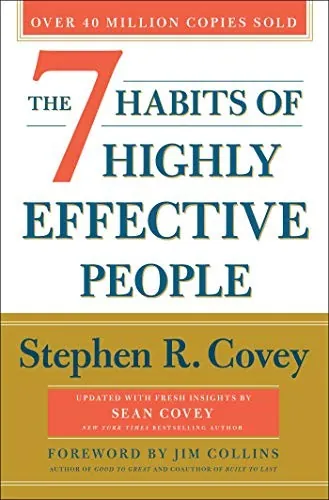
The 7 Habits of Highly Effective People by Stephen R. Covey (1989) is the essential modern book about responsibility as a skill: Covey’s first habit - “be proactive” - is built on the distinction between the things you can control and the things you cannot, and the claim that responsible people focus their energy where it can actually act. He even plays on the word itself: responsibility as “response-ability,” the ability to choose your response. Content note: clean and practical; appropriate for readers from high school upward.
Meditations by Marcus Aurelius (c. 170–180 CE) is the essential book of duty practiced daily: the private notebooks of a Roman emperor, written for himself, in which he rehearses the same obligations over and over - to his work, to his fellow citizens, to the present moment. It is the book that shows duty as a discipline rather than a mood, and it is the essential companion for anyone who must keep doing their job when no one is watching. Content note: entirely clean; accessible in good translations; appropriate for readers from high school upward.
The Essential Books of Ideas
The Nicomachean Ethics by Aristotle (c. 350 BCE) is the essential philosophical account: the argument that the good life is the life of virtue, and that virtue is built by habit - by doing the responsible thing until it becomes who you are. Aristotle’s account of practical wisdom, of choosing well in particular situations, is the foundation of the whole Western literature of responsibility. Content note: demanding in places; appropriate for mature readers.
Groundwork of the Metaphysics of Morals by Immanuel Kant (1785) is the essential book about duty itself: Kant’s argument that the only thing good without qualification is a good will, and that duty means acting according to a rule you could will for everyone. His famous categorical imperative - act only on the maxim you could wish to become a universal law - remains the sharpest test of responsibility in philosophy. Content note: demanding and abstract; for readers prepared to work; the ideas repay the effort.
Letter from Birmingham Jail by Martin Luther King Jr. (1963) is the essential essay about the duty to disobey: King’s defense of civil disobedience, written from a Birmingham jail cell, in which he distinguishes between just and unjust laws and argues that a person has a moral duty to obey the just law and to disobey the unjust one. It is short, an afternoon’s read, and it is the essential demonstration that duty can require defiance as well as compliance. Content note: entirely clean; appropriate for readers from around age fourteen upward.
How These Books Speak to Each Other
The power of reading about responsibility is the power of the conversation between the books. To Kill a Mockingbird shows responsibility as one person’s moral choice; The Plague shows the same choice repeated daily; Man’s Search for Meaning argues that the choice is the last freedom; Meditations shows the practice; Kant gives the test; King shows when the duty is to break the rule.
The essential question running through all of them is the one Frankl made precise: what are you answerable for, and to whom? That question - responsibility as answerability - is the deepest tool the literature offers, and it is the question every reader can bring to every book on this list.
The Essential Books of Character and Growth
Responsibility is not only about systems and obligations; it is also about the people who carry them, and the deepest books about responsibility are often the ones about character - what it takes to be the person who answers for things when answering is costly.
The Giver by Lois Lowry (1993) is the essential novel of responsibility for younger readers: in a community where all burdens have been smoothed away, a boy named Jonas is chosen to receive the community’s memories - and discovers that receiving them means carrying them. It is the novel that introduces the idea that responsibility is a burden accepted, not imposed, and that some burdens are worth carrying for others. Content note: entirely clean; appropriate for readers from around age ten upward.
I Am Malala by Malala Yousafzai (2013) is the essential memoir of responsibility for young readers and adults alike: the story of a Pakistani schoolgirl who spoke out for girls’ education, was shot by the Taliban, and continued speaking. It is the book that shows responsibility as vocation - the sense that she was answerable for something larger than herself, and that the answer did not change when the cost became extreme. Content note: an accessible memoir that includes the shooting and its context; appropriate for readers from around age twelve upward, with discussion.
The Death of Ivan Ilyich by Leo Tolstoy (1886) belongs here too: the story of a judge who discovers, dying, that he has answered for nothing that mattered - the career, the respectability, the propriety were a life he never chose. It is the essential warning that responsibility begins with the life you actually live. Content note: short, entirely clean, and intense; appropriate for mature readers.
Our thoughtful guide to responsibility and duty extends this reading into the ideas themselves, our kindness and compassion reading list connects duty to care, and our purpose reading list shows where responsibility meets meaning.
Content Notes Summary
The books on this list span every age range. For family reading and young readers: The Giver (from around age ten), I Am Malala (from around age twelve), To Kill a Mockingbird (from middle school, with discussion). For young adults: A Man Called Ove (from around age fourteen), Letter from Birmingham Jail (from around age fourteen). For mature readers: The Plague, Man’s Search for Meaning, The Death of Ivan Ilyich, Meditations, the Nicomachean Ethics, and Kant’s Groundwork (the last three demanding in places). None of the books contain explicit content; the notes are about emotional weight and historical context, which are real and worth respecting. Our thoughtful guide to responsibility and duty and our kindness and compassion reading list extend this list in two directions, and our purpose reading list connects responsibility to the meaning it serves.
A Reading Plan for Every Kind of Reader
For the reader who wants a single book: start with To Kill a Mockingbird. For the reader who wants responsibility in real life: start with Man’s Search for Meaning. For the reader who wants the idea: start with the Nicomachean Ethics, or with the more accessible Letter from Birmingham Jail. For the young reader: The Giver. For the book club: read The Plague and Man’s Search for Meaning together, and let the novel and the memoir argue with each other about what one person can do.
Conclusion: The Weight That Makes a Life
Responsibility and duty are the ideas every reader must face, and the best books about them do not answer the question - they show the weight being carried. They show responsibility as something lived: by a lawyer in a small town, a doctor in a sealed city, a girl who kept speaking after she was shot for it. The books on this list span fiction, memoir and philosophy, and together they form a complete education in the subject: what responsibility is, what it costs, what it requires, and why it is worth carrying even when it breaks you. Start with the book that calls to you, and let the conversation between the books carry you deeper. For more reading paths, explore the Ideas section of our site.