Best Books About Ethical Leadership by Nelson Mandela
Introduction: The Long Walk as the Lesson
Nelson Mandela wrote the essential autobiography of ethical leadership in the twentieth century. Long Walk to Freedom (1994) tells the story of a boy from a Thembu village who became a lawyer, a revolutionary, a prisoner for twenty-seven years and the first president of a democratic South Africa - and it does so in a voice of extraordinary calm, generosity and purpose. Mandela’s leadership is the purest modern example of the idea that power is service, that forgiveness is strength, and that the leader who cannot transcend his own grievances cannot lead his people out of them.
This guide maps Mandela’s books on ethical leadership, from the essential autobiography to the posthumous collections that completed his voice, with a reading order, honest content notes, the themes that make his work cohere, and companions for when you want more.
The Leadership Books in Reading Order
Long Walk to Freedom (1994) is the essential Mandela, and one of the essential memoirs of the twentieth century. It moves through four movements: the childhood in the Transkei and the Thembu royal house; the education in law and politics in Johannesburg, where Mandela joined the African National Congress and the struggle against apartheid; the decades of activism, trial and imprisonment, beginning with the Rivonia Trial that sentenced him to life in 1964; and the long negotiation - conducted partly from his prison cell - that ended apartheid and elected him president in 1994. The memoir is remarkable for what it does not do: it does not rage, it does not settle scores, and it treats even the architects of apartheid as people to be understood and, ultimately, negotiated with. Its calm is the most powerful thing about it, and it is the calm of a man who decided early that bitterness was a form of imprisonment he would refuse.
Conversations with Myself (2010) is the essential companion in a different key: a posthumous collection of Mandela’s letters, diary entries, notebooks and recorded conversations - the private man behind the public figure, including the letters he was forbidden to write and the reflections he never published. It is the book for readers who want to see the leadership from the inside, in the raw material rather than the polished account. Content note: an adult collection with the era’s politics; for readers from around age sixteen upward.
Dare Not Linger: The Presidential Years (2017), written with Mandla Langa from Mandela’s unfinished manuscript, is the essential companion for the last act: the story of Mandela’s presidency, 1994 to 1999 - the building of the new South Africa, the Truth and Reconciliation Commission, the negotiation of a nation’s future - told with the same calm and the additional wisdom of hindsight. Content note: adult history with the era’s politics; for readers from around age sixteen upward.
Content Notes for Each Book
Long Walk to Freedom is an adult memoir dealing with apartheid - the pass laws, the forced removals, the violence of the state and the resistance - and with Mandela’s imprisonment, including the hard labor on Robben Island. It is not graphic: Mandela writes with restraint and dignity throughout. The material is nonetheless weighty, and the book is usually read from around age sixteen upward, with discussion. It is long - most editions run well over six hundred pages - but it is written in prose so clear and calm that it reads more quickly than its length suggests.
Conversations with Myself and Dare Not Linger cover the same territory from different angles and are best for the same ages. None of the books contain gratuitous content; the weight is historical and moral, and it is the point.
Readers choosing among Mandela’s books will find our family-friendly ethical leadership reading list helpful for matching the right book to the right reader, and our family-friendly moral dilemmas reading list useful for the ethical questions his life raises.
The Leadership Themes in Mandela’s Work
Three themes give Mandela’s treatment of ethical leadership its distinctive shape.
Leadership as service is his central claim. Mandela’s authority came from the people and was held for them; his memoir is punctuated by the ANC’s structures, the consultations, the committees, the long discipline of collective leadership. His leadership is never solitary - it is the leadership of a movement, and his greatness is inseparable from his refusal to be greater than the cause.
Leadership as the refusal of bitterness is the second theme. Mandela’s most famous statement of it is in the memoir itself: leaving prison, he knew he had to leave his bitterness behind or remain imprisoned. His leadership is the practice of that decision - in the negotiations, in the prison years, in the presidency - and his forgiveness is presented not as weakness but as the hardest and most strategic strength.
Leadership as reconciliation is the third theme. Mandela’s presidency is the story of a nation told to forgive itself: the Truth and Reconciliation Commission, the rugby field where he wore the Springbok jersey of his former oppressors, the invitations to his jailers. His leadership is the argument that a nation is built by those willing to make peace with its past - and that the ethical leader is the one who can see the enemy of yesterday as the partner of today.
Why Mandela’s Leadership Endures
Long Walk to Freedom has sold millions of copies worldwide and remains one of the most widely read autobiographies ever written. The reason is simple: Mandela wrote about ethical leadership at the scale of one man’s life, and made the largest questions of power and forgiveness feel like a walk you could take with him. His story is the modern proof that the leader who forgives is stronger than the leader who retaliates, and his calm voice has become the reference point for every conversation about reconciliation.
His influence extends far beyond South Africa: the Truth and Reconciliation Commission became a model for divided societies everywhere, his method of negotiating with enemies has been studied in politics and business, and his life has become the standard example of leadership through moral authority rather than force. But the book endures because of its voice - a dignity that never becomes distance, a purpose that never becomes dogma, and a generosity that extends even to the men who imprisoned him. Mandela wrote the essential memoir of ethical leadership, and no one has written a better one since.
Companion Books for Every Mandela Reader
When you have finished Mandela’s own books, these titles extend the same territory.
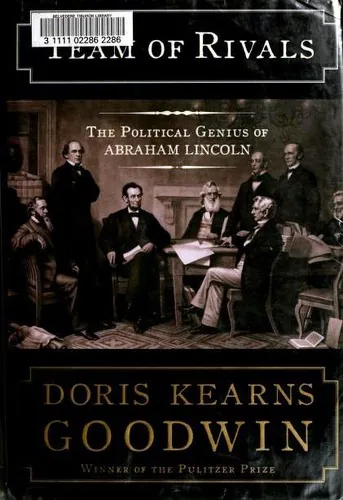
Team of Rivals by Doris Kearns Goodwin (2005) is the essential companion: the study of Abraham Lincoln’s leadership through empathy and reconciliation - the American parallel to Mandela’s method, and the proof that the pattern is ancient.
Long Walk to Freedom is also illuminated by The State vs. Nelson Mandela by Joel Joffe (2007), the lawyer’s account of the Rivonia Trial - the courtroom drama that sentenced Mandela to life and gave him the platform from which he eventually won.
Mandela’s Way by Richard Stengel (2009) is the essential companion as a distillation: the fifteen lessons in leadership drawn from Stengel’s years working with Mandela on the autobiography - the practical manual extracted from the life.
For the practical application of the same ideas, our a thoughtful guide to ethical leadership and our a thoughtful guide to moral dilemmas gather the modern titles that extend his questions.
A Reading Plan for Book Clubs
Long Walk to Freedom is a commitment, but it is the rare memoir that generates conversation on every level: the history, the man, the lessons. The most fertile questions are the ones the book refuses to settle: Was Mandela’s willingness to negotiate a strength or a compromise? Can forgiveness be strategic and still be genuine - and does it matter? What does the memoir ask of readers in their own smaller conflicts?
The book also generates the hardest kind of discussion: whether reconciliation is possible without justice, and what the Truth and Reconciliation Commission’s bargain - amnesty for truth - actually cost. Clubs should expect the conversation to be emotional, and should give members room to disagree - the memoir rewards exactly the seriousness it was written with.
Clubs preparing without spoilers will find our ethical leadership themes and values guide useful for framing the themes.
A Note on the Book’s Structure and Editions
Long Walk to Freedom was written over decades: Mandela began it in prison, continued it in notebooks, and completed it with the journalist Richard Stengel in the early 1990s. Readers should know that the memoir’s calm is a construction - Mandela chose the voice as deliberately as he chose the negotiations - and that the later chapters, written during the transition, carry the additional weight of being composed while history was still being made. The book was published in 1994, the year of his election. It rewards rereading: the early chapters on the Thembu village and the law offices illuminate the later chapters on the presidency, and the whole is greater than the sum of its parts. Read it once for the story, and again for the method; the second reading is where the memoir becomes a manual rather than an account.
What Mandela’s Books Teach Together
Read together, Mandela’s three books form a single portrait of leadership as a long education. Long Walk to Freedom is the finished account - the life as Mandela chose to present it, calm and purposeful. Conversations with Myself is the raw material - the letters, diaries and notebooks that show the uncertainty, the loneliness and the discipline beneath the calm. Dare Not Linger is the last act - the presidency in which the lessons of the prison years were finally put to the test of governing. The three together make the point that the polished memoir can only suggest: Mandela’s serenity was not a temperament he was born with but a practice he maintained for decades, in letters smuggled from prison, in decisions made under the hardest pressure. That is why the three belong on the same shelf. The reader who has seen the account, the raw material and the application has seen leadership as it actually is - not a gift but a discipline, maintained daily.
Conclusion: The Man Who Left His Bitterness at the Gate
Nelson Mandela’s contribution to the literature of ethical leadership is a single decision, and it has entered the language: the decision, walking out of prison, to leave the bitterness behind. He wrote it into an autobiography of extraordinary calm, and it has outlasted every regime he fought. His leadership is not power and not charisma; it is service, the refusal of bitterness, and the courage to reconcile. His memoir is long, and it is inexhaustible. Read it, and let Mandela show you what leadership is actually for. For more reading paths, explore the Ideas section of our site.