Meaningful Self-Discipline for Adults

In your twenties, self-discipline is often a performance - visible, dramatic, tied to goals you can put on a resume. By your thirties and forties, the performance loses its appeal. You are tired, the to-do list is longer, and the same advice that once felt inspiring now feels like one more demand on a full life. This is exactly when self-discipline stops being optional and becomes meaningful.
This guide is about self-discipline for adults in the truest sense: not grinding harder, not performing productivity, but building reliable self-control around the things that actually matter - your health, your family, your work, your integrity - and letting purpose carry the load that motivation cannot.
Why Adult Discipline Is Different
Adulthood changes the discipline problem in four ways. First, the stakes are higher. Your habits now affect other people: your children learn from your example, your partner depends on your reliability, your colleagues count on your follow-through. Second, the time is tighter. The disciplined version of yourself cannot be built in the spacious mornings of a student schedule; it has to be built into evenings and commutes and the fifteen minutes before bed.
Third, the identity is more fixed. By adulthood you have decades of patterns, and you know yourself well enough to know which promises you keep and which you quietly drop. That knowledge cuts both ways: it can become an excuse, or it can become the honest foundation for change. Fourth, the motivation is deeper. A twenty-year-old builds discipline to become someone; an adult builds discipline because other people are counting on them. That is a more durable fuel than ambition.
The Trap of Performance Discipline
The most common mistake adults make is importing the young person’s version of discipline: visible, heroic, measurable. Wake at five, cold showers, perfect streaks, an hour of meditation. This version is seductive because it looks like discipline, but it is really performance - and performance discipline collapses the first time life gets loud.
The collapse happens because performance discipline is disconnected from meaning. You are doing the thing because it looks like the disciplined thing to do, not because it serves the life you actually want. The fix is not more willpower; it is better questions. What am I actually trying to protect? What would break if I stopped? Who is counting on me? The answers to those questions are the real foundation of adult discipline.
Building Discipline Around What Matters
Protect the Foundations First
Before optimizing anything else, discipline the foundations: sleep, health, attention and the key relationships. These are the load-bearing walls of adult life. Skipping sleep to be productive is borrowing from the foundation to decorate the roof. The disciplined adult does the reverse: they protect sleep, move their body, guard their attention, and show up for the people who matter - because they know everything else depends on it.
The order matters. If you are chronically exhausted, no amount of discipline will fix your output. Fix the foundations, and the discipline you already have starts working again.
Attach Discipline to Purpose
Here is the insight that separates meaningful adult discipline from mere willpower: discipline follows purpose. People persist far longer on tasks connected to values they care about. The parent who is “too tired” to exercise has no trouble finding energy for a sick child at 3 a.m. - the purpose was always there; the energy followed it.
So the adult version of building discipline is first to get clear on what matters. Why do I want to be healthier? Why do I want to stop doomscrolling at night? Why do I want to be more patient? If the answer is “I should,” it will not survive a hard week. If the answer is “because I want to be present for my children” or “because my work deserves my best self,” it will. Our guide to purpose and meaning explores how to get clear on those answers - because purpose is the engine, and discipline is the transmission.
Small Commitments, Kept for Years
Adult discipline is built from small commitments kept over long periods, not large ones kept briefly. The rule of thumb: choose habits so small that a bad week cannot destroy them. Twenty minutes of reading before bed. A walk after lunch. One honest conversation a week. The size does not matter; the keeping does. Every kept commitment rebuilds self-trust, and self-trust is the real currency of adult discipline.
Attach the new commitment to an existing routine - after I pour the evening tea, I read for twenty minutes. Design the environment to make it easy - the book on the pillow, the phone in another room. And when you miss a day, use the never-miss-twice rule: one lapse is an accident, two is a new identity. Return the next day without drama.
Discipline in a Family Context
For adults with families, discipline is a household matter, not a solo one. The parent who manages their temper, keeps their word and follows through on promises is not just being disciplined; they are teaching discipline by example. Children do not learn self-control from lectures; they learn it from watching adults who have it.
This also means the family schedule is part of your discipline architecture. If the evening routine is chaos, your reading habit will not survive. If the household runs on screen time, your attention discipline will leak. The adult who wants discipline builds it into the family’s shared rhythms - and our guide to family-friendly self-discipline covers exactly how to build routines and responsibility that work for the whole household, because adult discipline that ignores the family is discipline built on sand.
The Character Dimension
There is a reason discipline and character are inseparable in every serious tradition, from Aristotle to the Stoics to modern psychology. Self-discipline is the mechanism by which character is built. Honesty is a discipline under pressure. Patience is a discipline under provocation. Courage is a discipline under fear. You cannot have the virtues without the capacity to act on your intentions when you do not feel like it.
This is the deeper reward of adult discipline. It is not a more impressive resume; it is a more trustworthy self. The adult who keeps their word to themselves and others becomes someone whose word means something. That reliability is the foundation of integrity, and it is worth more than any productivity system. Our guide to meaningful character for adults explores how these traits are deliberately developed in the middle of a busy life.
The Role of Rest and Grace
A meaningful account of adult discipline must include its limits. Discipline is not the absence of rest, joy or spontaneity; it is the reliable foundation that makes them possible. The disciplined adult protects sleep not because rest is a reward for discipline but because rest is part of it. The disciplined adult also knows when to stop - when the goal is served by persistence and when it is served by stepping back.
This is where the Stoic distinction becomes practical: some things are up to us, and some are not. Discipline belongs in the first category. Outcomes do not. The adult who disciplines their effort while accepting that results are partly beyond control is protected from the burnout that comes from treating the world as fully manageable.
A Practical Starting Plan
If you want to begin today, here is a plan that fits an adult life. Choose one foundation to protect - sleep, movement or attention - and one small daily commitment attached to an existing routine. Write down the reason it matters, in your own words, and put it where you will see it. Design one environmental change: the book on the pillow, the phone charging in the kitchen, the walking shoes by the door. Use an if-then plan: if it is 7 p.m., then I read for twenty minutes. Keep a weekly review: what worked, what did not, what will I adjust? And expect the timeline to be months, not weeks.
The point is not to become a different person. It is to become more reliably the person you already intend to be. That is a quieter goal than the ones sold by the discipline industry, and it is the one that actually holds.
Discipline at Work: Boundaries, Focus and Integrity
Work is where adult discipline is most visible and most tested, and it deserves its own consideration. The disciplined professional is not the one who works the longest hours; they are the one whose attention is reliable, whose word is kept, whose boundaries are clear. Three practices matter more than any productivity system.
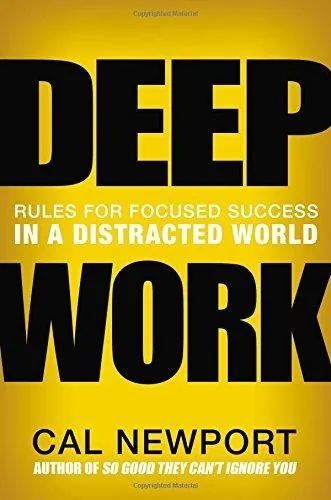
The first is the discipline of deep work - protecting blocks of uninterrupted attention for the tasks that actually matter. This is partly a time-management skill and partly an environment design problem: the open office, the always-on inbox and the meeting culture are all environments engineered against depth. The disciplined professional designs against them: blocks on the calendar, notifications off, a definition of done for each day.
The second is the discipline of saying no. Every yes to a new commitment is a no to something else - often to the work that matters most or the family that needs you. The adult who cannot say no is not generous; they are undisciplined in the most expensive way, because they are spending the one resource that cannot be replaced. The practice is to make saying no a pre-committed rule rather than an in-the-moment negotiation: if it is not part of my priorities, the answer is no, and the answer is kind.
The third is the discipline of integrity under pressure - doing the honest thing when it is inconvenient. This is where work discipline connects to character most directly. The professional who reports the mistake, credits the colleague, refuses the shortcut, and keeps the confidential confidence is practicing a discipline that no system can enforce. It is the discipline of being the same person when no one is watching, and it is the foundation of trustworthiness in every domain of adult life.
None of these require heroic willpower. They require the architecture this whole guide has described - small commitments, designed environments, honest self-knowledge - applied to the specific environment of work. And they repay the effort in the currency adults actually need: not more hours, but more reliable ones.
Discipline and the Seasons of Adult Life
Adult life is not a steady state; it moves through seasons, and discipline that ignores the season will break. The season of young children, with its broken sleep and constant demands, is not the time for a five a.m. workout habit - it is the time for minimum viable versions of everything: the ten-minute walk, the one-page journal, the habit small enough to survive a sick child’s night. The parent who insists on the full program during the hardest season is setting themselves up to quit, and then to conclude that discipline does not work for them. The program was the problem, not the discipline.
The season of career building has its own shape: more external demands, less control over the calendar, energy spent in directions chosen by others. Discipline here is often about protection rather than addition - protecting the one hour of deep work, the weekly date, the sleep that everything else runs on. The season of teenagers is a season of renegotiation, where the parent’s role shifts from manager to consultant and the discipline is mostly about staying calm, keeping boundaries and modeling rather than enforcing.
And the season of empty nests and later career is a season of redirection, where energy freed from parenting and ambition needs a new address. Many adults find that the discipline skills built in earlier seasons - the habits, the routines, the honest self-knowledge - become the tools for the most important work of this season: deciding what the second half of life is for, and building the practices that serve it.
The skill that ties the seasons together is noticing when the season has changed and adjusting the practice to meet it. A discipline practice is not a contract written once; it is a living arrangement that gets renegotiated with every major change in life. The adult who treats discipline as fixed will find it breaking at every transition. The adult who treats it as adaptive - same values, new architecture - keeps the discipline and sheds only the schedule.
This is also why the meaning question keeps returning in adult discipline. The seasons force it: why am I building this habit now? What is this season for? The adult who can answer those questions with honesty has discipline that survives the transitions. The adult who cannot is rebuilding from zero after every season, and wondering why it never sticks.
Conclusion
Meaningful self-discipline for adults is not about grinding harder or performing productivity. It is about protecting the foundations - sleep, health, attention, the people who matter - and building small, reliable commitments around the things that count, fueled by purpose rather than willpower. It is discipline attached to meaning: the parent who wants to be present, the professional who wants to do work that deserves their best, the person who wants their word to mean something.
Start with the foundations. Connect the habit to the reason. Keep the commitment small enough to survive a bad week. Give yourself grace when you miss, and return the next day. The reward is not a more impressive schedule; it is a more trustworthy self - which is the only version of discipline that matters in the end.
Frequently Asked Questions
How do I become more disciplined as an adult?
Is self-discipline harder for adults?
Why does my discipline always collapse after a few weeks?
Can discipline and flexibility coexist?
How does purpose affect self-discipline?
What is the most important discipline for adults to build?
Featured Recommendations


Raining Book Editorial Team
The Raining Book editorial team curates the best book recommendations and reading guides for every type of reader.