Books Like The Four Agreements

There is a specific feeling that comes from finishing The Four Agreements: you have been given a mirror, and it is both uncomfortable and liberating. Don Miguel Ruiz’s short, dense book, drawing on Toltec wisdom, argues that we are born free but raised into “domestication” - a set of learned agreements with ourselves and the world that limit us - and it offers four agreements to set us free: be impeccable with your word, do not take anything personally, do not make assumptions, and always do your best.
The book became a phenomenon because the four agreements are simple enough to remember and deep enough to change a life. The problem after finishing it is the one every great wisdom book creates: you want more of the clarity, more of the practice, and more of the territory it opens - the self, the ego, the freedom. This guide collects the books that genuinely belong on that shelf.
What Made The Four Agreements Special
Before the recommendations, it is worth naming what you are actually looking for, because the right next book depends on which part of the book stayed with you.
If the framework stayed with you - the agreements, the domestication, the freedom - then the continuation books will be your natural next step. If the inner work stayed with you - the ego, the self, the voice in your head - then the awareness books will fit. And if the relationships stayed with you - where the agreements are hardest to keep - then the relationship applications will carry it forward.
Most readers are looking for all three, and the books below cover the range. Each one takes a piece of what The Four Agreements gave you and builds on it.
The Continuations
The Fifth Agreement by Don Miguel Ruiz and Don Jose Ruiz
If there is one book that the Four Agreements reader should pick up next, it is The Fifth Agreement. Written by Don Miguel Ruiz with his son Don Jose, the book adds the fifth agreement - be skeptical, but learn to listen - and, more importantly, it teaches the practice that makes the first four possible: the mastery of your own attention and perception.
Where The Four Agreements gives you the rules, The Fifth Agreement gives you the underlying skill: seeing through the illusions - the stories and beliefs - that the domestication installed in you. It is the deeper book, and it is the natural continuation for readers who took the first four seriously.
Content notes: Accessible non-fiction; suitable for a wide range of readers.
The Mastery of Love by Don Miguel Ruiz
For readers who want the agreements applied where they are hardest, The Mastery of Love is the book. Ruiz applies the Toltec framework to relationships - romantic, familial, all of them - arguing that our suffering in love comes from the same domestication, the same assumptions, the same taking things personally.
The book is the most practical application of the framework, and it is the one readers return to when the agreements keep failing in their closest relationships. It is gentle, wise and often startlingly direct.
Content notes: Accessible non-fiction; suitable for a wide range of readers.
The Awareness Books
The Power of Now by Eckhart Tolle
The Power of Now is the modern classic that The Four Agreements’ readers almost always find their way to. Tolle argues that suffering comes from identification with the mind - the endless thinking about past and future - and that freedom is found in the present moment, the Now, where the mind’s stories have no power.
The two books are perfect companions: Ruiz describes the domestication - the voice in your head that limits you; Tolle shows you how to stop being controlled by it. Where Ruiz gives you the agreements, Tolle gives you the presence that makes keeping them possible.
Content notes: Accessible non-fiction; suitable for a wide range of readers.
The Untethered Soul by Michael Singer
If there is one book that matches The Four Agreements’ combination of depth and accessibility, it is The Untethered Soul. Michael Singer offers a guide to the inner self - the consciousness that observes the thoughts, rather than being identified with them - and to the release of the habitual patterns that keep us trapped.
The book is the most systematic on this list, walking the reader through the inner journey step by step: the voice in the head, the energy it consumes, and the freedom of living from the deeper self. For readers who want the inner work the agreements point toward, this is the book.
Content notes: Accessible non-fiction; suitable for a wide range of readers.
A New Earth by Eckhart Tolle
For readers who want Tolle’s teaching at its most complete, A New Earth is the deeper book. Tolle examines the ego - the sense of self built from thoughts, roles and possessions - and argues that the awakening of consciousness beyond the ego is not only a personal liberation but the key to the survival of humanity.
The book is the philosophical expansion of The Power of Now, and it connects directly to Ruiz’s account of domestication: both describe the false self constructed by the mind, and both point to the same freedom.
Content notes: Accessible non-fiction; suitable for a wide range of readers.
The Self-Mastery Books
The Obstacle Is the Way by Ryan Holiday
The Four Agreements teaches freedom from the inner tyrant; The Obstacle Is the Way teaches mastery of the outer world. Ryan Holiday’s book, drawn from Stoic philosophy, argues that the obstacles we face are not impediments to our goals but the material of them - that we can turn every difficulty into an advantage through perception, action and will.
The two books are different traditions - Toltec wisdom and Stoicism - but they are the same project: the mastery of the self in the face of what life throws at you. For readers who loved the self-mastery of the agreements and want the outward-facing version, this is the book.
Content notes: Accessible non-fiction; suitable for a wide range of readers.
The War of Art by Steven Pressfield
The War of Art is the book for readers who want to see the inner resistance - the force that keeps you from your best work - named and fought. Pressfield calls it Resistance, the universal force that opposes any act of creation or growth, and he offers the practice that defeats it: showing up, doing the work, day after day.
The book connects to The Four Agreements because both are about the inner enemy: Ruiz calls it the domestication, Pressfield calls it Resistance, and both agree it can be beaten - not by force, but by practice.
Content notes: Accessible non-fiction; contains some strong language; suitable for mature readers.
The Practice Books
The Daily Stoic by Ryan Holiday and Stephen Hanselman
For readers who want the wisdom made daily, The Daily Stoic is a page for every day of the year - one Stoic teaching, one reflection, one practice - drawn from Marcus Aurelius, Seneca and Epictetus. It is the book to keep by the bed and open each morning.
The book is the daily practice version of everything on this shelf: the same self-mastery, the same freedom, delivered one day at a time. For readers who loved the Four Agreements’ memorability, it is the natural next habit.
Content notes: Accessible non-fiction; suitable for a wide range of readers.
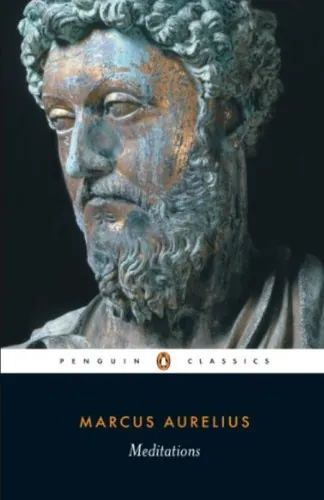
Meditations by Marcus Aurelius
For readers who want the original, Meditations is the book. Written as a private notebook by a Roman emperor, it is the record of a man practicing the same inner work the agreements describe - auditing his judgments, refusing to take things personally, doing his best in the role he was given.
The book is the historical root of the modern self-mastery shelf, and it belongs in every collection of wisdom books. It is the book the others are footnote to.
Content notes: Accessible; a classical text suitable for a wide range of readers.
How to Choose Your Next Read
The right next book depends on what you are ready for. If you want the continuation: The Fifth Agreement. If you want the agreements applied to relationships: The Mastery of Love. If you want the presence that makes them possible: The Power of Now. If you want the systematic inner work: The Untethered Soul. If you want the outward-facing mastery: The Obstacle Is the Way. If you want the inner enemy named: The War of Art. If you want the daily practice: The Daily Stoic or Meditations.
There is no wrong order, but there is a sensible one: start with The Fifth Agreement for the continuation, then The Power of Now for the presence, then The Untethered Soul for the inner work, and let The Mastery of Love apply it where it matters most.
The Dream of the Planet
One of the most striking ideas in Ruiz’s framework is the “dream of the planet” - the collective story that human beings are raised inside, the shared agreements about how the world is and how we must be, passed down through families and cultures. The four agreements are the tools for stepping out of the dream: not by rejecting the world, but by choosing your own agreements within it.
This idea connects the books on this shelf into one project. Tolle’s ego, Singer’s inner voice, Pressfield’s Resistance - each is a name for the same thing: the inherited story that limits us. And each book offers the same freedom: the recognition that the story is not you, and that you can choose differently. The reader who sees the pattern across the shelf understands the whole enterprise - and the freedom it points toward.
A Note on the Agreements in Daily Life
The four agreements are easy to memorize and hard to keep, and the gap between the two is where the real work happens. The practice that helps is to take them one at a time, in seasons: a month of being impeccable with your word, a month of not taking anything personally, a month of not making assumptions, a month of always doing your best. The season approach converts the agreements from ideals into habits, and the habits are what actually change a life.
There is also a useful honesty in admitting where the agreements are hardest for you. For some it is the word - the casual exaggeration, the half-promise. For others it is the taking things personally - the criticism that lands like a blow. The books on this shelf are best read with that self-knowledge in hand, because each one is strongest at a different point of the work: Ruiz on the word and the assumptions, Tolle on the reactions, Singer on the inner voice. All of these titles belong to the growth section of our library, which keeps the whole shelf together.
The Character and Growth Shelf
The Four Agreements is, at its core, a book about character - about the inner work that makes a person free, honest and at peace. It belongs on the wider character shelf, alongside the books that explore what character is and how it is built. Our best character reading list collects the titles on that project - the books about integrity, virtue and the habits that make a person - and it pairs naturally with this reading, because the agreements are character practices in their purest form.
The shelf also connects to the reading notes habit, in a specific way: wisdom books reward the kind of reading that pauses and reflects, and the agreements are exactly the kind of teaching that needs to be turned into practice. Our notes on character themes, values and reading notes explore how the same habit of attention - the pausing, the questioning, the applying - turns any book into a practice, and the wisdom books of this list are the books that practice was made for.
Conclusion
The Four Agreements became a phenomenon because it named the inner tyrant and offered four simple practices to dethrone it. The books on this list are the honest responses to the question it leaves behind: what next?
The continuations of Ruiz, the presence of Tolle, the inner work of Singer, the mastery of Holiday and Pressfield, and the daily practice of the Stoics - together they carry the same truth in different voices: the freedom you are looking for is not outside you; it is the inner work of seeing through the stories and choosing your own agreements. Read the notes, choose where you are, and let the books take their time.
Frequently Asked Questions
What should I read after The Four Agreements?
Is The Fifth Agreement like The Four Agreements?
What is the difference between The Four Agreements and The Power of Now?
Are there books like The Four Agreements about self-mastery?
Which book is the most practical after The Four Agreements?
Do these books contain difficult content?
Featured Recommendations

Raining Book Editorial Team
The Raining Book editorial team curates the best book recommendations and reading guides for every type of reader.