Family Friendly Fiction: Themes, Values and Reading Notes
Family friendly fiction is easy to recognize and surprisingly hard to define. Ask ten readers what it means and you will get ten answers, because the category is defined as much by what it avoids as by what it embraces: no explicit content, no graphic violence, no language that makes a parent wince. But the absence of those things is not what makes a book good. What makes family friendly fiction worth reading is what it puts in their place: careful attention to character, honest treatment of real feelings, and a steady belief that stories can be both entertaining and true.
This article is a set of reading notes for that kind of book. It names the themes that run through the best family friendly fiction, sketches the values those themes express, and offers a practical framework you can use to talk about almost any family friendly fiction book, whether you are reading with one child or running a multigenerational book club.
The Recurring Themes of Family Friendly Fiction
Read enough family friendly fiction books and patterns begin to emerge. These are not formulas; they are the concerns that writers keep returning to because they are the concerns that matter to readers of every age.
Home and Belonging
The most persistent theme in family friendly fiction is home. Sometimes home is a place the hero leaves, as in The Hobbit, where Bilbo discovers that going on an adventure is the best way to find out what home means. Sometimes home is a place the hero builds, as in The Secret Garden, where three lonely children turn an abandoned garden into a sanctuary. Sometimes home is simply the people around the table, as in the everyday stories of Beverly Cleary, where the Quimby family’s apartment is a place of chaos, love and belonging.
What family friendly fiction consistently teaches about home is that it is not a building. It is a pattern of care: the people who notice when you are sad, who save you a piece of cake, who know your story. This is a profoundly comforting idea for young readers, and it is no less true for adults.
Courage in Small Packages
Family friendly fiction is full of heroes, but their heroism rarely looks like the heroism of action movies. Bilbo is terrified for most of his adventure and keeps going anyway. Opal in Because of Winn-Dixie is a lonely girl who decides to be brave about making friends. Jonas in The Giver accepts a burden he did not ask for because he understands that ignoring it would be worse.
This quiet courage is one of the great gifts of family friendly fiction to its readers. It models a version of bravery that children can actually practice: the courage to speak up, to apologize, to try something scary, to keep going when things are hard. It is courage scaled to a child’s life, which is the only scale that matters.
Kindness as a Practice
The best family friendly fiction books treat kindness as something you do, not something you are. Because of Winn-Dixie is almost a textbook of this idea. Opal does not simply decide to be kind; she learns techniques. She asks people about themselves. She listens to their stories. She shows up at their doors. The novel’s quiet radicalism is its insistence that kindness is a skill that can be learned and practiced, and that practicing it changes the person who practices it.
Grief, Handled with Care
Family friendly fiction does not avoid grief; it handles it with care. Bridge to Terabithia is built around a loss that arrives without warning, and it earns its reputation as a book that helps children process the idea that terrible things can happen to good people. The One and Only Ivan is narrated by a gorilla who has lost everything except his art. These books do not shield readers from sadness; they give readers a safe place to feel it, and that is exactly what families need.
The Values Beneath the Themes
Themes are what a book is about; values are what it stands for. The family friendly fiction worth keeping on your shelf tends to stand for a small set of values that are worth naming out loud.
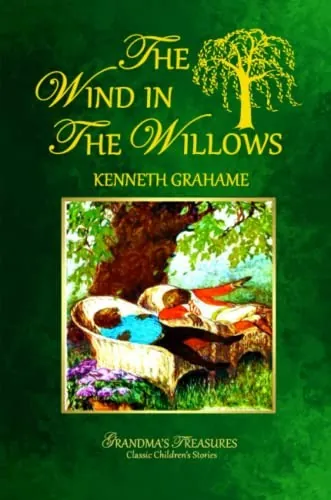
Every person has a story. From the lonely librarian in Because of Winn-Dixie to the grumpy badger in The Wind in the Willows, family friendly fiction is full of characters who seem unremarkable at first and turn out to be full of hidden depth. The value here is attention: the willingness to look past first impressions.
Feeling is better than not feeling. The Giver makes this argument explicitly. Its community has eliminated pain by eliminating memory, and the cost is that it has also eliminated joy. The book’s message, delivered through Jonas’s growing understanding, is that a full life includes difficult feelings, and that numbing ourselves to the hard parts numbs us to the good parts too.
Small acts matter. Family friendly fiction is full of small acts that turn out to be large: a shared meal, a whispered apology, a garden weeded on a rainy afternoon. These books consistently reward the reader who pays attention to small gestures, and they model a life built from them.
Reading Notes: A Framework for Any Family Friendly Book
The notes below are designed to work with almost any family friendly fiction book on your shelf. Use them for a family discussion, a book club meeting, or simply to deepen your own reading. They are organized in three movements: before reading, while reading and after reading.
Before You Read
Take ten minutes to set expectations. Read the jacket copy together. Look at the cover. Talk about what kind of story you think this will be, and write down any predictions. For families, this is also the moment to check content notes. Common Sense Media and similar resources give age recommendations and content breakdowns, and a quick check before you begin saves surprises later.
It is also worth deciding what you want from the book. Are you reading for comfort, for adventure, for discussion? Naming the goal changes how you read. A family reading The Hobbit for adventure will notice different things than a family reading it for its ideas about home.
While You Read
Pay attention to the themes above and note where they appear. You do not need a notebook; a few mental bookmarks are enough. Notice the small acts of kindness, the moments of quiet courage, the places where characters talk about home.
For families, the read-aloud is its own reading method. Listen for the places where the reader slows down, where a child asks a question, where the room goes quiet. Those are the moments the book is working, and they are worth returning to in discussion.
After You Read
Start with the reader’s experience before moving to interpretation. These questions work for readers of almost any age:
- What surprised you about this book?
- Which character would you most want to have dinner with, and why?
- Was there a moment when a character did something you would not have done?
- Did any part of the book remind you of something in your own life?
- If you could ask the author one question, what would it be?
For older readers and book clubs, add a layer of interpretation:
- What does this book say about home?
- Where did you see quiet courage, and what made it quiet?
- How does the book treat kindness as a practice rather than a personality trait?
- What does the book suggest about the value of difficult feelings?
- If the book’s values were a list, what would be on it?
Using These Notes with a Family Book Club
A family book club is one of the most rewarding ways to use family friendly fiction, and it does not need to be elaborate. Pick a book, pick a date, and agree that everyone will come with at least one question or observation. The notes above give you more than enough material for the first meeting.
The key is to keep the tone conversational. The moment a book club feels like school, children (and many adults) check out. Let the discussion wander. Follow the tangents. If the conversation about The Wind in the Willows turns into a conversation about the best kind of picnic, that is a successful meeting.
For more titles to bring to the table, our reading list of books without explicit content is a strong companion, and our deeper notes on books without explicit content themes expand the framework to a neighboring category. The stories section has still more options if you want to rotate the register from gentle to adventurous.
A Note on Difficulty and Depth
One misconception about family friendly fiction is that it is simple by definition. The vocabulary is often accessible, but the ideas are not. The Giver is written in plain sentences and is one of the most philosophically demanding books a middle-grade reader will encounter. Bridge to Terabithia is short, and its emotional architecture is intricate. The Wind in the Willows contains a chapter of pure mysticism that has puzzled and moved adult readers for more than a century.
This is worth remembering when you plan discussions. A book can be easy to read and hard to think about, and that combination is exactly what makes family friendly fiction valuable: it lets readers of different abilities and ages meet on the same page and climb different heights from there. For groups that want to follow how characters change over the course of a story, our meaningful character growth analysis offers a deeper framework built for exactly this kind of book.
Building Your Own Reading Notes
Once you have used a framework like this a few times, you will probably want to build your own. The habit is simple: after finishing a book, write down three things. First, what the book was about, in one sentence. Second, what the book stood for, in one sentence. Third, one question you still want to discuss. Three sentences and a question, written on a card or in a notebook, turn a pleasant read into a lasting one.
Families that keep these notes build something remarkable over time: a record of every book they have shared, the questions they asked and the conversations they had. Years later, a card that says “The Secret Garden - about how a garden can grow a person - what would your garden be?” is worth more than any bookmark.
Conclusion
Family friendly fiction rewards attention. The themes of home, quiet courage and practiced kindness run through the best of these books like a steady current, and the values beneath those themes are worth naming and discussing. Reading notes are not homework; they are a way of slowing down long enough to notice what the book is actually doing, and a way of turning a solo read into a shared one.
Choose a book from the best family friendly fiction on your shelf, gather your readers, and try the framework here. The first discussion will feel a little awkward, and the fifth will feel like a tradition. That is how family friendly fiction reading lists become family stories of their own. For more places to start, browse the stories section, visit the books without explicit content reading list, and use the themes and values guide as your discussion companion.
Frequently Asked Questions
What makes a book similar to ndly Fiction: Themes, Values and Reading Notes?
Which book is closest to ndly Fiction: Themes, Values and Reading Notes?
Are there other books like ndly Fiction: Themes, Values and Reading Notes for younger readers?
What should I read after ndly Fiction: Themes, Values and Reading Notes?
Is ndly Fiction: Themes, Values and Reading Notes suitable for all readers?
Where can I find more clean reads like this?
Featured Recommendations


Raining Book Editorial
The Raining Book editorial team curates the best book recommendations and reading guides for every type of reader.