Family-Friendly Books Without Graphic Violence
The best family reading is a shared language: a set of books that everyone in the house knows, that can be quoted at dinner, that a teenager will defend to friends and a parent will reread alone after everyone is asleep. Books without graphic violence are the natural building material for that language, because they can be handed from hand to hand without a moment’s hesitation. The category is not about avoiding adventure; it is about choosing books where the danger is real but the page never lingers, and where the reader’s own imagination supplies the thrill.
This guide collects family-friendly books without graphic violence for readers of every age, from first chapter books to novels adults will want to finish after the kids have gone to bed. Each title comes with an honest content note, because families do not need vague reassurance; they need accurate information.
For the First Chapter-Book Readers
The youngest independent readers need books with strong hooks, clear language and no content concerns at all. The classics of this stage are the ones that generations of families have passed down.
Charlotte’s Web by E. B. White is the perfect first serious book. The friendship between Wilbur the pig and Charlotte the spider is funny, tender and, at the end, genuinely sad, and White’s prose is so clean that it reads like water. There is no violence in it at all, and the book’s one hard truth - that Charlotte dies - is handled with complete gentleness. Parents should know that the book deals with death honestly, which is exactly why it has been a family staple for seventy years.
The Little Prince by Antoine de Saint-Exupéry is stranger and more philosophical. A pilot stranded in the desert meets a prince who has traveled from a tiny asteroid, and their conversation ranges over grown-ups, roses and what it means to see with the heart. Its sadness is gentle and abstract, and its content is clean without a single exception.
For a longer, funnier classic, Pippi Longstocking by Astrid Lindgren introduces the strongest girl in the world, who lives alone with a horse and a monkey and a bottomless supply of confidence. Pippi’s adventures include a fight with two burglars, but it is handled as slapstick comedy rather than violence, and the book’s anarchy is pure joy.
Middle-Grade Gems with Grown-Up Depth
The middle-grade shelf is where family-friendly books without graphic violence really shine, because this is where writers trust readers with real feelings and real ideas.
The One and Only Ivan by Katherine Applegate, winner of the Newbery Medal, is narrated by a gorilla who lives in a shopping mall and draws pictures. When a baby elephant arrives, Ivan begins to remember the world he came from and to understand what he owes his friends. The book is about art, memory, freedom and the courage to tell the truth, and it contains no violence of any kind.
The Mysterious Benedict Society by Trenton Lee Stewart gives readers puzzles, friendship and a genuinely clever plot. Four children answer a newspaper advertisement and are tested into a secret society working against a shadowy villain. The danger is cerebral rather than physical, and the book is thrilling without a single graphic scene.
For families who want poetry disguised as a story, The Phantom Tollbooth by Norton Juster is a book-length wordplay adventure about a boy who drives a magic tollbooth into the lands of words and numbers. Its conflicts are battles of wit rather than weapons, and it gets better as the reader gets older, because more of its jokes become visible.
Books for the Whole Family to Read Aloud
The read-aloud shelf is a category of its own. These are books built for a parent’s voice, a child’s attention and the long, good hour before bed.
The Hobbit by J. R. R. Tolkien is the read-aloud classic. Bilbo Baggins, the comfort-loving hobbit, joins a quest he did not ask for and discovers courage he did not know he had. The book is full of peril - trolls, goblins, spiders, a dragon - and almost none of it is described with graphic detail. Tolkien understood that the reader’s fear is more effective than any description of injury, and the book remains thrilling at every age.
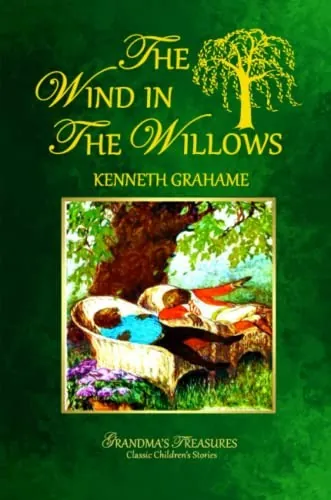
The Wind in the Willows by Kenneth Grahame is the other great read-aloud classic, and it is stranger and funnier than its reputation. Mole, Rat, Toad and Badger have picnics, adventures and a legendary motorcar obsession, and even the Wild Wood - the book’s one genuinely frightening place - is scary without being violent. Its humor is dry enough for adults and broad enough for children.
For a modern read-aloud with the same spirit, The House in the Cerulean Sea by T. J. Klune follows a lonely social worker sent to inspect an orphanage for magical children. There is no violence in it, and there does not need to be; its only villain is bureaucracy, and its drama is entirely emotional.
For the Teenagers on the Couch
Teenagers are the hardest audience for family reading, and the books that work for them are the ones that take them seriously. The family-friendly list does not thin out at the teen shelf; it changes register.
The Giver by Lois Lowry is the essential teen-adjacent pick. Its dystopian community has eliminated pain and choice, and twelve-year-old Jonas is selected to carry the memories that make life real. The book’s horror is entirely implied: the community’s past is revealed through memory, never depicted, and the reader’s imagination supplies the weight. It is the rare novel that works at twelve and at forty.
The Book Thief by Markus Zusak is narrated by Death and set in Nazi Germany, and it is one of the most moving novels of the century. Its setting includes cruelty and loss, and its handling is restrained: the horror is implied, the grief is carried in prose. The subject is heavy, and the content note matters: families with younger readers may want to wait, but for teenagers ready for serious material, it is a book that will stay with them.
For a gentler teen pick, Anne of Green Gables by L. M. Montgomery follows an orphan girl with a talent for trouble into a new home on Prince Edward Island. There is no violence in it, and its coming-of-age material is handled with complete delicacy.
Content Notes: What Families Actually Need to Know
Families do not need books to be sanitized; they need to know what they are getting. The notes in this guide are honest, and the habit of checking content applies to every book, not just the ones on this list.
Common Sense Media is the best first stop for family content checks. Its reviews break down violence, language and sexual content for each title, and its age recommendations are calibrated for real families. The StoryGraph adds community-driven filtering, and publisher pages usually state age ranges. The final check is the read-ahead: the first chapter tells you the register of the whole book.
It is also worth remembering that violence is only one axis of a book. A book without violence may still contain language, and a family that cares about one may care about the other. The family-friendly books without profanity list in our stories section is the natural companion for families who want to check both, and our notes on books without graphic violence themes give discussion questions for the shelf you build.
Reading with the Whole Family in Mind
One more habit belongs on this list, and it is the habit of reading with the whole family in mind rather than with one reader in mind. The books in this guide were chosen because they work at multiple ages, and the family that reads them together will find that the same chapter means different things to different listeners. A six-year-old hears the adventure in The Hobbit; a parent hears the meditation on courage and home. Both readings are real, and both belong in the conversation.
It also helps to plan for the reading itself. A chapter a night builds a rhythm, but a long car ride or a rainy afternoon can hold a whole book. Keep the read-aloud loose: pause when someone has a question, stop early when attention wanders, and never let the book become homework. The goal is not to finish the book; it is to make the book part of the family’s shared life, and the books on this list are built for exactly that.
Building the Family Shelf
A family bookshelf built from books without graphic violence does not need to be uniform. Mix the registers the way you mix meals: a funny book, a thoughtful book, an adventure book, a sad book. The reading notes collection in our stories section gives discussion questions for exactly this kind of shelf, and our redemption themes analysis in the guides section connects these stories to the deeper questions they raise.
The habit that makes a family shelf work is the shared read. Whether it is a nightly chapter of The Hobbit or a family book club with one pick per month, the reading becomes the language. Years later, the books are the shorthand: a reference to Toad’s motorcar, a quote from Charlotte, a shared memory of the night the family finished The Book Thief in silence.
Conclusion
Family-friendly books without graphic violence are not a diminished category; they are a generous one. From Charlotte’s Web to The Hobbit to The Book Thief, the shelf holds some of the most beloved books in the language, and it holds them safely enough to share with anyone. The content notes in this guide are honest because families deserve accuracy, and the books are chosen for quality because quality is what keeps everyone at the table.
Start with one title from this list, read it together, and let it lead to the next. The themes and values guide in our stories section is ready when the discussion starts, and the family-friendly no-spice romance list is there for readers who want to extend into romance without the grit. The stories section is full of more books without graphic violence for the shelf you are building.
Frequently Asked Questions
What makes a book similar to ndly Books Without Graphic Violence?
Which book is closest to ndly Books Without Graphic Violence?
Are there other books like ndly Books Without Graphic Violence for younger readers?
What should I read after ndly Books Without Graphic Violence?
Is ndly Books Without Graphic Violence suitable for all readers?
Where can I find more clean reads like this?
Featured Recommendations
Raining Book Editorial
The Raining Book editorial team curates the best book recommendations and reading guides for every type of reader.