Books Like The House in the Cerulean Sea
T. J. Klune’s The House in the Cerulean Sea became a phenomenon for a reason that has nothing to do with plot and everything to do with feeling. Linus Baker is a by-the-book caseworker for the Department in Charge of Magical Youth, sent to a remote island to evaluate an orphanage for extraordinary children - a gnome, a sprite, a wyvern, a boy who may be the Antichrist. He expects to find problems. He finds, instead, a family.
The book is warm, funny, and quietly radical: it is a love letter to found family, to the children who do not fit, and to the adults brave enough to love them. If you have finished it - and immediately wanted to move to that island - here is where to go next.
If You Loved the Found Family: The Family You Choose
The heart of The House in the Cerulean Sea is the discovery that family is not about blood but about choice. Linus arrives alone and leaves belonging - to the children, to Arthur, to the whole strange household. These books are about the same discovery.
The Very Secret Society of Irregular Witches (Sangu Mandanna)
A young witch named Mika Moon has spent her life hiding what she is - the rules of her world say witches must never gather, must never be seen. When she is invited to a remote English manor to tutor three young witches, she finds the family she was never allowed to have, and the warmth she never knew she needed. It is the closest companion to The Cerulean Sea on this list: the same found family, the same found magic, the same romance with the same gentle soul. If you loved Klune’s book, this is the essential next read.
The Ten Thousand Doors of January (Alix E. Harrow)
January Scaller is a girl who does not fit - a foundling raised in the house of a collector of strange things, told she is lucky to be there and never quite believing it. The book is about the doors she finds - doors into other worlds - and about the family she discovers on the other side of them. It is a different kind of book - darker, more literary, more concerned with doors than with orphanages - but it shares the Cerulean Sea’s deep subject: the discovery that you are not alone, and that the people who love you are out there, on the other side of a door you only have to be brave enough to open.
The House in the Cerulean Sea, Read Again for the Children
On a re-read, the book’s most radical choice becomes visible: the children are not obstacles to Linus’s happiness but its source. Each one is a portrait of difference - the gnome who loves too much, the sprite who is too sharp, the boy who may destroy the world and is worried about it - and the book insists, again and again, that they are not problems to be fixed but people to be loved. The scene where Linus finally tells the children what he thinks of them is the book’s emotional peak, and it works because Klune has earned it: he has spent the whole novel showing you that these children are worth fighting for. That conviction - that the strange, the different, the difficult are exactly the ones who deserve love - is the book’s gift, and every book on this list shares it.
If You Loved the Cozy Magic: Magic That Warms Instead of Threatening
There is a genre now called “cozy fantasy,” and The Cerulean Sea is its flagship: magic that is not about battles or destiny but about home, belonging, and small daily wonders. These books are cozy fantasy at its best.
The Very Secret Society of Irregular Witches (Sangu Mandanna)
The magic in Mandanna’s book is warm and domestic - spells for comfort, spells for snow, spells that knit a household together. The threat is not a dark lord but the fear of being discovered, of being too different to be safe. The book’s coziness is the point: it is a book about magic as comfort, about a home where the fire is lit and the tea is hot and the people around the table love each other.
Legends & Lattes (Travis Baldree)
The coziest premise in modern fantasy: Viv, an orc barbarian, retires from adventuring to open a coffee shop - and the book is about her learning to build a life out of cinnamon rolls, good coffee, and a small circle of friends. There is no dark lord, no prophecy, no war. There is a coffee shop, and the people who come to it, and the slow accumulation of a life worth living. It is the purest cozy fantasy on this list, and it delivers the same warmth as the Cerulean Sea with even fewer stakes.
The Wizard’s Guide to Defensive Baking (T. J. Kingfisher)
A fourteen-year-old baker’s apprentice who can make gingerbread men dance discovers that her town needs defending - and that her magic, the humble magic of bread, might be exactly what it takes. Kingfisher’s book is funny, warm, and genuinely thrilling, and it shares the Cerulean Sea’s love of the ordinary made magical: the magic is not in the grand gestures but in the daily work, the kneading, the rising, the feeding of people you love.
If You Loved the Grumpy Protagonist: The Closed Heart That Opens
Linus begins the book as a man who has never been loved and does not expect to be - a man so used to following rules that he has forgotten how to want anything. These books are about the same arc: the closed heart that opens.
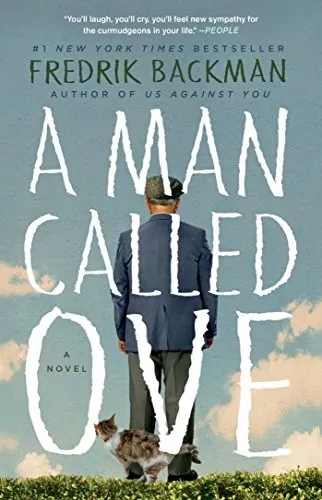
A Man Called Ove (Fredrik Backman)
Ove is a grumpy old man who has decided that the world has gone soft, and he is prepared to be angry about it until the day he dies - which he keeps trying to arrange. What follows is a comedy about a neighborhood - a cat, a pregnant woman, a series of increasingly absurd interruptions - that keeps pulling him back into life. It is the closest match for Linus’s arc on this list: a man whose walls are his whole personality, worn down by kindness until the person underneath appears.
The House in the Cerulean Sea, and the Department in Charge
One of the book’s quiet satires is the Department in Charge of Magical Youth - the bureaucracy that Linus serves, which is more interested in rules than in children, more interested in paperwork than in people. The book is, among other things, an argument against that way of seeing the world: against the idea that difference is a problem, that children are cases, that love can be regulated. Arthur’s whole project - the island, the house, the family - is a rebellion against the Department’s worldview, and the book’s climax is Linus choosing the rebellion. It is a book about refusing the role you were assigned, and about the courage it takes to choose your own family instead.
If You Loved the Romance: Gentle Love, Slowly Earned
The romance in The Cerulean Sea is one of the gentlest in modern fiction: Linus and Arthur, falling for each other the way people do - slowly, awkwardly, inevitably. These books have romances of the same register.
The Very Secret Society of Irregular Witches (Sangu Mandanna)
Mika’s romance with the grumpy librarian at the manor is the perfect companion to Linus and Arthur’s: two people who have spent their lives alone, learning to be alone together. The book’s romance is cozy in the best sense - no misunderstanding plot, no third-act breakup, just two people who like each other and slowly realize it.
Red, White & Royal Blue (Casey McQuiston)
A different kind of romance - the son of the American president and a British prince - but the same deep structure: two people who are told they cannot be together, who choose each other anyway. McQuiston’s book is funnier and more contemporary than Klune’s, but it shares the Cerulean Sea’s conviction that love is a choice, and that choosing each other is the bravest thing two people can do.
If You Loved the Message: Difference Is Not a Problem
The deepest thing about The Cerulean Sea is its argument: the children are not wrong, the world is wrong for not seeing their value. These books are about the same conviction.
Wonder (R. J. Palacio)
Auggie Pullman has a facial difference that makes other kids stare, and the book follows his first year at a real school - told from multiple perspectives, including his own and his classmates’. It is the essential young-reader companion to the Cerulean Sea: the same argument that difference is not something to be fixed but something to be met with kindness, the same insistence that the strange child is the one worth loving.
The Boy, the Mole, the Fox and the Horse (Charlie Mackesy)
A small book that does a large thing: a boy, a mole, a fox, and a horse walk together through a landscape, and they talk about the things that matter - kindness, courage, home, asking for help. It shares the Cerulean Sea’s gentleness and its conviction that the strange and the lost deserve love. It is the book to reach for when you need the warmth back.
The Girl Who Drank the Moon (Kelly Barnhill)
A witch, a swamp monster, a tiny dragon, and a girl who was accidentally enmagicked as a baby: Barnhill’s Newbery winner is about a girl who is different in a way that frightens people, and about the family of strange creatures who love her anyway. It is a children’s book, but it shares the Cerulean Sea’s deep subject - the child who does not fit, the family that fits anyway - with real literary craft.
The Quiet Power of Gentleness
It is worth saying something about what makes cozy fiction like this so powerful, because it is easy to mistake gentleness for softness. The House in the Cerulean Sea is gentle the way a held hand is gentle: it is not weak, it is deliberate. Linus’s whole journey is an argument about strength - he begins the book believing that strength means rules, distance, control, and he learns that it means something else entirely: the courage to love children the world has written off, the courage to defy the department that employs him, the courage to build a family from nothing. That is not a small story. It is, in its way, a radical one. The books on this shelf share that conviction: they are not escapes from difficulty but arguments about how to meet it - with kindness, with attention, with the refusal to let the world’s judgment be the last word. Cozy fiction has been dismissed as a retreat, but the best of it - like this book, like the others here - is a form of resistance: a reminder that the gentle choice is often the braver one.
Building Your Own Family: A Reading Order
Here is a suggested path that moves from the closest match outward:
- Start with The Very Secret Society of Irregular Witches for the closest match in spirit.
- Move to Legends & Lattes for the purest cozy fantasy.
- Try A Man Called Ove for the grumpy protagonist’s arc.
- Pick up The Ten Thousand Doors of January for the literary version.
- End with Wonder when you want the message for younger readers.
For more books with this gentle spirit, our thoughtful guide to books without profanity helps you find warm, clean reads, and our best books without graphic violence list gathers stories that are rich without being rough. The stories section of our site is full of guides like this one, so there is always another house to visit.
The House That Welcomes Everyone
The House in the Cerulean Sea endures because it tells a story we desperately want to be true: that somewhere, on some island, there is a house full of strange and wonderful people, and that if you are brave enough to go there, they will love you exactly as you are. The book’s magic is not in the gnomes or the wyverns or the boy who may be the Antichrist. It is in the promise - the promise that you are not too much, not too strange, not too different to be loved. The books on this list are all houses like that: places you can move into, families you can choose, warmth you can keep. There is always room. Come inside.
Frequently Asked Questions
What makes a book similar to The House in the Cerulean Sea?
Which book is closest to The House in the Cerulean Sea?
Are there other books like The House in the Cerulean Sea for younger readers?
What should I read after The House in the Cerulean Sea?
Is The House in the Cerulean Sea suitable for all readers?
Where can I find more clean reads like this?
Featured Recommendations


Raining Book Editorial
The Raining Book editorial team curates the best book recommendations and reading guides for every type of reader.