Books Like The Golden Compass

Philip Pullman’s The Golden Compass is one of the great novels of the past century - a book that redefined what young adult fantasy could be. Lyra Belacqua is a girl who lives in a version of our world where every human has a daemon - an animal familiar that is the external self, the soul made visible - and where the scholars of Oxford’s Jordan College study a mysterious particle called Dust. When children begin disappearing, taken by an organization called the Gobblers, Lyra’s adventure begins: a journey to the far north, armed with an alethiometer - a golden compass that tells the truth - and accompanied by a destiny she does not yet understand.
It is a fantasy, a mystery, an adventure, and a philosophical novel at once, and it has shaped the genre more than almost anything since. If you have finished it and want more, here is where to go next.
If You Loved the World: Parallel Universes and Daemons
Pullman’s great invention is his world: a version of our own where souls are visible, where the north is full of armored bears and witch queens, and where other worlds are reachable through windows in the air. These books build worlds of the same ambition.
The Book of Dust (Philip Pullman)
The essential companion: Pullman’s return to Lyra’s world. The first volume, La Belle Sauvage, is set years before Lyra’s story - a boy named Malcolm rescues baby Lyra from forces that want her - and the second, The Secret Commonwealth, follows a grown Lyra. If you loved The Golden Compass, this is the essential next read: the same world, the same questions, new stories.
The Chronicles of Narnia (C. S. Lewis)
The great ancestor: parallel worlds, doors between them, children who travel between. Pullman’s world is a deliberate argument with Lewis’s - the same machinery, a very different theology - and reading them together is one of the great experiences in fantasy.
The Subtle Knife (Philip Pullman)
The second book of His Dark Materials introduces the parallel world of Cittàgazze and the knife that cuts windows between worlds. It is the book where the series opens up - from the single world of the first volume to the multiverse - and it is essential reading.
If You Loved Lyra: Heroines Who Refuse the Rules
Lyra is one of the great heroines of fantasy: a liar, a fighter, a girl who reads the alethiometer better than anyone, and who will do anything to save her friends. These books have heroines of the same kind.
The Golden Compass, and the Education of Lyra
The book is about Lyra’s education in the deepest sense: learning to tell the truth, learning what the truth costs, learning that the adults cannot be trusted. She begins the book a liar and a thief - a girl who lives by her wits in the colleges of Oxford - and she ends it having learned that some things are worth more than survival. The book’s great achievement is the way it honors her: she is not punished for her lying; she is loved for her courage, and her journey is the journey of learning what the truth is worth.
The Hunger Games (Suzanne Collins)
Katniss Everdeen is a different kind of heroine - a hunter, a survivor - but she shares Lyra’s refusal to play by the rules and her willingness to do whatever it takes to protect the people she loves. Both books are about girls who are underestimated and who turn out to be the ones who change everything.
The Girl Who Drank the Moon (Kelly Barnhill)
Luna is a girl who was accidentally enmagicked as a baby, and the book is about her discovery of what she is. It is a children’s book, but it shares the Golden Compass’s conviction that girls can carry the weight of the world.
If You Loved the Ideas: Fantasy That Thinks
Pullman’s books are novels of ideas in the truest sense: they are about consciousness, faith, authority, and the nature of truth, and they trust their young readers to think about them. These books share that seriousness.
The Golden Compass, and the Question of Dust
The book’s central mystery is Dust - the particle that is consciousness itself, that gathers around adults and not children, that the Church wants to control. The book is an argument about what makes us human: that consciousness is a natural wonder, that the forces that want to control it are the enemy, and that the truth - whatever it costs - is worth pursuing. It is a vision of the world that is secular, humane, and deeply felt, and it is the reason the book has been loved and attacked in equal measure.
The Giver (Lois Lowry)
Jonas’s community has eliminated pain, conflict, and choice - and the book is about his discovery of what the community has given up. It shares Pullman’s seriousness about memory, choice, and the price of control.
A Wrinkle in Time (Madeleine L’Engle)
Meg Murry’s journey through space and time shares Pullman’s ambition: physics, theology, love, and the nature of evil, all woven into a story. L’Engle’s book is the essential ancestor of the idea-driven fantasy.
If You Loved the Arctic Adventure: The Far North
Lyra’s journey takes her to the far north - to the land of the armored bears and the witch queens, of the frozen seas and the aurora. These books live in the same cold.
The Golden Compass, and the North of the Imagination
The north of the Golden Compass is one of the great settings in fantasy: the frozen seas, the bears of Svalbard, the witches of the aurora, the station at Bolvangar where the terrible experiments happen. Pullman renders the cold with such vividness that you feel it - and the north is also the book’s moral landscape: the place where the truth is hidden, and where Lyra must go to find it. For readers who love the Arctic in fiction, this is the essential version.
The Call of the Wild (Jack London)
The classic Arctic adventure: Buck, a domestic dog, is stolen and sold into the brutal life of the Klondike gold rush, and the book is about his return to the wild. It shares the Golden Compass’s love of the far north and its conviction that the cold reveals what a creature truly is.
The Snow Child (Eowyn Ivey)
A couple homesteading in 1920s Alaska build a snow child that comes to life - and the book is about the magic and the grief of the northern wilderness. It shares the Golden Compass’s sense of the north as a place where the ordinary rules do not apply.
If You Loved the Rebellion: Children vs. the System
The great enemy in the Golden Compass is the Magisterium - the Church-like authority that wants to control Dust - and the book is about Lyra’s rebellion against it. These books are about authority and the rebellion against it.
The Golden Compass, and the Gobblers
The book’s engine is the mystery of the Gobblers: the organization taking children, and the terrible purpose behind it. Lyra’s journey north is a journey into the heart of the system - and her discovery of what the Gobblers are doing at Bolvangar is one of the great reveals in fantasy. The book is an argument about institutions: that they are capable of convincing themselves of anything, and that the child who sees is the one who can act.
The Hunger Games (Suzanne Collins)
Katniss’s rebellion against the Capitol shares the Golden Compass’s conviction that the system is the enemy and that the child who refuses is the one who can change everything.
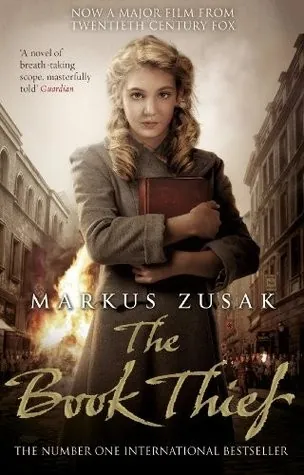
The Book Thief (Markus Zusak)
Liesel’s quiet acts of defiance under the Nazis - stealing books, sharing them, hiding a Jew - share the Golden Compass’s argument that the individual can resist the machine.
If You Loved the Epic Scope: Trilogies That Demand Everything
The Golden Compass is the first book of His Dark Materials - a trilogy that spans multiple worlds and ends in a war against the Authority itself. These books share its scale.
His Dark Materials (Philip Pullman)
The essential trilogy: The Golden Compass, The Subtle Knife, and The Amber Spyglass - the complete story of Lyra and Will, the war with the Authority, and the great love at the heart of it. It is one of the greatest fantasies ever written, and readers who loved the first book owe it to themselves to finish the journey.
The Chronicles of Narnia (C. S. Lewis)
A complete world, seven books, the war between Aslan and the White Witch and everything after. It is the series Pullman is arguing with, and it is essential reading for understanding what his books are doing.
The Lord of the Rings (J. R. R. Tolkien)
The great ancestor of the epic fantasy: a war for the fate of the world, fought by the smallest and least likely heroes.
If You Loved the Daemons: The Soul Made Visible
The daemon is Pullman’s most famous invention: the animal familiar that is the external self, the soul made visible, the companion that changes shape through childhood and settles into its final form in adulthood. These books have similar inventions.
The Golden Compass, and the Meaning of the Daemon
The daemon is the book’s deepest metaphor: the self made visible, the companion that is also yourself. Lyra’s daemon, Pantalaimon, is one of the great characters in fantasy - a snow-white ermine, a moth, a cat, a dragonfly - and the book’s most terrible moments are the ones that threaten the bond between them. The daemon is the book’s argument made visible: that we are not alone in ourselves, that the self is a companionship, and that to harm the bond is to harm the person.
The Northern Lights (Philip Pullman)
The book’s British title - Northern Lights - points to a different aspect of the story: the aurora, the lights of the north, the beauty that is also a door to other worlds. Reading the book under either title, the north and its lights are the book’s emblem: the beauty that hides the truth, and the truth that is worth the journey.
If You Loved the Oxford Setting: Scholars, Spires, and Secrets
The Golden Compass begins in Oxford - the colleges, the scholars, the libraries, the secrets hidden among the spires - and the book’s Oxford is one of the great settings in fantasy. These books live in the same city.
The Book of Dust (Philip Pullman)
Pullman’s return to Lyra’s world is even more saturated in Oxford: La Belle Sauvage begins in the inn where Malcolm lives, across the river from the colleges, and the book is full of the city’s secrets. For readers who love Pullman’s Oxford, the sequel series is the essential next read.
Gaudy Night (Dorothy L. Sayers)
A mystery set in an Oxford women’s college: Harriet Vane returns to her alma mater and finds herself investigating a campaign of poison-pen letters. It shares Pullman’s love of Oxford and its conviction that the city is a world of its own.
Building Your Own World: A Reading Order
Here is a suggested path that moves from the closest match outward:
- Start with The Subtle Knife to continue the trilogy.
- Move to The Amber Spyglass to complete it.
- Try The Book of Dust for the return to Lyra’s world.
- Pick up The Chronicles of Narnia for the argument Pullman is making.
- End with The Hunger Games when you want the rebellion with teeth.
For more books with this kind of depth, our family-friendly closed-door romance list gathers love stories that are romantic without being explicit, and our meaningful clean historical fiction list helps you find substantial, wholesome reads. The stories section of our site is full of guides like this one, so there is always another world to enter.
The Girl Who Read the Truth
The Golden Compass endures because it is a book about the truth - about the girl who learns to read it, the institutions that want to hide it, and the cost of pursuing it. Lyra begins the book a liar and a thief, and she ends it having learned what the truth is worth: that some things are worth more than survival, that the child who sees can change the world, and that the truth - whatever it costs - is the only thing worth having. The books on this list are companions in that pursuit: worlds of daemons and dust, of girls who read the truth and boys who save it, of wars against the forces that want to dim the light. The alethiometer is waiting. Ask it your question.
Frequently Asked Questions
What makes a book similar to The Golden Compass?
Which book is closest to The Golden Compass?
Are there other books like The Golden Compass for younger readers?
What should I read after The Golden Compass?
Is The Golden Compass suitable for all readers?
Where can I find more clean reads like this?
Featured Recommendations
Raining Book Editorial
The Raining Book editorial team curates the best book recommendations and reading guides for every type of reader.