Books Like The Book Thief
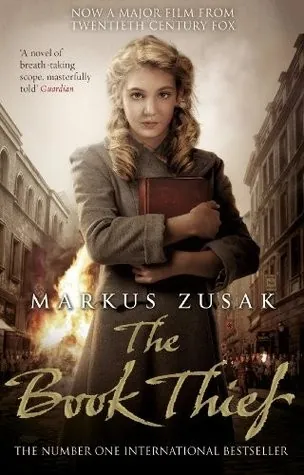
Some books change the way you read. Markus Zusak’s The Book Thief is one of them: a novel narrated by Death himself, following a young girl in Nazi Germany who steals books, shares them with her neighbors, and discovers that words can be both a weapon and a refuge. It is devastating, funny, and strangely hopeful - a story about the worst of times told by a narrator who has seen all of it and still finds room for wonder.
The book’s power comes from its contradictions: Death is the narrator and he is oddly tender; Liesel is a thief and she is the most generous character in the book; the world is collapsing and small acts of kindness keep happening anyway. If you have finished the last page - and sat with it for a while - here is where to go next.
If You Loved the Unusual Narrator: Stories Told From the Edges
The most famous thing about The Book Thief is its narrator: Death, weary, curious, unexpectedly humane, watching a little girl and deciding she is worth telling a story about. These books take the same risk with their narrators.
The Guernsey Literary and Potato Peel Pie Society (Mary Ann Shaffer and Annie Barrows)
A novel told entirely in letters, set in the aftermath of the Second World War on the island of Guernsey: a writer begins corresponding with the members of a book club that was invented in 1941 as an excuse to break curfew, and the letters reveal the island’s story - occupation, resistance, loss, and the books that kept people alive. The form is the message: like Zusak, the authors trust that a story told from many small voices can carry more truth than a single grand one.
It is the gentlest possible companion to The Book Thief: the same war, the same love of books, the same insistence that literature is a form of resistance - but told in a warmer key, with letters instead of death, and with hope arriving more readily.
The Curious Incident of the Dog in the Night-Time (Mark Haddon)
Christopher Boone narrates with a precision that makes the ordinary world strange: he does not understand metaphors, he cannot tell a joke, and he knows every prime number up to 7,057. When he investigates the murder of his neighbor’s dog, he uncovers, along the way, the far larger mystery of his own family. His narration is the book’s great achievement - a mind that works differently, rendered with complete fidelity and complete respect.
The connection to Zusak is structural: both books take a narrator who sees the world from an unexpected angle and make that angle the story. Where Death is weary, Christopher is exact; where Death looks down from above, Christopher looks from inside. Both narrators, in their different ways, make you see the world anew.
The Book Thief, Read Again for the Language
Zusak’s prose is the book’s signature: sentences that break grammar to break your heart, images that arrive like gifts (“the sky was the color of a TV tuned to a dead channel”). On a re-read, notice how the language does the work - how the narrator’s voice carries the book’s whole argument about words. The stolen books in the story are not just plot devices; they are the book’s method. Zusak is showing you, in every sentence, what Liesel discovers: that language can name the horrors and, in naming them, make them survivable. The second read reveals the craft behind the voice, and the book becomes, if anything, more moving.
If You Loved the War Setting: Ordinary Lives in Extraordinary Times
The book’s subject is not the war itself but the people living through it - the Hubermanns, Rudy, Max, the neighbors on Himmel Street. These books share that focus.
The Nightingale (Kristin Hannah)
Two sisters in occupied France, two very different forms of resistance: Vianne, who stays and endures, and Isabelle, who joins the resistance and fights. Kristin Hannah’s novel is a sweeping, emotionally devastating story about the women the history books left out, and it shares The Book Thief’s central insight: that heroism in wartime is not only grand gestures but also the daily, invisible work of survival and care.
The two books complement each other perfectly. Zusak shows the war from the German side, through the eyes of a child; Hannah shows it from the French side, through the eyes of women. Both are about the people the official histories forgot, and both are built on the conviction that their stories matter.
The Alice Network (Kate Quinn)
Two timelines, two women, one spy network: Charlie, an American college girl in 1947 searching for the truth about a friend, and Eve, a former spy whose work for the real-life Alice Network in occupied France changed her forever. The book alternates between their stories, and the connection between them - revealed slowly, painfully - gives the novel its shape.
It is a story about women at war and the cost of courage, and it shares The Book Thief’s fascination with the secret lives people lead under occupation. Where Zusak’s book is about words, Quinn’s is about codes - the messages, hidden in plain sight, that kept the resistance alive.
Code Name Verity (Elizabeth Wein)
The most formally daring book on this list: a young woman, captured by the Gestapo and accused of being a spy, is forced to write a confession - and what she writes is the story of her friendship with the pilot who brought her down. The book is structured as her confession, and the structure is the key to the mystery at its heart.
It is a book about friendship and courage under the worst possible circumstances, and it is the closest spiritual cousin to The Book Thief on this list: both are about young women in the Second World War whose survival depends on words - on what they say, what they hide, and what they choose to tell. The ending is devastating and it is earned.
If You Loved the Child Protagonist: Young Eyes on a Broken World
Liesel is the heart of the book - a child who loses everything and finds, in books and friendship, a way to keep going. These books center children in the same way.
The Boy in the Striped Pajamas (John Boyne)
Bruno is nine years old when his family moves to a place he does not understand - “Out-With,” he calls it - and he befriends a boy on the other side of a fence. The book is narrated with a child’s innocent incomprehension, and that innocence is the point: the horror of the setting is rendered through a narrator who cannot name it. It is a smaller book than Zusak’s but it works the same way, using a child’s voice to make the reader feel what the child cannot say.
I Am Malala (Malala Yousafzai)
Not fiction, but the same story told true: a girl who loved school and words, in a place where both became dangerous. Malala’s memoir is the real-world counterpart to Liesel’s story - a child whose courage and whose commitment to words changed her life and her world. It is a book to read alongside The Book Thief as a reminder that the story Zusak set in 1940s Germany is still being lived, in different places, today.
The Boy, the Mole, the Fox and the Horse (Charlie Mackesy)
A small book that does a large thing: a boy, a mole, a fox, and a horse walk together through a landscape, and they talk about the things that matter - kindness, courage, home, asking for help. It is not a novel, and it is not about the war, but it shares The Book Thief’s deep subject: how people keep each other alive with small acts of care, and how words can be a refuge when the world is cold. It is the book to reach for when you need the warmth back.
If You Loved the Books-About-Books: Stories That Celebrate Stories
The Book Thief is, among other things, a love letter to reading - Liesel steals books because she needs them, and the book insists, again and again, that literature is survival. These books share that conviction.
The Guernsey Literary and Potato Peel Pie Society (Mary Ann Shaffer and Annie Barrows)
The book club in the title was invented as a cover - an excuse to gather after curfew during the German occupation of Guernsey - and it became real: the islanders who met to discuss books discovered that the books were keeping them alive. It is the purest expression on this list of The Book Thief’s central idea: that reading together is a form of resistance, and that a story shared is a story that cannot be taken away.
The Storied Life of A. J. Fikry (Gabrielle Zevin)
A grumpy bookseller, a remote island bookstore, a baby left on the doorstep, and a life rearranged by both. Zevin’s novel is a love letter to bookstores and the communities they create, and it shares Zusak’s belief that books are not ornaments but necessities - the things that connect us to each other and to ourselves.
On Reading Books About the Darkest Times
It is worth pausing on the question these books raise: why do we read about the Holocaust, about the war, about the worst things human beings have done to each other? The answer The Book Thief offers is not that we read to be horrified but that we read to understand - and to remember. Liesel’s story matters because the people in it mattered: the Hubermanns, Rudy, Max, the neighbors on Himmel Street. The war is not an abstraction in the book; it is a series of individual lives, each one loved, each one lost. That is what the books on this list do: they take history’s vast statistics and turn them back into people. They are difficult to read, and they should be. But they are also, in their own strange way, hopeful - because the act of telling the story is itself an act of defiance, a refusal to let the dead be forgotten. When you finish a book like this, you are not left with despair; you are left with the memory of particular people, and with the determination that their stories will be told again.
Building Your Own Bookshelf: A Reading Order
Here is a suggested path that moves from the closest match outward:
- Start with Code Name Verity for the most similar blend of war, words, and friendship.
- Move to The Guernsey Literary and Potato Peel Pie Society for the books-about-books warmth.
- Try The Nightingale for the sweeping historical epic.
- Pick up The Curious Incident of the Dog in the Night-Time for the extraordinary narrator.
- End with The Boy, the Mole, the Fox and the Horse when you need the hope back.
For more books that carry weight without graphic content, our best books without explicit content list gathers stories with real substance, and our books without explicit content themes and values guide explains what makes them work. The stories section of our site is full of guides like this one, so there is always another book to love.
The Words That Remain
The Book Thief ends with a question that the whole book has been building toward - about words, and what they can do, and whether they are worth it. The answer, Zusak suggests, is written in every page you have just read: yes, they are. Words fail, and words lie, and words cannot bring back the dead - but they can carry a girl through the worst of times, they can keep a community alive, they can tell a story that Death himself decides is worth telling. The books on this list are all answers to the same question, from the islanders of Guernsey to the spies of the Alice Network to the boy with the extraordinary mind. They are the words that remain, and they are worth it.
Frequently Asked Questions
What makes a book similar to The Book Thief?
Which book is closest to The Book Thief?
Are there other books like The Book Thief for younger readers?
What should I read after The Book Thief?
Is The Book Thief suitable for all readers?
Where can I find more clean reads like this?
Featured Recommendations
Raining Book Editorial
The Raining Book editorial team curates the best book recommendations and reading guides for every type of reader.