Books Like The Alice Network

Kate Quinn’s The Alice Network has one of the most satisfying structures in modern historical fiction: two timelines, two women, one secret that binds them across decades. In 1947, Charlie St. Clair, an American college girl who is “in trouble,” is searching for the truth about her cousin, who vanished in France during the war. In 1915, Eve Gardiner is a young woman desperate to contribute to the war effort, who finds herself recruited as a spy for the real-life Alice Network - a ring of women who gathered intelligence in occupied France and paid for it with their lives.
The two stories interleave, and the connection between them - revealed slowly, painfully - gives the novel its shape. It is a book about women at war, the cost of courage, and the debts we owe to the people who came before us. If you have finished it and want more, here is where to look.
If You Loved the Two-Timeline Structure: Then and Now, Braided Together
The pleasure of The Alice Network is partly structural: the way the 1915 story and the 1947 story illuminate each other, each revealing what the other has hidden. These books use the same architecture.
The Nightingale (Kristin Hannah)
A single timeline, but the same territory: two sisters in occupied France - Vianne, who endures, and Isabelle, who fights - and the novel follows them through the war in all its horror and all its small mercies. It is the most famous companion on this list, and it shares the Alice Network’s focus on the women whose courage was written out of the official record.
Read the two books back to back and you get the full picture of women’s wartime France: Quinn’s spies and Hannah’s civilians, the resistance and the endurance, the girls who fought and the women who simply refused to break.
The Four Winds (Kristin Hannah)
Hannah’s Dust Bowl epic: Elsa Martinelli must decide whether to stay and watch her family starve in 1930s Texas or leave for California, where the promise of work is really a promise of exploitation. It is a single-timeline story, but it shares the Alice Network’s interest in women pushed to their limits and the historical catastrophes that test them.
Orphan Train (Christina Baker Kline)
Two timelines, two orphans: Molly, a foster child in modern Maine, and Vivian, an Irish immigrant child who rode the orphan trains of the 1920s and 1930s, sent west to families who wanted labor more than love. Their stories braid together as Molly helps Vivian sort through her past, and the book shares the Alice Network’s conviction that the past is never really past - it is just waiting for someone to ask.
If You Loved the Spies: Women Who Fought in the Shadows
Eve’s story - the young woman recruited into a spy ring, the codes, the danger, the cost - is the novel’s engine. These books are about the women who spied.
Code Name Verity (Elizabeth Wein)
A young woman, captured by the Gestapo and accused of being a spy, is forced to write a confession - and what she writes is the story of her friendship with the pilot who brought her down. The book is structured as her confession, and the structure is the key to the mystery at its heart. It is the closest spiritual cousin to Eve’s story on this list: a woman at war, using words as her weapon, paying the price for her courage. The ending is devastating, and it is earned.
A Woman of No Importance (Sonia Purnell)
The true story that reads like the most thrilling fiction: Virginia Hall, an American woman with a prosthetic leg, who became one of the most wanted spies in occupied France - the Gestapo’s most dangerous Allied agent, and the woman they could never catch. Purnell’s biography is the real-world counterpart to Eve’s story, and it is a reminder that Quinn’s novel, for all its drama, is rooted in the actual courage of actual women. The “Limping Lady” was real, and her story is even more incredible than fiction.
The Spying Game (Michael Donkor)
A quieter, more literary take on the spy novel: a Ghanaian British teenager, adopted as a baby, begins to suspect that his parents are not who they say they are, and that the family secrets reach back to the Cold War. It is a different kind of spy story - no guns, no chases, just the slow, corrosive discovery that the people who raised you have been lying your whole life - but it shares the Alice Network’s fascination with the long shadow that secrets cast.
If You Loved the Aftermath: What War Does to the People Who Survive It
One of the most striking things about The Alice Network is how much of it happens after the war: Charlie’s 1947 search, Eve’s broken life, the reckoning with what the war took from the women who fought it. These books are about the aftermath.
The Alice Network, and the Cost of Courage
The novel’s darkest thread is the price Eve pays. She survives the war, but she is not the same person - she drinks, she isolates, she has spent decades not talking about what happened. The book insists that this is part of the story too: courage has consequences, and the women who fought were never thanked, never honored, never allowed to put the war down. Charlie’s search, in a sense, is the book’s way of finally thanking Eve - of saying that someone remembered, that someone wanted to know. That is the novel’s deepest argument: that the debt we owe to the women who came before us is not paid by statues or parades but by attention - by asking, listening, and telling their stories.
The Alice Network (Kate Quinn), and the Other Timeline
The 1947 timeline is not a framing device; it is the novel’s second half, and it carries as much weight as the spy story. Charlie is “in trouble,” as the euphemism of the era has it, and her search for Rose is also a search for herself - for a way to be brave, for a model of womanhood that does not require apology. The novel is as much about Charlie’s coming into her own as it is about Eve’s past, and the way the two stories converge in the final pages is the book’s great achievement. It is a story about women helping women across decades, and it is quietly radical in its insistence that the past is not dead - it is alive in the people who carry it.
The Guernsey Literary and Potato Peel Pie Society (Mary Ann Shaffer and Annie Barrows)
A novel told entirely in letters, set in the aftermath of the war on the island of Guernsey: a writer begins corresponding with the members of a book club that was invented in 1941 as an excuse to break curfew. It is the gentlest possible version of the aftermath story - the war is over, the islanders are rebuilding, and the letters are how they process what happened. It shares the Alice Network’s interest in the people the war left standing, but in a warmer key.
The Paris Wife (Paula McLain)
A different kind of aftermath: Hadley Richardson’s story - her marriage to Ernest Hemingway, their years in Paris among the lost generation, and the slow unraveling that followed. It is not a war story, but it shares the Alice Network’s interest in women whose lives were shaped by forces larger than themselves, and in the cost of loving a man who is not capable of loving you back.
If You Loved the Search: Journeys Into the Past
Charlie’s search for Rose - the cousin who vanished, the truth that everyone around her is hiding - drives the modern timeline. These books are built around searches of the same kind.
The Sweetness at the Bottom of the Pie (Alan Bradley)
A dead man in the cucumber patch, a postage stamp, and a secret from her father’s past: Flavia de Luce, eleven years old and utterly convinced she is the best detective in England, sets out to solve the case herself. The search is the book’s engine, and it shares the Alice Network’s understanding that the past is never really buried - it is just waiting for someone sharp enough to dig it up.
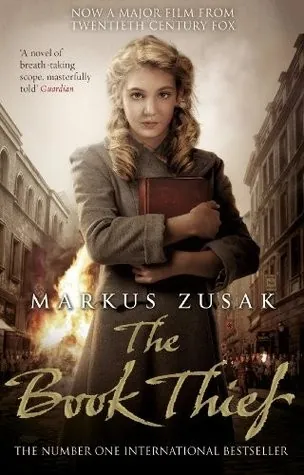
The Book Thief (Markus Zusak)
Not a search in the literal sense, but the same deep structure: Liesel’s story is a search for what was taken from her - her family, her home, her childhood - and for the words that can carry her through the worst of times. Narrated by Death himself, it is the most beloved companion on this list, and it shares the Alice Network’s conviction that the stories of the war’s ordinary people deserve telling.
If You Loved the Ensemble: Women Together, for Better or Worse
Beneath the structure, The Alice Network is a story about women helping women - Eve and Charlie, the spies of the network, the bonds that form under pressure. These books are about women together.
Resistance Women (Jennifer Chiaverini)
A novel that follows a group of women - an American journalist, a German countess, a student, a doctor - through the rise of the Third Reich and into the resistance. It is a sweeping ensemble story in the Alice Network mold, and it shares Quinn’s conviction that women’s stories from this period have been systematically undervalued.
The Help (Kathryn Stockett)
A different country, a different kind of oppression: young white women and the Black maids who raise their children, in 1960s Mississippi, and the book they write together about the lives the maids are never supposed to talk about. It is a novel about women finding their voices, and it shares the Alice Network’s interest in the stories that are hidden, the courage it takes to tell them, and the price of telling.
On Reading Novels With Dual Timelines
The two-timeline structure is one of the most popular in modern historical fiction, and it is worth understanding why it works. A novel like The Alice Network uses the past not as a flashback but as a conversation: the 1915 story and the 1947 story are constantly answering each other, each timeline explaining what the other has left unexplained. Eve’s war explains why Charlie’s present looks the way it does; Charlie’s search explains why Eve’s story needed to be told at all. The structure is also a promise to the reader: the two halves will meet, the threads will braid, and the convergence will land like a door closing - satisfyingly, completely. When the technique fails, it is usually because one timeline is doing all the work while the other just waits. When it works, as it does in Quinn’s novel and in the best books on this shelf, the two timelines feel like two people telling the same story from opposite ends of a room, and the reader is the one standing in the middle, watching the truth arrive from both directions at once.
Building Your Own Network: A Reading Order
Here is a suggested path that moves from the closest match outward:
- Start with The Nightingale for the same war and the same women.
- Move to Code Name Verity for the spy story with the twist.
- Try A Woman of No Importance for the true story behind the fiction.
- Pick up Orphan Train for the two-timeline structure in a different setting.
- End with The Help when you want the ensemble of women finding their voices.
For more books with weight and substance, our family-friendly books without explicit content list gathers stories that are rich without being graphic, and our meaningful books without profanity list helps you find novels with strong language in the best sense. The stories section of our site is full of guides like this one, so there is always another story to carry with you.
The Women Who Would Not Be Forgotten
The Alice Network endures because it tells two stories at once - the story of the women who spied and the story of the woman who finally asked about them - and insists that both matter. Eve’s war was real, and so was her silence afterward; Charlie’s search was real, and so was her courage in asking. The novel’s great gift is the way it connects them: the past is not dead, the book says; it is alive in the people who carry it, and it is waiting for someone to ask. The books on this list are all, in their own ways, acts of asking - searches for the women the histories left out, and for the truth of what they endured. Read them, and the network grows.
Frequently Asked Questions
What makes a book similar to The Alice Network?
Which book is closest to The Alice Network?
Are there other books like The Alice Network for younger readers?
What should I read after The Alice Network?
Is The Alice Network suitable for all readers?
Where can I find more clean reads like this?
Featured Recommendations

Raining Book Editorial
The Raining Book editorial team curates the best book recommendations and reading guides for every type of reader.