Books Like And Then There Were None

There is a particular flavor of dread that only Agatha Christie could brew, and And Then There Were None is its purest expression. Ten strangers, each hiding a secret, are invited to a remote island and then, one by one, die according to the lines of a nursery rhyme. No detective arrives to save them. No one is innocent. The reader is trapped on the island with them, watching the count drop, knowing that the killer is one of the ten - and that the clues are all there, if only you could see them clearly.
It is the best-selling mystery of all time, and it created a template that still dominates the genre: the locked-room mystery with a shrinking cast. If you have finished the last page - and then gone back to the beginning to check what you missed - here is where to go next.
If You Loved the Locked-Room Setup: Nowhere to Run
The genius of Christie’s island is that it removes every possibility of escape. The suspects cannot flee, the police cannot arrive, and the killer cannot be an outsider. Every book in this first group traps its characters just as effectively.
Murder on the Orient Express (Agatha Christie)
The most famous locked-room mystery ever written is Christie’s own: a murder on a snowbound train, thirteen suspects, and a solution that is so audacious that readers have argued about it for ninety years. Hercule Poirot, trapped by a blizzard, must solve a crime that seems to have no possible perpetrator - and the answer, when it comes, forces him to make a choice that a lesser detective could not.
It is the perfect companion to And Then There Were None because it asks the same question from the other side. The island book is about collective guilt - everyone on the island has done something wrong. The train book is about collective justice - what happens when a group decides that the law has failed. Read them together and you get Christie’s full argument about crime and punishment.
The Westing Game (Ellen Raskin)
A lighter, younger cousin, but the structure is the same: a closed group - sixteen heirs in an apartment building - and a puzzle that implicates everyone. The difference is tone: where Christie deals in dread, Ellen Raskin deals in delight. The heirs are not suspects in a murder but players in a game, and the game, it turns out, is the point. The solution reframes the entire book, and careful readers are given every clue they need to solve it themselves. It is the perfect introduction to the locked-room tradition for readers who are not yet ready for Christie’s body count.
And Then There Were None, Read Again for the Craft
No book rewards a re-read more than Christie’s island. On a first read, you are counting bodies; on a second, you are watching the mechanism. Notice how carefully Christie manages information: each confession, each detail about the guests’ pasts, each moment of isolation. Notice how the nursery rhyme structures the deaths - and how the killer uses it as both a plan and a distraction. The second read reveals that everything was in front of you, and that the solution, far from being a trick, is the most logical possible answer to the puzzle she built. That is the mark of fair-play mystery at its absolute best, and it is the standard every book on this list is trying to meet.
If You Loved the Moral Weight: Guilt That Cannot Be Outrun
What makes And Then There Were None more than a puzzle is its moral seriousness. These are not random victims; they are people who did bad things and got away with them - and the book asks whether anyone has the right to be the judge. The books in this group carry the same weight.
The Sweetness at the Bottom of the Pie (Alan Bradley)
Alan Bradley’s debut introduces Flavia de Luce, an eleven-year-old chemistry prodigy who discovers a dead man in her family’s cucumber patch and decides, naturally, to solve the murder herself. The book is set in a crumbling English manor in 1950, and its mystery - involving a postage stamp, a missing professor, and a secret from her father’s past - unfolds with a warmth that balances its darker currents.
The connection to Christie is real: Bradley’s village England, his cast of suspicious locals, his amateur detective who is smarter than the police. But the book’s real inheritance from And Then There Were None is its understanding that the past does not stay buried. Every secret in the book is old, and every one of them is still alive, still capable of killing. Flavia is a delight - sharp, funny, and utterly unafraid - and the book treats her intelligence with the same respect Christie gave her detectives.
The No. 1 Ladies’ Detective Agency (Alexander McCall Smith)
A very different kind of guilt weighs on the cases of Precious Ramotswe, Botswana’s first female private detective. The mysteries here are small - a missing husband, a wayward daughter, a deception that turns out to be kindness - but the moral questions are the same ones Christie raised: what do we owe each other, what do we owe the truth, and when is compassion more important than justice?
McCall Smith’s book is the gentlest possible response to Christie’s darkness. Where the island book insists that everyone is guilty, Ramotswe’s Botswana insists that everyone is complicated - guilty of something, yes, but also deserving of understanding. If And Then There Were None left you wanting to think about justice and mercy, this is the book that continues the conversation in a warmer key.
If You Loved the Unreliable Narrator: Truth as a Moving Target
One of the unsettling discoveries of And Then There Were None is that you cannot trust the survivors’ accounts - each death is witnessed by people who have every reason to lie. These books make that instability the whole point.
The Murder of Roger Ackroyd (Agatha Christie)
The book that made Christie famous - and then infamous - is the one that taught the genre that the narrator could be lying. Dr. Sheppard, the village doctor, tells us everything about the murder of Roger Ackroyd, and he is, by the standards of the genre, perfectly reliable - until he is not. The solution caused an uproar when the book appeared in 1926, and readers have been arguing about the ethics of its trick ever since.
It is the essential companion to the island book because it is Christie’s purest experiment with the reader’s trust. And Then There Were None hides the solution in plain sight; Ackroyd hides it in the act of narration itself. Read both and you have seen the two poles of her art: the fair-play puzzle and the narrative trick, the book that plays by the rules and the book that rewrites them.
The Appeal (Janice Hallett)
Janice Hallett’s modern masterpiece is a locked-room mystery told entirely through emails, texts, and messages among the members of a small-town amateur theater group. The reader is handed the whole file - every message, every attachment, every telling pause - and invited to solve the case before the lawyers reviewing it do. The form is the message: the medium itself is unreliable, full of the small deceptions, polite evasions, and outright lies that make up ordinary correspondence.
It is the most exciting mystery of the past decade, and it carries Christie’s DNA: a closed community, everyone with something to hide, and a solution that is findable if you pay attention to the right clues. Like the island book, it trusts the reader completely - and like the best of Christie, it rewards that trust with a solution that was in front of you all along.
If You Loved the Body Count: The Countdown Continues
There is a specific thrill in a mystery where the danger is quantified - ten little soldiers, then nine, then eight. These books keep the countdown going.
One by One (Ruth Ware)
Ruth Ware’s One by One is a direct descendant of the island book: eight employees of a tech startup, snowed in at a luxury alpine chalet, dying one by one while an app tells the world how many are left. The setting is modern - there is a music-streaming app, a wellness retreat, a group of colleagues who hate each other - but the mechanism is pure Christie: an isolated group, a shrinking count, and the creeping certainty that the killer is among them.
Ware is the most successful contemporary practitioner of the Christie countdown, and her books are built with the same respect for the reader’s intelligence. The solution is fair, the tension is relentless, and the ending earns its darkness.
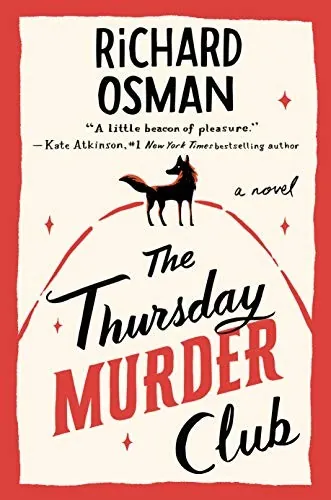
The Thursday Murder Club (Richard Osman)
A warmer take on the same machinery: four retirees in an English retirement village solve cold cases for fun, and then a real murder arrives. Osman’s book has Christie’s love of the closed community and her appreciation for the sharpness of people who are underestimated - in this case, the elderly, who have a lifetime of experience and absolutely no patience for nonsense.
It is a cozy counterweight to the island book’s dread, and it proves that the Christie engine can run on warmth as easily as fear. The mystery is properly built, the solution is fair, and the characters are so delightful that you will want to stay on their island forever.
If You Loved the Justice Question: Who Has the Right to Judge?
Beneath the puzzle, And Then There Were None is asking the most uncomfortable question in crime fiction: if the law cannot punish the guilty, does anyone else have the right to? These books take the question seriously.
A Time to Kill (John Grisham)
Grisham’s first novel is a legal thriller about a father who takes justice into his own hands, and a young lawyer who must defend him. It is not a whodunit - the crime is committed in the first chapter, in front of witnesses - but it is a whodunit of a different kind: who gets to decide what justice is, and what the law is for when it fails the people it is supposed to protect.
The connection to Christie is thematic rather than structural. The island book imagines a private judge; Grisham imagines a public one, and the trial that follows puts the whole community on the stand. Read them together and you get the full argument: Christie’s dark fantasy of vigilante justice, and Grisham’s sober account of what it actually costs.
Everyone in My Family Has Killed Someone (Benjamin Stevenson)
A locked-room mystery with a body count and a killer sense of humor: a family reunion where, as the title promises, everyone has killed someone. Ernest Cunningham narrates, explains the rules of the genre as he goes, and delivers the funniest commentary in modern crime fiction - but the book is not a joke. The puzzle is rigorous, the solution is fair, and the family’s collective guilt is treated with real seriousness.
It is the ideal modern companion to Christie: it loves her rules, honors her craft, and then does something she never could - makes you laugh while the bodies pile up.
Building Your Own Island: A Reading Order
Here is a suggested path that moves from the closest match to the most surprising:
- Start with Murder on the Orient Express for Christie’s other great locked room.
- Move to The Murder of Roger Ackroyd for the narrative trick.
- Try The Appeal for the modern reinvention of the form.
- Pick up The Sweetness at the Bottom of the Pie for the cozy with teeth.
- End with The Thursday Murder Club when you need the warmth back.
For more puzzles in this spirit, our thoughtful guide to family-friendly fiction explains how to match a mystery to the reader, and our best books without explicit content list gathers stories that keep the suspense without the graphic darkness. The stories section of our site is full of reading lists built with the same care, so there is always another island waiting.
The Island That Never Stops Growing
And Then There Were None endures because it is two books at once: a perfect puzzle and a profound meditation on guilt. Every generation discovers it, and every generation finds something new - the mechanism, the morality, the sheer audacity of its structure. The books that follow in its wake have their own answers to the questions it raises, their own locked rooms, their own countdowns. But they all owe something to that island: ten strangers, a rhyme, and the most elegant trap ever built in fiction. Step onto it once, and you will spend the rest of your reading life looking for the way out.
Frequently Asked Questions
What makes a book similar to And Then There Were None?
Which book is closest to And Then There Were None?
Are there other books like And Then There Were None for younger readers?
What should I read after And Then There Were None?
Is And Then There Were None suitable for all readers?
Where can I find more clean reads like this?
Featured Recommendations

Raining Book Editorial
The Raining Book editorial team curates the best book recommendations and reading guides for every type of reader.