Meaningful Community and Belonging for Adults
There is a specific moment in adulthood when the structure of belonging disappears. The family, school and neighborhood that once supplied community without effort recede - and the adult discovers that the belonging of adult life must be built deliberately, against the pull of work, family and exhaustion. The research on this is stark: adults report fewer close friends and more loneliness than any generation in recent history, and the decline tracks the disappearance of the local institutions that once supplied community. The meaningful community and belonging books for adults take this difficulty seriously. They do not celebrate togetherness; they examine what building it requires from people with real lives. This guide gathers the best of them - the novels that show adult belonging being built, the memoirs that record it as it was lived, and the research that explains why it matters.
Why Adult Belonging Deserves Its Own Shelf
The belonging books written for children tell a story of given community - the family, the neighborhood, the school that supplies belonging without effort. Adult belonging is a different creature. It must be built without the structures of childhood, maintained against the pull of adult life, and practiced in a culture that has quietly dismantled many of the institutions that once did the building.
This is why adult belonging deserves its own shelf. The mechanism is the same as childhood belonging - repeated participation, being known, being expected - but the conditions are harder, and the books below are honest about the difficulty.
The Novels That Show Adult Belonging
Adult belonging is the quiet subject of some of the best novels of the last century. These books do not announce the theme; they show it being built, lost and rebuilt.
The Shell Seekers by Rosamunde Pilcher
Pilcher’s novel is the warmest book on this shelf and one of the truest. Penelope Keeling, an aging artist, looks back on a life shaped by the places and people she belonged to - and the novel shows how the belonging was built, piece by piece, across a lifetime. It is the essential adult demonstration of the theme: belonging is not a place you arrive at once but a web you build your whole life, and the building is the work of adulthood.
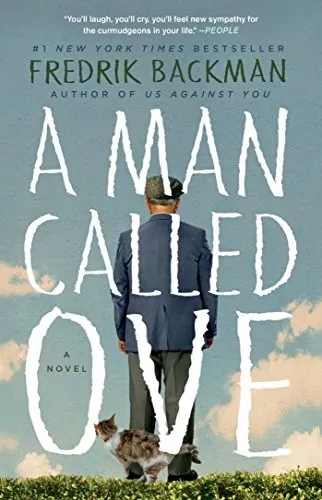
A Man Called Ove by Fredrik Backman
Backman’s novel is the gentlest demonstration of adult belonging and one of the most instructive. Ove is a bitter, grieving widower whose life has narrowed to rules and routines - until his new neighbors begin, against his will, to draw him into their lives. The novel is about the late-in-life belonging that arrives uninvited: the community that does not choose you, that you resist, and that saves you anyway. It is a perfect demonstration of the research finding that belonging is built by participation - the neighbors keep showing up, and the showing up is the community.
The Grapes of Wrath by John Steinbeck
Steinbeck’s novel is the hardest book on this shelf and one of the most important. The Joad family, driven from their land, must create community among the displaced and despised - and the novel’s most famous scenes are acts of community performed by strangers for strangers. It is the book that proves the research’s central claim: belonging is built by showing up, even when showing up costs everything. For adults who have wondered whether community is possible in hard times, it is the essential answer.
Content notes: The novel deals with poverty and hardship; it is for older readers.
The Memoirs That Record the Building
Memoir brings adult belonging as it was actually built, in real places, by real people.
The Liars’ Club by Mary Karr
Karr’s memoir of growing up in a Texas oil town is a book about belonging to a place so particular it becomes its own world. It is a reminder that the deepest adult belonging is often the belonging we carry from the places we came from - the women who know your history, the neighborhood that raised you - and that understanding that inheritance is part of building where we belong next.
Braiding Sweetgrass by Robin Wall Kimmerer
Kimmerer’s book is the most unusual and one of the most profound entries on this shelf. As a botanist and a member of the Citizen Potawatomi Nation, she writes about belonging to the land itself - the web of reciprocity that connects people to place and to the more-than-human world. Its argument - that we belong to what we care for - is a direct answer to the adult ache of disconnection, and its practice of attention and gratitude is available to anyone.
What the Research Says About Adult Belonging
The research on adult belonging is one of the most practically useful bodies of social science, and its findings should change how adults live.
The Loneliness Epidemic
Researchers have documented what has been called a loneliness epidemic: declining social connection across the adult population, driven by the decline of local institutions, the rise of remote work and the fragmentation of family life. The finding is freeing: the adult who struggles to belong is not broken, they are swimming against a current. The health stakes are real - chronic loneliness damages the body as surely as smoking - and the response is equally clear: belonging must be built deliberately.
Belonging Is Built by Participation
The central finding of community research is that belonging is the product of repeated participation. It is not a feeling that arrives but a structure that is built - the accumulated history of showing up, being known, being expected. The novels on this shelf demonstrate the finding constantly: Ove’s neighbors keep arriving; the Joads keep sharing. The lesson for adults is practical: if you want to belong somewhere, build the participation. The invitation follows the showing up, not the other way around.
The Harder Questions
A meaningful shelf should be honest about the questions the belonging literature mostly avoids.
The Cost of Adult Belonging
The first hard truth is that adult belonging has a real cost. Every community asks something - the time, the labor, the surrender of some freedom, the acceptance of the group’s limits. Adults, with their limited energy, must choose where to pay the cost, and the choosing is part of the work. The books are honest about the cost, and the honest reader accepts it.
The Shadow of Exclusion
The second hard truth is the shadow side of belonging: every community defines itself partly by who is outside it. The shelf teaches that healthy belonging is the kind that widens its circle, and that the belonging built on exclusion is a counterfeit. For adults building communities in a divided world, this is the most important distinction on the shelf.
How to Read These Books
A shelf of belonging books is only as useful as the reading, and adult readers should read with adult purpose. Three practices will get the most from these books.
First, read for the building. In every book, watch how belonging is actually constructed - the repeated showing up, the shared labor, the accumulated history. Name the mechanism as you read.
Second, read with your own communities in mind. Before you open the book, name the places where you belong and the places where you wish you did. When the book touches them, mark it.
Third, practice one act of participation. Choose a community - a neighborhood, a group, a cause - and commit to one act of showing up this month. The research and the fiction agree that this is how belonging is built.
Building Your Reading Path
There is no wrong order, but there is a useful one. Start with the warm novels - The Shell Seekers, A Man Called Ove - because they make the feeling feelable. Add the harder novel when you are ready for the cost. Read the memoirs for belonging as it was lived, and the research when you want the mechanism named. For the family version of the conversation, our family-friendly community and belonging guide collects the books to share, and our guide to meaningful family healing covers the first community we all belong to. For the wider family shelf, the family-friendly fiction guide is a natural companion.
The Adult Practice of Belonging
It is worth being concrete about what building belonging looks like in an ordinary adult week, because the books describe it abstractly and the reader has to translate. The practice has three parts. First, choose the place: identify one community you want to belong to - a neighborhood, a group, a cause - and commit to it, because belonging is built somewhere, not everywhere. Second, build the repetition: show up on a schedule, not when it is convenient, because the accumulated history of showing up is the mechanism of belonging. Third, accept the being known: let the group see you past the performance, because belonging requires the exposure.
These practices sound simple, and they are - the difficulty is not in understanding them but in doing them against the pull of adult life. The books on this shelf show the difficulty honestly: Ove’s neighbors keep arriving when arriving is inconvenient; the Joads keep sharing when sharing costs everything. The reader who wants adult belonging is not looking for a grand transformation but for the willingness to build the repetition, one ordinary week at a time.
It is worth saying plainly what the repetition is for. The accumulated history of showing up is not a means to belonging; in a real sense it is the belonging. The group that knows your name, expects your presence and notices your absence is not a group you have found but a group you have built - and the building is the bond. That is why the books on this shelf so often end with a community that formed without anyone planning it: Ove’s neighbors, the Joads’ fellow travelers, the web of care around Charlotte’s barn. Each was built one act of showing up at a time, and the reader who practices the repetition is doing the same quiet work.
Conclusion
The meaningful community and belonging books for adults take the ache seriously enough to examine its remedy. They show adult belonging being built without the structures of childhood, maintained against the pull of adult life, and tested by real costs. Start with one book and one act of participation. Read for the building; show up once this month. The books are not the goal; the community you build while reading them is.
Frequently Asked Questions
Why is belonging harder in adulthood than in childhood?
What makes belonging meaningful for adults?
What is the most common adult barrier to belonging?
Can adults still build deep new communities?
What role does place play in adult belonging?
How should adults read community books?
Featured Recommendations

Raining Book Editorial Team
The Raining Book editorial team curates the best book recommendations and reading guides for every type of reader.