Best Marriage and Commitment to Read
Every couple has a version of the same quiet question: how do we stay committed when life gets hard? The bookstore answer is that there are hundreds of books promising to answer it. The honest answer is that a small number of genuinely good books - grounded in research or in real experience - will take a couple further than a shelf of titles skimmed and forgotten. This guide gathers the best marriage and commitment books to read: the research that explains how commitment works, the guides that turn the research into practice, and the novels that show commitment under pressure.
What Makes a Marriage Book Worth Reading
Before recommending anything, it helps to define the bar. A useful marriage book does three things. It is grounded - in research, in clinical experience, or in honest memoir, rather than in slogans. It is specific, offering practices a couple can actually do rather than attitudes they should have. And it is honest about difficulty, because a marriage that has never been tested has never actually practiced its commitment.
Books that fail usually fail at the second point. They are long on inspiration and short on mechanism - the kind of book you finish feeling hopeful and unchanged. The books below pass the test. They explain how commitment works, they tell you what to do on Tuesday, and they do not pretend that staying committed is easy.
The Research Foundation
If the marriage shelf has a load-bearing wall, it is the research of John Gottman, whose laboratory observations of thousands of couples identified the patterns that predict whether marriages last.
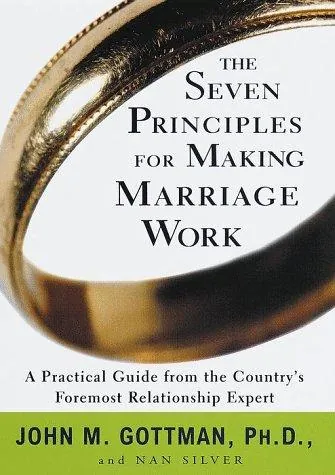
The Seven Principles for Making Marriage Work by John Gottman
Gottman’s classic is the most research-backed marriage book ever written. His lab observed couples for decades and identified the behaviors that distinguish the marriages that last from the ones that fail - and the findings are remarkably concrete. The seven principles include enhancing your love map (knowing your partner’s inner world), turning toward instead of away, letting your partner influence you, and - perhaps most importantly - mastering the art of repair after conflict.
What makes the book the essential starting point is its specificity. Gottman does not tell couples to communicate better; he shows them how, with exercises and conversation starters built on the research. The book is the foundation of the shelf, and almost everything else builds on it.
The Seven Principles: The Workbook by John Gottman and Julie Schwartz Gottman
For couples who want the research turned into practice, the workbook is the essential companion. It walks a couple through the exercises from the main book - the love maps, the fondness and admiration system, the conflict grids - with space to do the work together. The workbook is the difference between reading about a strong marriage and practicing one.
The Practice of Everyday Commitment
The research explains what works; the practice books turn it into daily life. The strongest of these are honest about how unglamorous the work is.
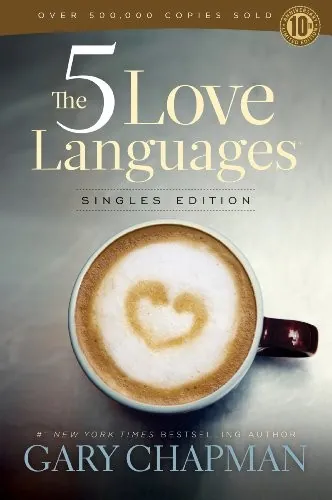
The Five Love Languages by Gary Chapman
Chapman’s book is one of the most popular relationship books ever written, and its core claim is simple and useful: people express and receive love in different ways - words of affirmation, acts of service, receiving gifts, quality time, physical touch - and couples often fail not from lack of love but from speaking different languages. The book’s practical value is its diagnosis: if your partner does not feel loved, the problem may not be the love but the language.
The book is at its best when it is used as a diagnostic tool rather than a prescription. Couples who read it together and identify their languages gain a concrete tool for turning good intentions into received love.
Hold Me Tight by Sue Johnson
Johnson’s book is grounded in attachment science - the research on how humans bond - and it reframes the hardest conflicts in marriage as bids for connection. Her model of love as emotional bonding, and her seven conversations that repair the bond, give couples a map of the moments when commitment is actually made: not in the grand gestures but in the small bids for attention and the responses to them.
The book is especially valuable for couples who find themselves in the pattern Johnson calls the demon dialogue - the pursue-withdraw cycle that erodes so many marriages. It explains the pattern, and it offers the conversations that break it.
The Novels That Show Commitment Under Pressure
The research explains how commitment works; the novels show what it feels like. The best marriage fiction is honest about the cost of commitment, and it reveals the emotional patterns the research describes.
Pride and Prejudice by Jane Austen
Austen’s novel is usually read as a courtship story, and it is - but it is also a book about the foundation of lasting commitment. Elizabeth and Darcy begin with every obstacle: pride, prejudice, family interference, misunderstanding. And the book shows that their commitment is built not on the initial attraction but on the painful revision of their judgments - the willingness of each to admit they were wrong. The book’s lesson is that lasting love begins where self-knowledge begins.
Anna Karenina by Leo Tolstoy
Tolstoy’s novel is the deepest account of commitment in fiction, and it is a warning as much as a portrait. Anna, who leaves her marriage for passion, finds that passion without commitment becomes its own prison; Levin, who works at his marriage the way he works at his land, finds the peace that Anna cannot reach. The novel’s famous contrast - every unhappy family is unhappy in its own way - is really a thesis about commitment: that the happy marriages are the ones that endure the ordinary, repetitive work of daily life.
The book is long and demanding, and it is worth it. For readers who want the commitment conversation in the context of the family it builds, our guide to family values is a natural companion.
The Time Traveler’s Wife by Audrey Niffenegger
Niffenegger’s novel is a love story with a twist that makes it a profound meditation on commitment: Henry time-travels involuntarily, and Clare must wait for him, again and again, across a lifetime. The novel’s subject is what commitment means when the person you love cannot always be with you - the waiting, the trust, the choice to stay through every absence. It is a modern fable of the oldest commitment question: will you still choose me when I cannot be here?
Content notes: The novel is written for adults and includes mature themes; it is best for readers who want the commitment story in a modern, imaginative key.
The Novels and the Research, Side by Side
One of the most useful ways to read the marriage shelf is to hold the research and the novels side by side, because each illuminates the other. Gottman’s finding that lasting marriage is predicted by the quality of repair becomes vivid when you watch Elizabeth Bennet revise her judgment of Darcy - the repair of a false conclusion, made at the cost of her pride. Johnson’s account of the pursue-withdraw cycle becomes visible in Anna Karenina’s marriage, where each partner’s withdrawal feeds the other’s pursuit until there is nothing left. And de Botton’s argument that the romantic ideal is the enemy of real love is the novelistic version of the research finding that couples who last are not the ones with the least conflict but the ones who repair best after it.
The pairing is not decoration; it is the deepest way to learn. The research names the pattern; the novel makes it feelable. A couple who has read The Seven Principles and then watched Anna Karenina has understood the demon dialogue at two levels - intellectually and emotionally - and the emotional understanding is the one that changes behavior. The best readers of the marriage shelf read both, and they read them together.
The Harder Shelf: Commitment Tested
The books above assume commitment is possible; the harder books ask what it costs - and what happens when it fails.
The Course of Love by Alain de Botton
de Botton’s novel-in-essays follows a couple from first meeting through marriage, children, infidelity and the long middle - and it is perhaps the most honest book ever written about the ordinary difficulties of staying committed. Its central claim is that the romantic ideal of effortless love is the enemy of real love: real commitment is the daily decision to keep choosing a person you have learned to see clearly, flaws included.
The book is the perfect bridge between the research and the novels - it is a novel, but it argues like an essay, and it tells the truth about the long middle that the courtship stories skip.
Mating in Captivity by Esther Perel
Perel’s book asks the question the commitment books usually avoid: how do you keep desire alive in a long-term commitment? Her answer is counterintuitive - that security and desire pull in opposite directions, and that the couples who keep desire alive are the ones who preserve some mystery, some separateness, some space for the partner to be a stranger again. The book is provocative and honest, and it is essential reading for couples in the long middle of a committed life.
A Note on the Content of the Shelf
It is worth being honest about the range of the shelf, because the books differ widely in difficulty and in what they ask of the reader. The research books - The Seven Principles, Hold Me Tight - are accessible to any couple and are best read early, because they supply the map. The practice books - The Five Love Languages - are equally accessible and are best used as diagnostics. The novels range widely: Pride and Prejudice is accessible to most readers, Anna Karenina is long and demanding, and The Time Traveler’s Wife is written for adults with mature themes. The harder books - The Course of Love, Mating in Captivity - are essays in novel’s clothing and fiction in essay’s clothing, and they ask the reader to think as well as feel. There is no wrong order, but there is a sensible one: map first, practice second, novels third, hard questions last.
The content notes in each section above are there for a reason - some of these books are not suitable for every reader, and a couple should choose with their own history and comfort in mind. The shelf is not a gauntlet; it is a menu, and the best reading order is the one that meets the couple where they are.
How to Actually Read These Books as a Couple
A reading list is only as good as the reading, and marriage books are best read the way marriage is practiced - together. Three practices separate couples who are changed by these books from couples who merely collect them.
First, read the same book. It does not need to be aloud, but it needs to be shared, so the conversations can happen. Reading the same chapter and discussing it over dinner is the marriage equivalent of the family read-aloud.
Second, practice one thing at a time. Choose a single behavior from the book - a daily love-map question, a weekly date, a repair ritual after conflict - and commit to it for thirty days before adding anything else. Depth beats breadth.
Third, be honest about what the book stirs up. The best marriage books will surface real conflicts, and the surfacing is the work. If a chapter on repair makes you realize you have not repaired something, that is the book working - and the practice is to repair it.
Building Your Own Reading Order
There is no required order, but a useful sequence exists. Start with the research - The Seven Principles - because it gives you the map. Add the practice books - The Five Love Languages, Hold Me Tight - when you are ready to turn the map into daily life. Read the novels - Pride and Prejudice, Anna Karenina - for the emotional depth, and the harder books - The Course of Love, Mating in Captivity - when you are ready for the long middle. Finally, circle back to the guides and reading notes that help you process what you have read.
For couples who want the commitment conversation in the context of the family it builds, our guide to parents and children carries the shelf into the next generation, and our guide to family values explores the partnership at the center of the family. For readers who want to keep the reading clean, our guide to books without explicit content gathers more titles.
Conclusion
The best marriage and commitment books to read are not the ones that make you feel the most romantic. They are the ones that survive being tested against an ordinary Tuesday - the research that explains how commitment works, the practice that turns it into daily life, and the novels that show what it feels like when it is tested. Start with one book. Read it together. Practice one thing for thirty days. The books are not the goal; the marriage you build while reading them is.
Frequently Asked Questions
What is the best marriage book to start with?
Can fiction teach anything about marriage?
What is the most important factor in a lasting marriage?
Are marriage books useful before marriage?
What should I look for in a marriage book?
How should couples read marriage books together?
Featured Recommendations

Raining Book Editorial Team
The Raining Book editorial team curates the best book recommendations and reading guides for every type of reader.