A Thoughtful Guide to Parents and Children
The bond between parents and children is the first relationship and the deepest template - the pattern of attachment formed in childhood that becomes the model for every relationship that follows. It is also the relationship almost no one is trained for. The training, such as it is, comes from two places: the research that explains how the bond forms, and the stories that show what it feels like. This guide walks through both - the books that explain the bond and the books that reveal it - and it offers a way of reading that turns a shelf of books into an actual practice of the bond.
What the Bond Actually Is
Before recommending books, it helps to be precise about the thing itself. The parent-child bond is not a feeling, though it is full of feelings; it is a pattern of attachment. The research of John Bowlby and Mary Ainsworth showed that children develop secure or insecure patterns of relating based on the responsiveness of their caregivers - the child’s confidence, built through thousands of small responses, that the parent will turn toward them when it matters. That confidence becomes the model for every relationship the child forms: the friendships, the marriages, the parenting of the next generation.
That is the first lesson of the shelf, and it is worth holding onto: the bond is built in the ordinary, in the thousands of small turns toward a child that no one records and everything depends on. The books below are about that ordinary building.
The Research: How the Bond Forms
The research shelf is the foundation, because it replaces opinion with observation.
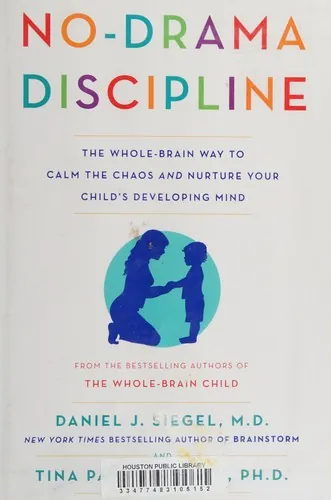
The Whole-Brain Child by Daniel J. Siegel and Tina Payne Bryson
Siegel and Bryson’s book is the most practical introduction to the science of the bond. It translates the neuroscience of child development into twelve strategies parents can actually use - for helping a child integrate the logical and emotional halves of the brain, for handling meltdowns, for building the neural pathways of resilience. The book’s great strength is its concreteness: every chapter ends with a strategy a parent can practice that same day.
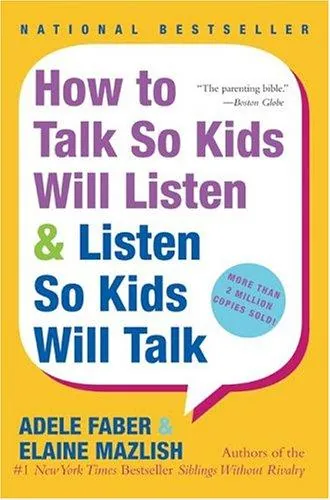
How to Talk So Kids Will Listen & Listen So Kids Will Talk by Adele Faber and Elaine Mazlish
Faber and Mazlish’s classic is the essential practical manual of the bond. Based on the work of child psychologist Haim Ginott, it teaches the specific skills of respectful communication - acknowledging feelings, offering choices instead of commands, describing the problem instead of blaming the child. The book is built on real conversations, and its genius is that it shows a parent exactly what to say in the moments when the bond is most tested.
The Deeper Guides: The Bond Across Generations
The research explains; the deeper guides explore the emotional and generational dimensions of the bond.
The Gifts of Imperfection by Brené Brown
Brown’s book is not a parenting book, but it belongs on this shelf because it addresses the quality at the heart of the bond: the willingness to be imperfect and still be loved. Brown’s research shows that children learn to be wholehearted from parents who can admit their own mistakes - and that parents who try to be perfect often pass on their shame instead of their love. For parents, the book is a liberation: the bond is strengthened not by perfection but by honest presence.
The Five Love Languages of Children by Gary Chapman and Ross Campbell
Chapman’s framework, adapted for the parent-child bond, gives parents a diagnostic tool: children express and receive love in different languages, and a parent who speaks the wrong language can love a child who does not feel loved. The book’s practical value is its concreteness: identify the child’s language, and the love begins to land.
The Novels: What the Bond Feels Like
The research describes the bond; the novels reveal it. The best fiction about parents and children is honest about the cost of the bond and the patterns that pass down the generations.
To Kill a Mockingbird by Harper Lee
Lee’s novel is the essential book on the bond, because it shows the bond being built through example rather than lecture. Atticus Finch does not tell Scout and Jem what integrity is; he defends an innocent man and lets the defense be the lesson. The children watch, absorb, and become - and the portrait of a parent who would rather be criticized than compromise is the deepest account in American fiction of what a parent actually teaches.
The Kite Runner by Khaled Hosseini
Hosseini’s novel shows the bond at its most complicated. Amir’s relationship with his father Baba is a study in the inheritance of silence and shame - the love that is present and never spoken, the disappointment that is felt and never named. The novel follows the consequences across decades, and its subject is what children inherit from parents who could not speak their love.
Content notes: The novel deals with violence and trauma; it is best for older teens and adults.
The Glass Castle by Jeannette Walls
Walls’s memoir is the great modern test case for the bond. Her parents are brilliant, loving and catastrophically irresponsible - and the memoir records both the damage and the love without flinching. The book asks the question that haunts every adult child of a complicated parent: how do you hold on to love for people who failed you, without becoming their failure? The book’s answer is not sentimental; it is the truth, told clearly, and the truth is the value.
The Bond From the Child’s Side
It is worth noting that the shelf is not only for parents - it is for adult children too, and the strongest books are written to be read from both sides. To Kill a Mockingbird is a book a parent reads as a portrait of what to be, and a child reads as a portrait of what they received. The Glass Castle is a book an adult child reads with recognition, and a parent reads with fear. The two-sidedness is the gift of the shelf: the bond is examined from both directions, and the reader who holds both views has the whole picture. The parent who reads the child’s books and the child who reads the parent’s books are meeting in the same pages, and the meeting is the bond.
The practice follows from the two-sidedness. If you are a parent, read at least one book from the child’s side - the memoirs of adult children - and ask what your children might recognize in them. If you are an adult child, read at least one book from the parent’s side - the guides - and ask what the books suggest your parents faced. The reading across the sides is the understanding, and the understanding is the bond.
The Inheritance
The most important - and most uncomfortable - lesson of the shelf is that parents pass down patterns along with names. The research calls it intergenerational transmission; the novels call it the family story; the memoirs call it the inheritance. Children absorb their parents’ ways of loving, fighting, hiding and repairing - and they carry the absorption into their own families. The books that are honest about this are the ones that help parents see what they are passing on, so they can choose what to keep and what to break.
Repairing the Pattern
The hopeful corollary is that patterns can be broken. The strongest books on the shelf - The Glass Castle, and the research on attachment - are honest that repair is possible, and that the repair often begins with the parent’s willingness to change the pattern rather than to defend it. The adult child who recognizes the inheritance has already begun the work; the parent who recognizes it has the chance to stop the transmission. That is the deepest hope of the shelf, and it is worth reading toward it.
The Practice of Presence
It is worth being explicit about what the whole shelf is really arguing, because the deepest books share a single claim: the bond is made of presence. The research says it in the language of responsiveness and secure attachment; the novels say it in the language of Atticus’s calm and Charlotte’s giving; the memoirs say it in the language of what was present and what was absent. But the claim underneath is the same - the bond is built in the ordinary, in the thousands of small turns toward a child that no one records and everything depends on.
The practical consequence is liberating and demanding at once. It is liberating because it means the bond is not made in the dramatic moments - the big conversations, the grand gestures - but in the ordinary: the bedtime story, the homework help, the being there. It is demanding because it means there is no resting state: the presence is either being practiced or it is eroding, and the erosion is usually invisible until it is advanced. The books on this shelf are, in the end, manuals for the presence - each one a different angle on the same daily work.
How to Read These Books
A reading list is only as good as the reading, and parents and children books are best read with the family in mind. Three practices make the difference.
First, read with your own family in mind. Name the one question you are carrying about your own bond before you open the book - the conversation you are avoiding, the pattern you are repeating, the love you are not sure is landing. When the book touches that question, mark it.
Second, read slowly. These are not books to skim; they are books to live with. The research takes time to absorb; the novels take time to feel; and the feeling is the work.
Third, practice one thing at a time. Choose a single behavior - a listening skill, a strategy, a conversation - and practice it for thirty days before adding anything else. Depth beats breadth, and the practice is the point.
The Bond and the Wider Family
It is worth naming how the parent-child shelf connects to the rest of the family shelf, because the bond does not exist in isolation. The parent-child bond is the first bond, and it shapes the ones that follow: the sibling bond, the marriage, the friendships. The research is clear that secure attachment in childhood predicts healthier relationships across a lifetime - and the novels show it from the inside: the Finch children’s security becomes their integrity, the March sisters’ bond with Marmee becomes their bond with each other. The parent-child books and the sibling books are two halves of one conversation, and the reader who reads both has the whole picture.
The practice of reading them together is simple: alternate, and let the questions from one shelf carry into the other. A question from the parent-child shelf - what am I passing down? - becomes deeper in the sibling books; a scene from the sibling books - the rivalry - becomes clearer in the parent-child research. The shelves are not separate; they are the same conversation, and the family that reads both is the family that understands its own bonds.
The Reading Path
There is no required order, but a useful sequence exists. Start with the research - The Whole-Brain Child, How to Talk So Kids Will Listen - for the map. Add the deeper guides - The Gifts of Imperfection - when you are ready to go beneath the surface. Read the novels - To Kill a Mockingbird, The Glass Castle - for the depth, and the harder books when you are ready for the hard questions.
For readers who want the sibling conversation alongside the parent-child one, our guide to sibling relationships is the natural companion, and our guide to parents and children for adults deepens the conversation. For families looking for warm reading to share, our guide to family-friendly romance gathers more titles.
Conclusion
The parent-child bond is the first relationship and the deepest template - and the training for it comes from the research that explains it and the stories that reveal it. The thoughtful shelf pairs them: the research for the map, the guides for the daily work, the novels for the depth, and the honest memoirs for the inheritance.
Read with your own family in mind, practice one thing for thirty days, and let the books surface what needs surfacing. The research is the map; the novels are the mirror; and the bond you build while reading is the point.
Frequently Asked Questions
What is the parent-child bond, actually?
What does attachment research say about the bond?
Why read fiction about parents and children?
What is the most common mistake in reading parenting books?
Can the bond be repaired after it is damaged?
Are these books only for parents?
Featured Recommendations
Raining Book Editorial Team
The Raining Book editorial team curates the best book recommendations and reading guides for every type of reader.