Books Like Anne of Green Gables
Introduction: The Girl Who Talked Her Way Into the World’s Heart
Anne of Green Gables (1908) begins with a mistake: an orphan girl is sent to the farm of an aging brother and sister who asked for a boy. Marilla and Matthew Cuthbert want help with the farmwork; what they get is Anne Shirley, an eleven-year-old with red hair, a bottomless imagination, a vocabulary that never runs dry and a will to be loved that is almost unbearably moving. The novel records her adventures in the village of Avonlea - the wrongs she imagines, the scrapes she gets into, the friendships she makes, the mistakes she learns from - and it has never stopped being read because Anne herself never stops being alive on the page.
This guide gathers the strongest readalikes: Montgomery’s other books, the classics that share Anne’s spirit, and the modern novels that carry her flame. Each comes with honest content notes and a clear sense of what it shares with the original.
More from L. M. Montgomery: The Author’s Own Readalikes
Readers who love Anne usually want more of Montgomery’s voice, and her other novels deliver it.
Anne of Avonlea (1909) and the rest of the Anne series continue the story: Anne becomes a teacher, then a college student, then a wife and mother, and Montgomery’s gift is that Anne never loses her imagination or her delight in the world. The later books are quieter and less comic than the first, but readers who love the character will want them all. Rilla of Ingleside (1921), the final book, is the remarkable one: it follows Anne’s youngest daughter through the First World War, and it is one of the few children’s classics to take the war seriously from a Canadian home-front perspective.
Emily of New Moon (1923) is the trilogy for readers who loved Anne’s ambition to be a writer. Emily Byrd Starr is an orphan sent to live with relatives on Prince Edward Island, and she is Anne’s sharper, more serious cousin: she knows from childhood that she is called to write, and the novels follow her apprenticeship with a fierceness that Anne’s story lacks. It is the Montgomery book most readers describe as even better than Anne, and it is the one to recommend to a reader who loves words.
The Story Girl (1911) is Montgomery’s warmest ensemble novel: a group of cousins on Prince Edward Island, gathered around a girl named Sara Stanley who tells stories so well that the whole summer becomes a story. It shares Anne’s humor, its setting and its love of narrative, and it is the best choice for readers who want the Avonlea feeling without the single-heroine focus.
The Classics That Share Anne’s Spirit
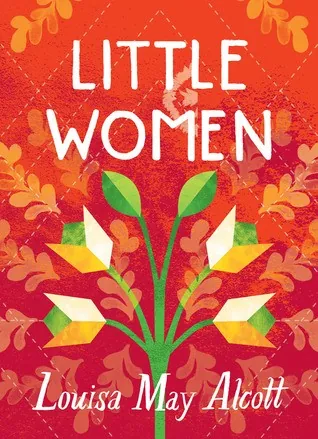
Little Women by Louisa May Alcott (1868) is the classic that Anne readers almost always love, for the simplest of reasons: Jo March is Anne Shirley in another century and another country. Both are tomboys with quick tempers, fierce ambitions to be writers, and hearts that are much softer than they admit. Both books are built on small domestic incidents that reveal character, and both believe that growing up is the most interesting story there is.
Pollyanna by Eleanor H. Porter (1913) is the other essential pairing. Pollyanna Whittaker is an orphan sent to live with a stern aunt, and she plays the “glad game” - finding something to be glad about in every situation - until even her aunt and the whole town are transformed. It shares Anne’s optimism and her power to change the people around her, though where Anne’s charm is imagination, Pollyanna’s is deliberate cheerfulness. The two books make a fascinating comparison of the same era’s belief in childhood as a moral force.
Heidi by Johanna Spyri (1880) shares the orphan-to-love structure and the pastoral setting: Heidi is sent to her grandfather in the Swiss Alps, thrives on the mountain, and is then taken to the city, where she becomes ill with homesickness until she is returned. It is less comic and less verbal than Anne, but it shares the book’s faith in childhood, nature and simple goodness.
A Little Princess by Frances Hodgson Burnett (1905) is the readalike for the darker half of Anne’s story: Sara Crewe, a wealthy boarding-school girl, is orphaned and reduced to servitude - and she survives through imagination and kindness, telling herself stories and sharing her imaginary feast with a hungrier child. Anne and Sara are the two great heroines of imaginative resilience in children’s literature, and readers of one almost always love the other.
Modern Books in Anne’s Line
The contemporary descendants of Anne Shirley are easy to spot: they feature a heroine who talks too much, imagines too much, and changes everyone around her by refusing to be ordinary.
The Penderwicks by Jeanne Birdsall (2005) is the modern book that most fully captures the Anne feeling: four sisters on a summer vacation at a grand old estate, getting into small adventures and learning about each other. It is warm, funny, entirely clean and written with a loving eye on the classics it descends from - the author has said the books were written in the spirit of the novels she loved as a child.
Ramona Quimby, Age 8 by Beverly Cleary (1981) is the urban, contemporary Anne: a girl with Anne’s imagination and her talent for unintended trouble, though her adventures are firmly modern and comic. Cleary’s Ramona series is the great American counterpart to Anne - the same belief that a child’s daily life is full of drama and that a spirited child is a gift, not a problem.
The Vanderbeekers of 141st Street by Karina Yan Glaser (2017) is the modern ensemble novel for readers who love the Cuthbert household: five siblings in a brownstone in Harlem, whose beloved landlord decides not to renew their lease, and who spend the days before Christmas trying to change his mind. It has the warmth, the humor and the faith in family that Anne readers love, in a contemporary urban setting.
Because of Winn-Dixie by Kate DiCamillo (2000) shares the structure of a lonely child transformed by a new friend - in this case, a stray dog - in a small town where everyone has a story. It is quieter and sadder than Anne, with real loneliness at its center, but it shares the book’s belief that children can heal and be healed through friendship.
Themes and Values That Hold the Readalikes Together
Reading these books side by side, the shared values become clear.
The power of imagination is the central theme. Anne transforms Avonlea not by changing anything real but by seeing it differently: a plain pond becomes the Lake of Shining Waters, a cherry tree becomes the White Way of Delight. The readalikes all carry this - Sara Crewe’s stories, Pollyanna’s glad game, Emily’s compulsion to write, Ramona’s wild interpretations of ordinary events. The books argue that imagination is not an escape from reality but a way of enriching it.
The orphan who brings life to a household is the second shared structure. Anne arrives at Green Gables and wakes the place up; Pollyanna transforms her aunt’s house; Heidi revives her grandfather; the Penderwicks bring summer to the Arundel estate. The books’ great comfort is the same as The Secret Garden’s: that a child can heal a household that adults have let grow cold.
Kindness as a practical daily choice is the third value. Anne is not good because she is sweet - she is frequently bad-tempered, vain and wrong - but because she keeps choosing, in small daily ways, to be kind: to comfort Matthew, to befriend the shy, to apologize. The readalikes share this: goodness is shown through action, not through being a good child.
Content Notes: What These Books Contain
All of the classic recommendations here are clean and suitable for family reading. Anne of Green Gables itself is entirely appropriate for children; the only note is that later books in the series include Matthew’s death and the grief that follows, handled gently and movingly. Our character book club questions guide includes ways to discuss loss in the series.
Little Women, Pollyanna, Heidi, A Little Princess and The Penderwicks are all appropriate for children. Emily of New Moon is clean, with a slightly more intense emotional register. Ramona Quimby and Because of Winn-Dixie are contemporary classics, both clean, the latter with a melancholy undertone of loneliness and a parent’s absence. None of these books contain explicit content or graphic violence, which is why the whole family can read them together. Our family-friendly family book club questions guide offers help choosing what fits your readers.
A Reading Plan for Book Clubs
Anne of Green Gables is a wonderful family book club choice because it works on every level: children love the adventures, and adults are often surprised by how much craft is in the book - Montgomery’s control of Anne’s voice, her sly comedy about village life, her unsentimental treatment of Anne’s hard childhood before Green Gables. The richest discussions come from Anne herself: Is her imagination a strength or an escape? What does her need to be loved - her obsession with her red hair, her invented past - tell us about children who have not been wanted?
Clubs that read Anne alongside a modern counterpart - The Penderwicks or Because of Winn-Dixie - can discuss what has changed and what has not: how children’s literature has become more honest about loneliness while keeping the same faith in childhood. Our character book club questions guide offers structured prompts, and our family book club questions guide adapts them for mixed-age groups.
How to Choose Your Next Book
The choice depends on which part of Anne you loved most. If it was Anne herself - her talk, her imagination, her temper - the Emily of New Moon trilogy is the essential next step, because Emily is Anne turned toward the life of a writer. If it was the household, the warmth of the Cuthbert farm and the way Anne wakes it up, then Heidi and Pollyanna share that structure of an orphan transforming a home. If it was the comedy of small-town life, The Story Girl and the Penderwicks books give you the ensemble version. If it was the deeper, sadder current beneath the humor - Anne’s orphan loneliness, her hunger to be loved - then A Little Princess and Because of Winn-Dixie honor that reading.
Age also matters. For young readers, Anne of Green Gables itself, Pollyanna, Heidi and The Penderwicks are all entirely suitable. For readers who want the same warmth with more literary weight, Emily of New Moon and Little Women are the classics that deliver it. And for a reader who wants to stay with Anne herself from childhood to motherhood, the full Montgomery series - through Rilla of Ingleside - is a reading journey few others can match.
Conclusion: The Girl Who Believed in Her Own Story
Anne of Green Gables endures because Anne Shirley is one of the few characters in literature who feels more real than most real people: she talks, imagines, rages, apologizes and loves with a completeness that has convinced generations of readers that she must exist somewhere. The novel’s quiet argument is that imagination and kindness are not childish things to be outgrown but permanent sources of strength - and that a girl who believes in her own story can change the world she lives in, one lake renamed, one friendship made, one apology offered at a time. The books on this list all carry a piece of that argument, and each one proves it in its own way. Start with whichever heroine calls to you, and let the family of spirited girls show you how large one orphan’s imagination can grow. For the full collection of reading paths, begin at the Guides section of our site.