Books Like The Road Less Traveled

There is a specific feeling that comes from finishing The Road Less Traveled: you have been told the truth about life, and you are not sure you wanted to hear it. M. Scott Peck’s book opens with the line that made it famous - “Life is difficult” - and then spends the next several hundred pages explaining why that is good news. Discipline, love, grace and spiritual growth: Peck’s synthesis of psychology and religion became a phenomenon because it took the difficulty of life seriously instead of pretending it away.
The problem after finishing it is the one every great wisdom book creates: you have the map, and you want more of the territory - more on discipline, more on love, more on the growth that happens through difficulty. This guide collects the books that genuinely belong on that shelf.
What Made The Road Less Traveled Special
Before the recommendations, it is worth naming what you are actually looking for, because the right next book depends on which part of Peck stayed with you.
If the discipline stayed with you - the four disciplines of delaying gratification, accepting responsibility, dedicating to truth and balancing - then the character and self-mastery books will fit. If the love stayed with you - Peck’s argument that love is the will to extend oneself for the growth of another - then the wholehearted-living books will be your natural next step. And if the spiritual growth stayed with you - the grace, the mystery, the journey - then the meaning and faith books will carry it forward.
Most readers are looking for all three, and the books below cover the range.
The Discipline and Character Books
The Courage to Be Disliked by Ichiro Kishimi and Fumitake Koga
If there is one book that the Road Less Traveled reader should pick up next, it is The Courage to Be Disliked. Written in the form of a dialogue between a philosopher and a young man, the book presents the psychology of Alfred Adler - the school that argues, as Peck does, that we are not victims of our past but choosers of our present.
The book’s central claim is the one Peck’s readers will recognize: that the freedom to live your own life requires the courage to be disliked, and that most of our suffering comes from living for others’ approval instead. Where Peck is dense and clinical, this book is lively and conversational - the same territory, easier access.
Content notes: Accessible non-fiction, written in dialogue form; suitable for a wide range of readers.
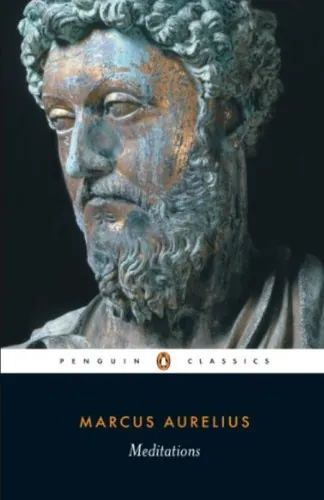
Meditations by Marcus Aurelius
For readers who want the discipline of The Road Less Traveled in its oldest form, Meditations is the book. Written as a private notebook by a Roman emperor, it is the record of a man practicing the same disciplines Peck describes - delaying gratification, accepting responsibility, dedicating to truth - two thousand years before psychology had a name for them.
The book has no system, which is its power: it is the practice itself, the daily self-audit of a person strengthening his own character. For readers who found Peck’s synthesis compelling and want the original, this is the book.
Content notes: A classical text, accessible and suitable for a wide range of readers.
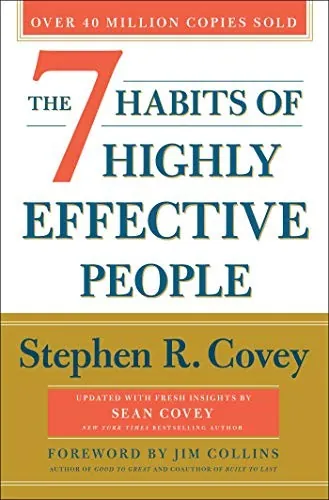
The 7 Habits of Highly Effective People by Stephen R. Covey
The Road Less Traveled diagnoses the difficulty of life; The 7 Habits supplies the practice. Covey’s framework - be proactive, begin with the end in mind, put first things first - is the modern, practical version of the discipline Peck describes, built on the same conviction that character precedes technique.
The two books belong together because they are the same project from two angles: Peck explains why the road less traveled is the right one; Covey shows how to walk it day by day. For readers who wanted the practical application, this is the book.
Content notes: Accessible non-fiction; suitable for a wide range of readers.
The Love and Wholehearted Living Books
The Gifts of Imperfection by Brené Brown
Peck argues that love is the will to extend oneself for another’s growth; Brené Brown argues that the capacity for that love requires something first: wholeheartedness - the willingness to be imperfect, vulnerable and seen. The Gifts of Imperfection is her guide to the ten guideposts of wholehearted living, grounded in her research on shame, vulnerability and courage.
The book is the emotional complement to Peck’s intellectual framework. Where Peck explains the discipline of love, Brown shows what it feels like to practice it - and the two belong together because the road less traveled is not only difficult; it is vulnerable.
Content notes: Accessible non-fiction, grounded in research; suitable for a wide range of readers.
All About Love by bell hooks
For readers who want the love dimension of The Road Less Traveled developed in full, All About Love is the book. bell hooks argues that we are confused about love because we treat it as a feeling rather than a practice - and she builds a case for love as a choice, an action, a discipline, very much in the spirit of Peck’s definition.
The book is more social and cultural in its analysis than Peck, and it is a powerful companion for readers who took the love chapters seriously and want them deepened.
Content notes: Accessible non-fiction; contains discussion of cultural and social issues; suitable for mature readers.
The Meaning and Spiritual Growth Books
Man’s Search for Meaning by Viktor Frankl
The Road Less Traveled asks how to live with the difficulty of life; Man’s Search for Meaning answers the deeper question underneath it: why. Viktor Frankl, a psychiatrist who survived the Nazi concentration camps, argues that the primary drive in human beings is not pleasure but meaning - and that meaning can be found even in suffering.
The two books are the same conversation: Peck says life is difficult and growth runs through the difficulty; Frankl says the growth is powered by meaning, and the meaning is found in the attitude we choose. For readers who wanted the deepest ground of Peck’s argument, this is the book.
Content notes: Contains first-hand accounts of the Holocaust; for mature readers.
The Road Less Traveled and Beyond by M. Scott Peck
For readers who want more of Peck himself, The Road Less Traveled and Beyond is the direct continuation. Written twenty years after the original, it revisits the themes - discipline, love, grace - with the perspective of the intervening decades, and it extends the discussion into new territory.
The book is the author’s own sequel, and it is the natural next step for readers who finished the original wanting more of the voice. It is not as famous as its predecessor, but it is the same project continued.
Content notes: Similar to the original; suitable for mature readers.
The Practical Growth Books
Atomic Habits by James Clear
The Road Less Traveled is honest that the disciplined path is the harder one; Atomic Habits is the book that makes the harder path sustainable. James Clear’s framework - make it obvious, attractive, easy and satisfying - is the modern science of how discipline becomes automatic, and it is the practical companion that Peck’s philosophy implies.
The two books belong together because they answer different questions: Peck explains why discipline matters; Clear explains how to actually build it. The reader with both has the why and the how of the road less traveled.
Content notes: Accessible non-fiction; suitable for a wide range of readers.
Grit by Angela Duckworth
The Road Less Traveled’s deepest claim is that the difficult path is the one that leads somewhere; Grit is the research that confirms it. Angela Duckworth’s study of passion and perseverance shows that sustained effort predicts achievement more reliably than talent - the empirical version of Peck’s argument that discipline is the road to growth.
For readers who found Peck’s case persuasive and wanted the evidence, Grit is the book. It is the same message - the hard path is the real one - supported by two decades of research.
Content notes: Accessible non-fiction; suitable for a wide range of readers.
How to Choose Your Next Read
The right next book depends on what you are ready for. If you want the same ideas in a livelier form: The Courage to Be Disliked. If you want the discipline in its oldest form: Meditations. If you want the practical application: The 7 Habits or Atomic Habits. If you want the love dimension: The Gifts of Imperfection or All About Love. If you want the deepest ground: Man’s Search for Meaning. If you want more of Peck: The Road Less Traveled and Beyond. If you want the evidence: Grit.
There is no wrong order, but there is a sensible one: start with The Courage to Be Disliked for the accessible version, then The Gifts of Imperfection for the love side, then Man’s Search for Meaning for the depth, and let the practical books carry the practice forward.
A Note on Reading Peck Slowly
The Road Less Traveled is a book that punishes speed and rewards slowness. Its chapters are dense with argument - the four disciplines, the nature of love, the stages of spiritual growth - and the reader who rushes through them will find the book blurring into a single vague impression: life is difficult, discipline matters, love is work. The reader who slows down will find something else: a book that can be read in seasons, one discipline at a time, with weeks between chapters to practice what was read.
This is why the recommendations above work best when they are spaced as well. Each book on this list is dense in its own way, and the shelf is best treated as a long-term project rather than a reading binge. The discipline of delayed gratification that Peck describes applies to reading his book too: the reward is not in finishing; it is in the practice that the reading makes possible. Read one chapter, practice it, then read the next - and let the shelf accumulate the way the disciplines do.
The Character and Growth Shelf
The Road Less Traveled is, at its core, a book about character - about the disciplines and loves that make a person whole, and the growth that comes from walking the harder path. It belongs on the wider character shelf, alongside the books that explore what character is and how it is built. Our thoughtful guide to character walks through the same territory in a more structured form, and it pairs naturally with Peck: both are about the deliberate construction of the self.
The shelf also connects to courage, in a specific way: the road less traveled is the road that requires the willingness to face difficulty, disapproval and uncertainty. Our best courage reading list collects the titles on that side of the project - the books about the capacity that Peck’s disciplines quietly depend on. Together, the two shelves form the complete map of the journey Peck describes, and they belong in the growth section of our library alongside the other titles gathered here.
The Four Disciplines in Daily Life
Peck’s four disciplines - delaying gratification, accepting responsibility, dedicating to truth and balancing - are abstract until they are met in the daily moments, and the daily moments are where this shelf comes alive. Delaying gratification is the discipline of the report written before the reward, the workout done before the evening, the conversation had before it becomes a crisis. Accepting responsibility is the discipline of the owned mistake, the refused excuse, the “I did that” said without a qualifier. Dedicating to truth is the discipline of the accurate report, the honest feedback, the refusal of the comfortable lie. And balancing is the discipline of the both-and - the discipline itself, flexed without becoming rigidity.
None of these require heroism; they require repetition, and the repetition is what the books on this list are for. The reader who wants the disciplines to become real does not need more theory; they need the daily practice - and the practice is exactly what the recommendations supply: the freedom of Adler, the framework of Covey, the systems of Clear. The disciplines are the why; the books are the how.
Conclusion
The Road Less Traveled became a phenomenon because it told the truth about life - that it is difficult, and that the difficulty is the point. The books on this list are the honest responses to the question it leaves behind: what next?
The discipline of Marcus Aurelius and Covey, the love of Brown and hooks, the meaning of Frankl, the freedom of Adler, and the evidence of Duckworth and Clear - together they carry the same truth in different voices: the road less traveled is the right one, and the growth is in the walking. Read the notes, choose where you are, and let the books take their time.
Frequently Asked Questions
What should I read after The Road Less Traveled?
Is The Road Less Traveled religious?
What is the main message of The Road Less Traveled?
Are there more accessible books like The Road Less Traveled?
Which book is the most practical after Peck?
Do these books contain difficult content?
Featured Recommendations


Raining Book Editorial Team
The Raining Book editorial team curates the best book recommendations and reading guides for every type of reader.