Books Like The 7 Habits of Highly Effective People
There is a specific feeling that comes from finishing The 7 Habits of Highly Effective People: you have been given a framework, and you suspect it could actually work. Stephen Covey’s book has sold tens of millions of copies because it did something unusual - it built effectiveness on character rather than technique, on principles rather than tricks, and it organized the whole project into seven habits you could actually practice: be proactive, begin with the end in mind, put first things first, think win-win, seek first to understand, synergize, and sharpen the saw.
The problem after finishing it is familiar: the framework is clear, and the practice is daily. What you need next are books that deepen the framework, supply the modern science behind it, and help you keep the habits alive in a busy life. This guide collects the books that genuinely belong on that shelf - the habit science, the focus practices, the prioritization methods and the character work that Covey’s framework points toward.
What Made The 7 Habits Special
Before the recommendations, it is worth naming what you are actually looking for, because the right next book depends on which part of Covey stayed with you.
If the private victories stayed with you - the idea that effectiveness grows from the inside out, from character before technique - then the books on personal change and habits will fit. If the prioritization stayed with you - the urgent-versus-important distinction, the big rocks - then the books on focus and essentialism are the natural next step. And if the character foundation stayed with you - the idea that you cannot fake your way to trustworthiness - then the books on habits and growth will carry the project forward.
Most readers are looking for all three, and the books below cover the range. Each one takes a piece of Covey’s framework and builds on it with evidence, method and practice.
The Habit Science
Atomic Habits by James Clear
If there is one book that the 7 Habits reader should pick up next, it is Atomic Habits. James Clear’s book is the modern science of habit formation, and it is the perfect complement to Covey for a specific reason: Covey tells you which habits matter; Clear tells you how habits actually form.
Clear’s core argument is that you do not rise to the level of your goals but fall to the level of your systems - that tiny, 1-percent improvements, compounded daily, produce extraordinary results over time. His framework - make it obvious, attractive, easy and satisfying - gives the 7 Habits reader the mechanics that Covey’s principles imply. If Covey gave you the why of effectiveness, Clear gives you the how of daily change.
Content notes: Accessible non-fiction, suitable for a wide range of readers including motivated teenagers.
The Power of Habit by Charles Duhigg
Where Clear gives you a system, Charles Duhigg gives you the science. The Power of Habit explains the habit loop - cue, routine, reward - and shows it working across individual lives, successful companies and social movements.
For the 7 Habits reader, Duhigg’s book is the evidence base: it explains why the habits Covey recommends work, at the level of neurology and behavior. The book is also full of case studies - from the patient who reorganized her life around a small habit to the companies that transformed themselves by changing one routine - and it makes the science vivid rather than abstract.
Content notes: Accessible non-fiction. Some case studies involve serious personal and organizational struggles, but the material is handled responsibly.
Tiny Habits by BJ Fogg
If you struggled to make Covey’s habits stick, Tiny Habits is the book for you. BJ Fogg, a behavior scientist at Stanford, argues that the secret to lasting change is not motivation but size: start with behaviors so small they cannot fail, attach them to existing routines, and celebrate the success.
The book is the most forgiving on this list, and that is its value. Covey’s habits are ambitious - be proactive, begin with the end in mind - and Fogg’s method is how you actually install ambitious habits: one tiny step at a time. For readers who have tried and stalled, Tiny Habits is the reset.
Content notes: Accessible non-fiction, suitable for a wide range of readers.
The Focus and Prioritization Books
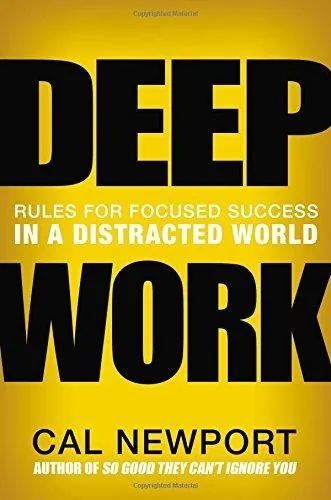
Deep Work by Cal Newport
Covey’s third habit - put first things first - raises a question the modern workplace keeps dodging: how do you actually protect time for what matters? Deep Work is the most practical answer written in recent years. Cal Newport argues that the ability to focus without distraction on cognitively demanding tasks is increasingly rare and increasingly valuable - and he shows how to build it.
The book is the natural successor to Covey’s prioritization habit because it addresses the modern enemy Covey could not have fully anticipated: the constant, fragmented attention economy. Newport’s strategies - the deep work schedule, the shutdown ritual, the disciplined use of technology - are the daily practice of “first things first” in a world of notifications.
Content notes: Accessible non-fiction, suitable for students and professionals.
Essentialism by Greg McKeown
The 7 Habits teaches you to put first things first; Essentialism teaches you to decide what the first things are. Greg McKeown’s book is a sustained argument for the disciplined pursuit of less - the idea that almost everything is noise, that almost nothing is essential, and that the essentialist is the person who has the courage to choose.
For the 7 Habits reader, this is the prioritization book taken to its logical conclusion. Covey gives you the quadrant - urgent versus important; McKeown gives you the courage to leave the unimportant quadrant entirely. It is a sharper, more demanding book, and it is the right one for readers who have mastered the framework and now need to prune their lives.
Content notes: Accessible non-fiction, suitable for professionals and students.
The Character and Growth Books
The 7 Habits of Highly Effective Teens by Sean Covey
If you are reading this for a teenager in your life - or if you are a teenager yourself - Sean Covey’s adaptation is the direct next step. Written by Stephen Covey’s son, the book translates the seven habits into the language and situations of teenage life: school, friendship, family and identity.
The book keeps the framework intact and makes it concrete for a younger reader, with stories, illustrations and exercises designed for the teenage attention span. It is the rare adaptation that does not dumb down the original - it makes it usable. It belongs on this shelf as the entry point for the next generation.
Content notes: Written for teenagers; content is appropriate for ages twelve and up.
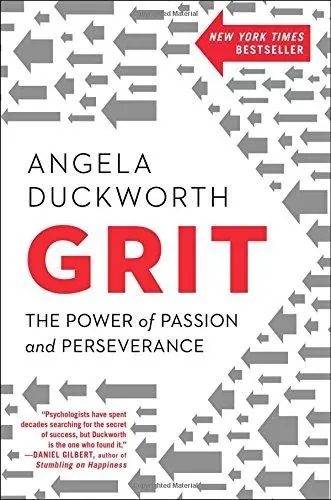
Grit by Angela Duckworth
Covey’s framework is built on character, and the character research of the past two decades has a name: grit. Angela Duckworth, a psychologist, argues that the achievement most people attribute to talent is actually powered by passion and perseverance - the sustained effort toward long-term goals.
For the 7 Habits reader, Grit is the empirical confirmation of the private victories: the reason be proactive works, the reason consistency compounds. Duckworth’s research - on West Point cadets, spelling bee champions and teachers - shows that the capacity to keep going is the hidden variable in most success stories. It is the character book that the 7 Habits framework implies.
Content notes: Accessible non-fiction, suitable for a wide range of readers.
Mindset by Carol Dweck
The other pillar of modern character research is mindset. Carol Dweck’s Mindset distinguishes the fixed mindset - the belief that abilities are static - from the growth mindset - the belief that abilities can be developed - and shows how the second one changes everything.
The book is the perfect companion to Covey’s first habit, be proactive, because mindset is the foundation of proactivity: the person who believes they can grow is the person who acts; the person who believes they are fixed is the person who waits. For the 7 Habits reader, Dweck supplies the psychological ground that Covey’s principles stand on.
Content notes: Accessible non-fiction, suitable for a wide range of readers including older teenagers.
How to Choose Your Next Read
The right next book depends on what you are trying to solve. If you want the science of how habits form: Atomic Habits or The Power of Habit. If you struggle to make habits stick: Tiny Habits. If your problem is focus: Deep Work. If your problem is too many commitments: Essentialism. If you are reading for a teenager: The 7 Habits of Highly Effective Teens. If you want the character research: Grit or Mindset.
There is no wrong order, but there is a sensible one: start with the habit mechanics (Atomic Habits), then the focus practice (Deep Work), then the pruning (Essentialism), and let the character research (Grit, Mindset) deepen the foundation as you go.
The Private Victories First
The deepest structural insight of the 7 Habits framework is the order of its parts: the private victories - be proactive, begin with the end in mind, put first things first - come before the public victories. Covey’s argument is that you cannot be effective with others until you are effective with yourself, and the books on this list respect the same order. The habit books (Atomic Habits, The Power of Habit) are private-victory books; the focus books (Deep Work, Essentialism) are private-victory books; even the character research (Grit, Mindset) is private before it is public.
This is worth remembering when choosing what to read next: the reader who skips the private work and reaches for the interpersonal books will find them hollow, because the public victories are built on a foundation that is not there yet. The practical version is the sequence: build the inner alignment first - the systems, the focus, the character - and the outer effectiveness follows.
A Note on Reading Order and Pacing
One question every 7 Habits reader eventually asks is whether to read the recommendations in any particular order, and the honest answer is that the order matters less than the spacing. These books are dense with practice, and they reward being read one at a time, with weeks between them - time to test a principle before taking on the next one. The reader who finishes Atomic Habits and immediately starts Deep Work is carrying two systems at once; the reader who spaces them gets to feel each one work.
There is also a case for reading against your weaknesses rather than your strengths. If you are already good at prioritization, The One Thing will be familiar; if focus is your struggle, Deep Work will be the book that changes your year. The 7 Habits framework works best when the next book fills a gap, not when it repeats a strength. And whichever order you choose, keep one habit from each book when you finish it - the framework grows by accumulation, and the accumulated habits are what the effectiveness actually is.
The Wider Growth Shelf
The 7 Habits is a character book as much as an effectiveness book, and it belongs to the wider project of personal growth - the deliberate development of the person behind the achievements. Our guide to meaningful personal growth for adults explores how grown-ups continue that development in the middle of full lives, and it belongs with this reading because the habits are the daily form of the growth. The whole growth section of our library collects these titles together, so the reader building the complete framework has one shelf to return to.
The shelf also connects to self-discipline, in a specific way: the habits only work because discipline makes them repeatable. Our thoughtful guide to self-discipline walks through the capacity that the habit books depend on - the willingness to do the right thing daily, which is the engine of every habit on Covey’s list.
Conclusion
The 7 Habits of Highly Effective People is the rare framework that changes how you work and live, and the books on this list are the honest responses to the question it leaves behind: what next? The habit science of Clear, Duhigg and Fogg supplies the mechanics; the focus work of Newport and McKeown supplies the daily practice; the character research of Duckworth and Dweck supplies the foundation; and Sean Covey’s adaptation carries it to the next generation.
Read the notes, choose the problem you are actually solving, and let the books build on each other. The 7 Habits gave you the map; these books give you the terrain - and together they turn a framework into a life.
Frequently Asked Questions
What should I read after The 7 Habits of Highly Effective People?
Is Atomic Habits similar to The 7 Habits?
Are there books like The 7 Habits for teenagers?
What is the difference between Covey and Duhigg?
Which book is the most practical after Covey?
Do these books contain difficult content?
Featured Recommendations

Raining Book Editorial Team
The Raining Book editorial team curates the best book recommendations and reading guides for every type of reader.