Best Resilience to Read
Resilience has become one of the most used and least understood words of our time. It is invoked at funerals and graduations, in corporate trainings and self-help aisles, and it usually means something slightly different each time. For some it sounds like a demand - the expectation that you should be fine, no matter what. For others it sounds like a mysterious gift possessed by the few. The books worth reading on the subject clear away both confusions: resilience is not a demand and not a gift; it is a capacity, built over time, that most people dramatically underestimate their ability to develop.
This guide collects the best resilience books to read - the research, the practices and the true stories - with honest notes on which titles actually build the capacity to recover.
What Resilience Actually Is
Start with a definition that survives contact with real life. Resilience is the capacity to recover from adversity - to bend without breaking, to rebuild after loss, to keep functioning and growing through difficulty. Three elements matter.
First, there is adversity: the loss, the setback, the crisis, the long hard season. Resilience is meaningless without it; the capacity is defined by its object. Second, there is recovery: the return to functioning, the rebuilding of what was lost, the movement forward. Recovery is not the same as returning to exactly what was; it often means arriving somewhere new. Third, there is growth: the resilient are not merely restored; they are often changed - deeper, stronger, more aware. This is what researchers call post-traumatic growth, and it is the surprising gift at the heart of the resilience literature.
The research is consistent on one crucial point: resilience is not a fixed trait. It is a capacity that can be developed - through practices, relationships and the stories we tell about difficulty. The person who believes resilience is born is the person who never tries to build it; the person who knows it is built is the person who can.
The Science of Resilience
Option B by Sheryl Sandberg and Adam Grant
Written after Sandberg’s husband died suddenly, and with the psychologist Adam Grant as co-author, Option B is the most accessible research-informed account of resilience available. The book alternates between Sandberg’s raw personal account and the research on what actually helps people recover: the practices of self-compassion, the importance of social support, the power of small steps forward.
The book’s central insight is that resilience is built through a combination of internal practices and external support - and that both can be developed deliberately. For readers who want the science and the story together, this is the book.
The Resilience Factor by Karen Reivich and Andrew Shatté
Reivich and Shatté, psychologists who built their work on the research of Martin Seligman, offer the most systematic practical manual on resilience in this list. Their model identifies the thinking habits that undermine resilience - catastrophizing, personalizing, permanence - and the practices that replace them.
The book is built around assessments and exercises, and it is the closest thing to a training program in book form. For readers who want the how rather than the why, this is the book.
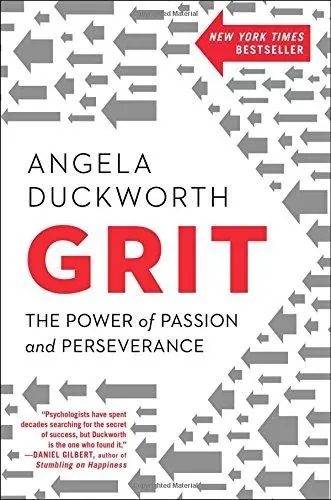
Grit by Angela Duckworth
Duckworth’s research on grit - passion and perseverance for long-term goals - is resilience in its long-term form. Her finding, replicated across contexts, is that sustained effort predicts achievement at least as well as talent. Grit is the resilience to keep going when the finish line is far, the applause is absent and the setbacks keep coming.
The book explains how grit develops - through interest, practice, purpose and hope - which makes it a practical manual for the slow, unglamorous resilience of the long project. It pairs with the purpose books, because purpose is the fuel that keeps grit going.
Resilience in True Stories
Man’s Search for Meaning by Viktor Frankl
Frankl, a psychiatrist who survived the Nazi concentration camps, wrote the essential book on resilience at the limit. Part testimony, part psychology, it records how prisoners maintained meaning and dignity in the camps - and how the attitude we choose toward suffering is the last of human freedoms.
The book’s resilience lesson is specific and profound: the prisoners who survived longest were not the strongest or the healthiest but those with a reason to live - a task unfinished, a person waiting, a meaning to hold. Resilience, Frankl argues, is sustained by meaning, and meaning can be found even in the worst conditions. It is the deepest resilience book on this list, and it connects directly to the purpose books.
Unbroken by Laura Hillenbrand
The true story of Louis Zamperini - an Olympic runner turned bombardier whose plane crashed in the Pacific in World War II, who survived forty-seven days on a raft and then years as a prisoner of war - Unbroken is resilience as endurance. It is long and often harrowing, and it shows resilience not as a single dramatic act but as a daily refusal to surrender.
Hillenbrand’s reporting is meticulous, and the book is as much about the body’s and spirit’s capacity to recover as it is about the suffering itself. For readers who want resilience demonstrated at the limit, this is the book.
The Choice by Edith Eger
Eger, a psychologist who survived Auschwitz, wrote The Choice as a distillation of her life’s work: the discovery that the most important freedom is the freedom to choose your response. The book alternates between her story - the camps, the liberation, the decades of silence - and the principles she developed helping others make their own choices.
The book’s resilience lesson is the one Frankl also reached: the past is real, the pain is real, but the meaning you make of it is yours to choose. Eger’s account is harrowing and ultimately hopeful, and it shows resilience as a lifelong practice rather than a one-time recovery.
Choosing Where to Start
The best resilience book for you depends on where you are. If you are in the raw aftermath of a loss: Option B. If you want the systematic training: The Resilience Factor. If you want the long-term research: Grit. If you want resilience at the limit: Man’s Search for Meaning or The Choice. If you want it demonstrated over years: Unbroken.
There is no wrong starting point, but there is a wrong way to read these books: as inspiration to admire rather than practice to build. Resilience is a capacity, and capacities are built by practice - the practices of self-compassion, of meaning-making, of social support, of small steps forward. Our thoughtful guide to resilience walks through how the practice works in daily life.
The Connection to Purpose and Leadership
Resilience does not exist in isolation, and the reading lists around it reveal its connections. Resilience and purpose are closely linked - Frankl’s central discovery is that meaning sustains resilience, and the purpose books supply the fuel that resilience burns. Our purpose reading list collects the strongest titles on that connection, and the two belong together: resilience is the capacity to keep going; purpose is the reason why.
Resilience is also the foundation of ethical leadership, because leaders face setbacks, criticism and crises as a matter of course, and the capacity to recover - and to model recovery for others - is what makes leadership sustainable. Our ethical leadership reading list explores how resilience operates in the arena of leadership, where the stakes are organizational and the recovery is public.
Common Mistakes When Reading Resilience Books
A list of the best books should also include a warning about the ways readers routinely misuse them, because the resilience genre has specific hazards. The first mistake is reading for inspiration instead of practice. You finish the story of someone who survived and feel inspired - and then nothing changes, because inspiration without practice is just a mood. The fix is to extract one building block from each chapter and apply it to your actual life.
The second mistake is treating resilience as a demand to be fine. Some readers conclude that reading about resilience means they should stop struggling - and the conclusion adds shame to the struggle. The correction is that resilience is not the absence of pain; it is the capacity to move through it. The reader who is struggling is not failing at resilience; they are in the middle of it.
The third mistake is reading the resilience books as a replacement for the purpose books. Resilience is fueled by meaning, and the reader who studies recovery without studying purpose is building an engine without fuel. The two genres belong together, and the best readers alternate between them.
The fourth mistake is expecting a fixed timeline. The books describe recovery as a process that takes the time it takes, and the reader who treats slow recovery as failure is reading the genre wrong. The pace is not the point; the direction is.
A Realistic Reading Plan
Resilience is built, not absorbed, and a realistic plan respects that. Choose one book from this list and read it slowly - the research-based books especially reward working through the exercises. Extract one resilience practice from each chapter: the self-compassionate self-talk, the social connection made, the meaning articulated, the small step taken.
Then practice deliberately: when the next setback comes - and it will - use the practices. Notice the thinking habits that undermine you, and replace them. Reach for the support you have been meaning to build. Articulate the meaning that keeps you going. Take the small step forward. And keep a simple log: what happened, how I responded, what I would do differently. The log is the feedback loop that turns reading into resilience. And expect the process to compound: resilience is built through adversity and recovery, and each recovery strengthens the capacity for the next.
The Post-Traumatic Growth Question
It is worth ending the selection with the most hopeful finding in the resilience literature, because it changes how you read the whole genre: post-traumatic growth. Researchers have documented, consistently, that a significant portion of people who face major adversity do not merely recover - they grow: deeper relationships, clearer values, greater appreciation of life, new possibilities, increased personal strength. The trauma does not cause the growth; the recovery process, done honestly, produces it.
The finding matters for readers in two ways. First, it reframes the goal: recovery is not the return to the old normal but the building of something the old life never had. The reader who expects to be restored to who they were is aiming at the wrong target; the reader who expects to be changed is aiming at the right one. Second, it is honest about the conditions: growth is not automatic, not fast, and not a demand. It emerges from the honest work of recovery - the acknowledgment, the support, the meaning-making - and it cannot be forced.
The books on this list document the growth as well as the recovery - Frankl’s transformation in the camps, Eger’s decades of work after Auschwitz, Zamperini’s eventual peace. Reading them, you see the pattern: the survivors are not the ones who never broke; they are the ones who, having broken, rebuilt something the breaking made possible. That is the deepest hope the resilience books offer, and it is not a cheap hope - it is earned, through the honest work of recovery.
Conclusion
The best resilience books to read are the ones that treat resilience as what it is: a capacity, built over time, through practices, relationships and meaning-making. Sandberg and Grant supply the accessible research. Reivich and Shatté supply the training. Duckworth supplies the long-term view. Frankl and Eger supply the limit. Hillenbrand supplies the endurance.
Read them slowly, extract one practice at a time, and build the capacity deliberately. Resilience is not a demand and not a gift; it is the capacity to recover from adversity, to bend without breaking, to rebuild after loss - and it is available to everyone, one practice, one recovery, one rebuilt life at a time.
Frequently Asked Questions
What is the best book on resilience for beginners?
What is resilience, exactly?
Is resilience born or built?
Do resilience books overlap with hope books?
How long does it take to build resilience?
Is resilience the same as never struggling?
Featured Recommendations



Raining Book Editorial Team
The Raining Book editorial team curates the best book recommendations and reading guides for every type of reader.