Best Integrity to Read

There is a word that appears in almost every eulogy and almost no resume: integrity. It is the quality people most want to be remembered for, and the one they least know how to build. The reason is partly that integrity sounds abstract - a vague goodness that you either have or lack. The books worth reading on the subject are the ones that take the abstraction apart: integrity is not a mood or a gift; it is a specific, buildable capacity - the alignment of your actions with your values - and like any capacity, it can be trained.
This guide collects the best integrity books to read: the philosophy of virtue, the modern psychology, and the leadership literature - with honest notes on which titles actually build a life of alignment.
What Integrity Actually Is
Start with a definition that survives contact with real life. Integrity is the alignment of your actions with your values - doing what you said you would do, living consistently with what you claim to believe, and being the same person in private as in public. Three elements matter.
First, there are values: the standards you hold, the beliefs you claim. Integrity is meaningless without them; the alignment has to be alignment with something. Second, there is alignment: the match between the values and the actions. The mismatch - the stated value and the contrary behavior - is where integrity fails. Third, there is consistency: the alignment holds across contexts and over time, not just when it is convenient. The person of integrity is the same in the meeting, at home, and alone.
This definition does useful work immediately. It separates integrity from reputation: reputation is what others think of you; integrity is what you actually do. It separates integrity from mere consistency: the person who is consistently dishonest is consistent but not integral. And it explains why integrity is buildable: alignment is a practice - the repeated choice to make actions match values - and practices can be trained.
The Philosophical Foundations
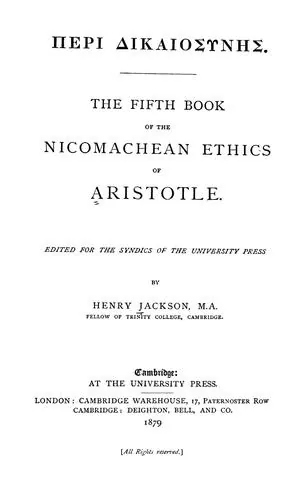
Nicomachean Ethics by Aristotle
If integrity has a founding text, it is Aristotle’s Nicomachean Ethics - not because Aristotle uses the word, but because he describes the thing: the person whose actions flow from their character, who has become the kind of person who does the right thing. Aristotle’s account of virtue is the deep background of every integrity book since.
The relevant insight is his account of habituation: we become just by doing just acts. Integrity, on Aristotle’s account, is not a possession but a practice - the repeated alignment of action with value, until the alignment becomes the default. The book is dense, and few readers finish it on the first attempt, but its core insight is worth carrying into everything else: integrity is built by action, not intention.
Meditations by Marcus Aurelius
Written as a private notebook by a Roman emperor, Meditations is the most direct book on integrity ever written - the record of a man auditing his own alignment daily. Marcus writes about the gap between what he intends and what he does, about acting rightly when it would be easier not to, and about being the same person in private as in public.
The book has no system, which is its power: it is the practice itself, the daily self-audit of a person strengthening his own integrity. For readers who find modern self-help too polished, Marcus is the bracing alternative.
The Modern Statements
The 7 Habits of Highly Effective People by Stephen R. Covey
Covey’s classic, published in 1989, is the bridge between the ancient tradition and modern life. His argument is that effectiveness grows outward from character - and the first three habits are the private victories that build the inner alignment: be proactive, begin with the end in mind, put first things first.
The book’s integrity lesson is that you cannot fake your way to trustworthiness; you can only become trustworthy. The private victories come before the public ones, and the person who is not aligned internally cannot be effective externally. For readers who want integrity connected to daily effectiveness, this is the book.
The Road to Character by David Brooks
Brooks’s The Road to Character (2015) contrasts the resume virtues - the achievements you list - with the eulogy virtues: the things people say about you when you are gone. The book is built on case studies of people who developed deep character, often through struggle, and its central question is the one every integrity book eventually asks: what are you for?
The book’s integrity lesson is the inner-outer distinction: integrity is built in the inner life, and the person who polishes the outer performance at the expense of the inner person is missing the point. For readers who want to question what the culture means by success, this is the book.
Integrity in Practice
Lying by Sam Harris
Harris’s short, sharp book on lying is the most focused treatment of the honesty side of integrity. His argument is that lying is almost never necessary and almost always corrosive - that the small lies accumulate into a self that cannot be trusted, and that honesty is a practice with immediate and compounding benefits.
The book is polarizing - some readers find its absolutism bracing, others unrealistic - but its core claim is the one the integrity literature supports: honesty is a practice, built one truthful moment at a time, and the practice compounds. For readers who want the honesty side of integrity sharpened, this is the book.
Integrity by Stephen L. Carter
Carter, a professor and ethicist, wrote one of the few books with integrity in the title that takes the concept seriously. His definition has three parts: discerning what is right from what is wrong; acting on what you discern, even at personal cost; and saying openly that you are acting on your understanding. The third part - the openness - is his distinctive contribution: integrity includes the willingness to be seen acting on your values.
The book is thoughtful and readable, and it connects integrity to the wider questions of character and community. For readers who want the concept fully developed rather than sloganized, this is the book.
Choosing Where to Start
The best integrity book for you depends on where you are. If you want the philosophical foundation: Nicomachean Ethics, read slowly, or Meditations for the daily practice. If you want integrity connected to effectiveness: The 7 Habits. If you want to question what success means: The Road to Character. If you want the honesty side sharpened: Lying. If you want the concept fully developed: Integrity by Stephen Carter.
There is no wrong starting point, but there is a wrong way to read these books: as theory to agree with rather than practice to attempt. Integrity is built by action - the repeated choice to make actions match values - and the books are instruction manuals for the practice. Our thoughtful guide to integrity walks through how the practice works in daily life.
The Connection to Personal Growth and Kindness
Integrity does not exist in isolation, and the reading lists around it reveal its connections. Integrity and personal growth are closely linked - integrity is the alignment, and personal growth is the direction the alignment serves. The person who is growing is the person who needs integrity most, because growth without alignment is just motion. Our personal growth reading list collects the strongest titles on the direction side of the same project.
Integrity is also connected to kindness and compassion, in a way that is often missed. Integrity without kindness can curdle into self-righteousness - the person who is honest without being kind. The full virtue includes both: the honesty and the warmth, the alignment and the care. Our kindness and compassion reading list explores the other half of this pair, and the two belong together because the person of real integrity is the person whose honesty is warm and whose warmth is honest.
Integrity in Daily Practice
The reading list is only useful if the practice is concrete, and integrity in daily life has a recognizable shape that the books all point toward. It is worth walking through a day to see it.
The morning begins with the small promises: the call you said you would make, the thing you said you would bring, the time you said you would be there. These are integrity tests, and they are the ones that compound - the person known for keeping the small promises is the person trusted with the large responsibilities. The habit to build is the refusal to overpromise: the honest “I cannot do that” is an integrity act, because it protects the alignment between your word and your capacity.
The workday brings the classic tests: the report that could be padded, the mistake that could be hidden, the credit that could be taken. The practice is the same in each: do the accurate thing, own the error, share the credit - and note that none of these requires heroism. They require the repeated choice, and the repetition is the training.
The evening brings the private tests, which matter most: the expense that no one would check, the standard that would cost you to keep with no audience, the same self maintained when no one is watching. These are where integrity is actually built, and the habit to build is the alignment check - the brief, honest review of the day: where did my actions match my values, and where did they not?
And the week brings the repair tests: the promise broken, the standard missed, the misalignment owned. The practice is the owning and the repairing - the apology made, the correction offered, the continuation. Integrity is not the absence of failure; it is the response to it, and the response is the part that compounds.
A day like this is not dramatic, and that is exactly the point. Integrity is built in the unobserved, unremarkable moments - the kept promise, the accurate report, the owned mistake - and the books on this list are the instruction manuals for those moments. Read them with the daily shape in mind, and the reading becomes practice.
A Realistic Reading Plan
Integrity is built, not absorbed, and a realistic plan respects that. Choose one book from this list and read it slowly. Extract one principle from each chapter: the alignment check, the honesty practice, the private victory. Then test the principle in your life for two weeks - the honest report, the kept promise, the same self in private as in public.
Keep a simple integrity journal: where did my actions match my values, where did they not, what will I align next? The journal is the feedback loop that turns reading into integrity. And expect the process to be gradual: integrity compounds the way trust does, and the person who practices alignment for years is the person whose word means something.
Common Misconceptions About Integrity Books
The integrity genre collects its own misconceptions, and they distort the reading if they are not cleared. The first is that integrity books are for people who lack integrity - that reading them is an admission. The opposite is true: the books are for people who want to build the capacity, and building is not an admission of absence; it is the practice itself. The most honest readers of integrity books are often the most aligned people, because they are the ones still training.
The second misconception is that one book will fix it. Integrity is built by action over time, and the books are instruction manuals for a practice that takes years; the book that promises a quick alignment is not an integrity book, whatever its cover says. The realistic reading plan above - one book, one principle, two weeks of testing - respects the timescale the practice actually requires.
The third misconception is that the books are all the same. They are not: the philosophy of Aristotle, the daily practice of Marcus Aurelius, the effectiveness of Covey, the critique of Brooks, the sharpening of Harris, the full development of Carter - each contributes a different piece, and the genre is read properly across several titles, not one.
The fourth misconception is that reading is the work. It is the preparation. The alignment check, the honest report, the kept promise - those are the work, and the books are the manuals. The reader who finishes the book and does nothing has not read an integrity book; they have admired one.
And the fifth misconception is that integrity books are for other people - the leaders, the public figures, the ones with power. They are for everyone with values and actions to align, which is everyone. The kept promise to a child is integrity; the accurate expense claim is integrity; the same self in private is integrity. The books are manuals for those moments, and the moments are everyone’s.
Conclusion
The best integrity books to read are the ones that treat integrity as what it is: a specific, buildable capacity - the alignment of your actions with your values - trained by practice, in the unobserved moments of ordinary life. Aristotle supplies the foundation. Marcus Aurelius supplies the daily practice. Covey supplies the connection to effectiveness. Brooks supplies the critique of success. Harris supplies the honesty sharpening. Carter supplies the full development.
Read them slowly, extract one principle at a time, and practice the alignment. Integrity is not a mood or a gift; it is the repeated choice to make your actions match your values, and it is available to everyone - one honest report, one kept promise, one aligned day at a time.
Frequently Asked Questions
What is the best book on integrity for beginners?
What is integrity, exactly?
Can integrity be learned from books?
What is the difference between integrity and honesty?
Do integrity books overlap with character books?
Why does integrity matter for success?
Featured Recommendations



Raining Book Editorial Team
The Raining Book editorial team curates the best book recommendations and reading guides for every type of reader.