Best Books About Self-Discipline by Ryan Holiday
There is a writer who took a two-thousand-year-old philosophy and made it the operating system for modern ambition, and his name is Ryan Holiday. The Obstacle Is the Way - his book on the Stoic art of turning obstacles into advantages - has been read by athletes, executives, artists and soldiers, and it has introduced millions to a way of thinking that predates the self-help industry by two millennia. It is a self-discipline book in the deepest sense: the discipline of perception, action and will.
This guide collects the books that belong on the Holiday shelf: the essential titles by Holiday himself, the ancient sources he translates, and the deeper works that extend his ideas into courage and character. Whether you are new to his thinking or returning to it, the reading path below will take you from the practice to the philosophy.
What Holiday Is Really Teaching
Before the recommendations, it is worth being precise about what Holiday actually argues, because his books can look like success manuals when they are really philosophy. Holiday’s central claim is that the obstacle is the way - that the thing blocking you is not an interruption of your path but the path itself, and that the discipline of meeting it well is the whole of the art of living. He organizes the practice into the three Stoic disciplines: perception - seeing things as they are, without the distortion of fear or wishful thinking; action - doing what the situation requires, with courage and persistence; and will - accepting what cannot be changed and finding the inner strength to continue.
That is why the books have traveled so far beyond the philosophy seminar. Holiday is not teaching theory; he is teaching a practice, illustrated by a gallery of figures - from presidents to gladiators - who lived it under pressure. The reader finishes the book with a method, not just a mood, and the method works in real situations: the setback, the rejection, the crisis.
The Essential Ryan Holiday
The Obstacle Is the Way by Ryan Holiday
This is the book that made Holiday’s name, and it remains the essential title on this shelf. The Obstacle Is the Way presents the three Stoic disciplines through the stories of people who practiced them under the hardest circumstances - the general who turned a disadvantage into a victory, the president who used his failures as fuel, the prisoner who used his confinement to build a life of the mind. Each story demonstrates the discipline; each chapter provides the practice.
The book’s greatest strength is its concreteness. Holiday does not stay in the abstract; he shows the discipline working in real lives, and the reader finishes with both the principle and the examples to anchor it. It is the rare philosophy book that is also a manual.
Content notes: Accessible philosophy with vivid historical examples, suitable for a wide range of readers.
Ego Is the Enemy by Ryan Holiday
For readers who want the discipline turned inward, Ego Is the Enemy is the essential book. Holiday’s second pillar - the argument that the ego - the need to be right, to be seen, to be validated - is the great enemy of achievement and peace, and that the discipline of humility is the cure. Where The Obstacle Is the Way faces the world, Ego Is the Enemy faces the self.
The book is the natural companion to The Obstacle Is the Way, and it is the book for readers who suspect that their biggest obstacle is themselves.
Content notes: Sharp, practical philosophy with historical examples, suitable for a wide range of readers.
The Daily Stoic by Ryan Holiday and Stephen Hanselman
For readers who want the practice made daily, The Daily Stoic is the essential book. Holiday and Hanselman’s collection of 366 daily readings - one passage from the Stoic tradition for every day of the year, with Holiday’s commentary - is the discipline in its most usable form: a page a day, a practice a day.
The book is the perfect bridge from reading to living, and it is the book for readers who want the philosophy installed as a daily habit.
Content notes: Daily readings, accessible and suitable for a wide range of readers.
The Ancient Sources
Meditations by Marcus Aurelius
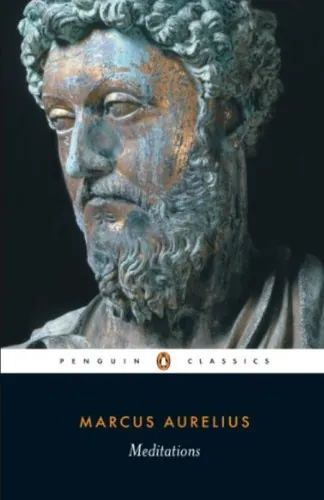
For readers who want the source itself, Meditations is the essential book. The private notebook of the Roman emperor - written for himself, never intended for publication - is the original record of the Stoic discipline in practice: a man auditing his judgments, accepting what he cannot control, doing his duty without complaint. It is the book Holiday’s entire project is built on.
The book rewards reading alongside Holiday, because the modern restatement and the ancient original illuminate each other: Holiday shows you the framework; Marcus shows you the practice from the inside.
Content notes: A classical text, accessible in modern translation, suitable for a wide range of readers.
Letters from a Stoic by Seneca
For readers who want the Stoic practice in its most human form, Letters from a Stoic is the essential book. Seneca’s letters - written to his friend Lucilius on the daily business of living well - are the most personal surviving documents of Stoicism: the philosophy as correspondence, the discipline as conversation. Where Marcus writes to himself, Seneca writes to a friend, and the difference is illuminating.
The book is the warmest entry point to the ancient sources, and it is the book for readers who want the philosophy as a living exchange.
Content notes: A classical text, accessible in modern translation, suitable for a wide range of readers.
Discourses by Epictetus
For readers who want the Stoic discipline at its most rigorous, Discourses is the essential book. Epictetus - a former slave who became one of the most influential Stoic teachers - lectures his students on the discipline of the inner life: the dichotomy of control, the training of desire, the freedom that comes from wanting only what is up to you. He is the sharpest of the Stoics, and his teaching is the clearest statement of the practice.
The book is the intellectual backbone of the shelf, and it is the book for readers who want the philosophy in full force.
Content notes: A classical text, demanding but accessible in modern translation, suitable for serious readers.
The Discipline of the Inner Life
There is a point where the Stoic books meet the courage shelf, and Holiday is the hinge. The Stoic discipline is not only about handling obstacles; it is about the inner state that makes the handling possible - the freedom from fear, the acceptance of what cannot be changed, the willingness to act anyway. Those are the qualities of courage, and they are the qualities the Stoics trained daily.
Holiday and the Idea of the Inner Citadel
One of the deepest images in Stoicism is the inner citadel - the stronghold of the self that no external force can breach. The Stoics believed that a person’s judgments, values and will were their own, untouchable by the world, and that the discipline of living from that stronghold was the whole of freedom. Holiday’s books are modern restatements of that image: the obstacle is the way because the way is through the discipline, and the discipline is entirely within your power.
That is why the Stoic shelf belongs at the foundation of the self-discipline tradition. Every modern discipline book is, in some sense, a footnote to the Stoics: the habit systems are strategies for the inner citadel; the focus practices are defenses of it; the courage books are celebrations of it. Holiday’s contribution is to have made the ancient practice usable for modern readers - and to have shown, with a gallery of examples, that it works under every kind of pressure.
The Discipline of Perception
Of the three Stoic disciplines Holiday teaches - perception, action, will - the first is the one readers most often overlook, and it is the one that makes the other two possible. The discipline of perception is the training of how you see: the refusal to let fear magnify the obstacle, the refusal to let wishful thinking shrink it, the refusal to let ego distort it. Holiday shows, again and again, how the same situation looked completely different depending on the perceiver - the general who saw an impossible position as an opportunity, the executive who saw a scandal as a chance to rebuild, the athlete who saw an injury as a season to reinvent. The obstacle did not change; the perception did, and the perception changed everything downstream.
That is why the discipline belongs first. Action follows perception - you cannot act well on a distorted view - and will follows action, because the will to continue is impossible to sustain on a foundation of self-deception. The reader who starts practicing the discipline of perception - asking, in every difficult moment, what am I actually seeing, and what am I adding to it - finds that the other disciplines become easier, because the obstacles appear at their true size. Perception is not optimism; it is accuracy, and accuracy is the rarest and most valuable of the disciplines.
How to Build Your Reading Path
There is no wrong order on this shelf, but there is a sensible one. Start with The Obstacle Is the Way for the framework. Add Ego Is the Enemy when you are ready to face the inner obstacle, and The Daily Stoic when you want the practice made daily. Then go to the sources: Meditations for the emperor’s practice, Letters from a Stoic for the human version, and Discourses for the full rigor.
The path moves from the modern to the ancient, and that is the right direction. Our thoughtful guide to self-discipline gathers the wider shelf these titles belong to, and it is the natural next stop after you have worked through this one.
The Courage Shelf
There is a quiet but important connection between the Stoic shelf and the courage shelf, and it is worth naming one more time: the Stoic discipline is the training of courage under the most ordinary conditions. The modern reader does not face gladiators or empires; they face the smaller obstacles - the rejection, the setback, the unfair criticism, the long plateau. Holiday’s contribution is to have shown that the ancient practice applies to those obstacles exactly as it applied to the great ones: the perception, the action, the will are the same. The courage the Stoics trained is available in every difficult Tuesday, and that is the quiet radicalism of the whole shelf.
The Courage Shelf
There is a quiet but important connection between the Stoic shelf and the courage shelf, and it is worth making explicit. The Stoic discipline is the training of courage: the acceptance of what cannot be changed, the willingness to act in the face of fear, the refusal to be mastered by circumstance. That is courage, and it is the quality the books on this shelf explore.
Our thoughtful guide to courage collects the titles that explore that territory most deeply - the books about the bravery of the inner life and the discipline that sustains it. Read them alongside the Holiday shelf and you get the complete picture: the practice of the Stoics, and the courage it builds. Together they form part of the growth section of our library, where the whole shelf of discipline and daring is gathered.
Conclusion
Ryan Holiday’s contribution to self-discipline is a translation: he took the two-thousand-year-old Stoic practice and made it the operating system of modern ambition. The obstacle is the way; the discipline is perception, action and will; and the practice is available to anyone, in any circumstance. The books on this shelf take you from the modern restatement to the ancient source, and from the practice to the courage it builds.
Start with The Obstacle Is the Way, work outward through the ego and the daily practice, and end with the emperors, slaves and senators who invented the discipline. The obstacle is the way - and the way is yours.
Frequently Asked Questions
What is the best book by Ryan Holiday for self-discipline?
What is the main idea of The Obstacle Is the Way?
What other books by Ryan Holiday are worth reading?
Is Ryan Holiday a Stoic?
Is The Obstacle Is the Way suitable for beginners?
How does self-discipline connect to Stoicism?
Featured Recommendations

Raining Book Editorial Team
The Raining Book editorial team curates the best book recommendations and reading guides for every type of reader.