Best Books About Self-Discipline by Cal Newport

There is a writer who has made the case that the most valuable skill of the modern age is also the most neglected, and his name is Cal Newport. Deep Work - his book about the ability to focus without distraction - has become a defining text for anyone who has ever felt their attention being pulled apart by notifications, meetings and the endless small demands of connected life. It is a self-discipline book, but it is not the kind you expect: the discipline it teaches is not about willpower but about design.
This guide collects the books that belong on the Newport shelf: the essential titles by Newport himself, the books that share his focus on attention and deliberate practice, and the deeper works that extend his ideas into courage and character. Whether you are new to his thinking or returning to it, the reading path below will take you from the practice to the person.
What Newport Is Really Teaching
Before the recommendations, it is worth being precise about what Newport actually argues, because Deep Work is often misread as a productivity book. Newport’s claim is deeper and stranger: that the ability to concentrate without distraction is becoming increasingly rare - precisely as it becomes increasingly valuable - and that the people who cultivate it will have an advantage that cannot be automated, outsourced or distracted away. The book is not about getting more done; it is about doing the work that matters, the work that requires the full engagement of a trained mind.
The second half of his argument is the part that makes it a self-discipline book: deep work is not a talent, it is a practice. Newport describes the rituals and systems of famous deep workers - the routines, the environments, the deliberate management of attention - and he argues that anyone can build the capacity through the same deliberate practice. The discipline is not in the willpower; it is in the design.
The Essential Cal Newport
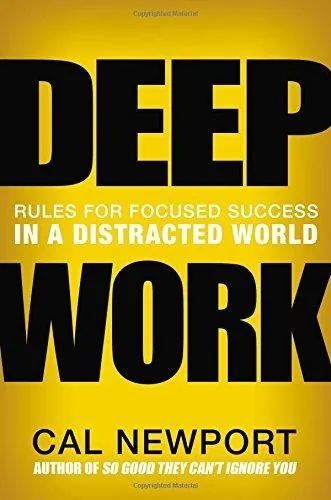
Deep Work by Cal Newport
This is the book that made Newport’s name, and it remains the essential title on this shelf. Deep Work makes the case for focused work and provides a complete system for building the capacity: the four philosophies of deep work scheduling, the rituals of the deep work session, the discipline of shutting down, and the argument for embracing boredom as the training ground of attention.
The book’s greatest strength is its combination of argument and practice. Newport does not just persuade; he equips - every chapter ends with strategies the reader can implement the same week. It is the rare book that changes both how you think about work and how you do it.
Content notes: Practical and rigorous, with clear strategies, suitable for professionals and students.
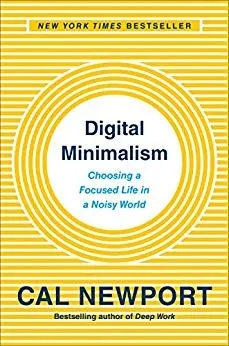
Digital Minimalism by Cal Newport
For readers who want the discipline applied to technology, Digital Minimalism is the essential book. Newport’s argument - that the tools of the connected world should serve our values rather than our impulses, and that a deliberate philosophy of technology use is the cure for the addiction to distraction - is the natural extension of Deep Work into daily life.
The book shares Deep Work’s method: the argument, then the practice. It offers a thirty-day digital declutter and a set of principles for rebuilding a relationship with technology on your own terms.
Content notes: Practical and persuasive, suitable for a wide range of readers.
So Good They Can’t Ignore You by Cal Newport
For readers who want the deeper framework, So Good They Can’t Ignore You is the essential book. Newport’s earlier work argues against the passion hypothesis - the idea that you should follow your passion - and in favor of the craftsman mindset: the discipline of getting so good at something valuable that the career follows. It is the book that sets up everything he writes later.
The book is the philosophical foundation of the Newport shelf, and it is the book for readers who want to understand why the discipline is worth building.
Content notes: A thoughtful, counterintuitive career book, suitable for a wide range of readers.
The Books That Share His Approach
Newport’s Idea of the Craftsman
The concept that ties Newport’s books together is the craftsman mindset, and it is worth dwelling on because it is the deepest thing he teaches. Against the modern gospel of following your passion, Newport proposes the opposite discipline: instead of asking what the world can give you, ask what you can give the world - and then get so good at giving it that you cannot be ignored. The craftsman does not wait for inspiration; he builds skill, day after day, through the focused practice that deep work makes possible.
That is why Newport belongs on the self-discipline shelf in a specific way. The discipline he teaches is not about resisting temptation; it is about building mastery. The deep work sessions, the digital minimalism, the deliberate practice - they are all in service of becoming so competent that the work speaks for itself. It is the oldest kind of self-discipline, the discipline of the apprentice, updated for the age of distraction.
The Practicing Mind by Thomas M. Sterner
For readers who want the discipline of practice in its purest form, The Practicing Mind is the essential book. Sterner’s short, profound book argues that the key to mastery - and to peace - is learning to be present in the practice itself rather than fixated on the outcome. It is the inner discipline that makes the outer practice sustainable.
The book complements Newport perfectly: Newport designs the deep work sessions; Sterner teaches you how to be inside them without suffering. Together they cover the structure and the state.
Content notes: A short, meditative book about practice, suitable for a wide range of readers.
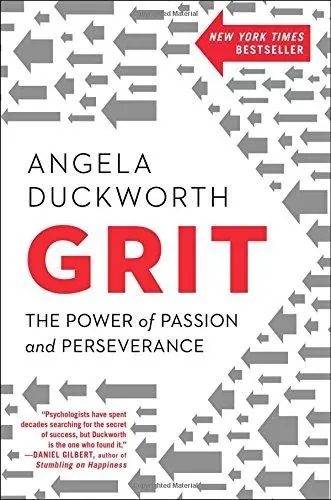
Grit by Angela Duckworth
For readers who want the science of sustained effort, Grit is the essential book. Duckworth’s research-based argument - that passion and perseverance, sustained over years, matter more than talent - is the scientific foundation for the craftsman mindset Newport recommends. It is the book for readers who want the evidence that the discipline is worth it.
The two books work beautifully together. Newport shows you what to do; Duckworth shows you why doing it for years is the whole game.
Content notes: A research-based book with vivid stories, suitable for a wide range of readers.
The Deeper Shelf: Attention and Courage
There is a point where the focus books meet the courage shelf, and Newport is a good bridge. Deep work is a practice, but sustaining it requires something deeper: the courage to say no to the easy, the social, the urgent-but-trivial - and the willingness to be bored, to be unreachable, to be the person working while the world pings. The books below explore that territory.
Newport and the Courage to Be Unreachable
One of the quietest and most radical arguments in Deep Work is about what the practice costs socially. Newport is honest that deep work makes you harder to reach, less responsive, less available - and that this is not a bug but the point. The discipline of attention is, in practice, the discipline of disappointing people: the colleague who wants an instant reply, the meeting that could have been an email, the expectation of constant availability. Saying no to those demands takes a specific kind of courage.
That is the connection to the courage shelf, and it is the reason the two belong together in a reading path. The focus is the visible practice; the courage is the invisible capacity that sustains it. Every deep work session is a small act of bravery - the choice of the hard, solitary, valuable task over the easy, social, empty one.
The Ritual of the Deep Work Session
One of the most practical parts of Deep Work is Newport’s insistence on ritual - and it is worth dwelling on because it is where the theory becomes a daily practice. Newport argues that the deep work session cannot be improvised; it must be designed. The ritual answers the small questions in advance - where you will work, how long you will work, how you will measure the work, how you will support it with coffee and snacks and the closed door - so that the session itself requires no decisions. The ritual is the bridge from the distracted self to the focused self, and Newport shows that famous deep workers all had one: the walk, the desk, the starting time, the shutting of the door.
The reason the ritual matters is that it moves the fight. Without a ritual, every session begins with a negotiation - should I work now? - and the negotiation is where the distraction wins. With a ritual, the beginning is automatic: the walk is taken, the desk is reached, the door is shut, and the work has already begun before the mind has time to object. The ritual is the discipline made structural, and it is the single most transferable idea in the book: the reader who builds even a small ritual - the same hour, the same chair, the phone in another room - reports that the deep work stops being a battle and becomes a habit. That is the whole point of Newport’s method: stop relying on willpower in the moment, and start relying on design.
How to Build Your Reading Path
There is no wrong order on this shelf, but there is a sensible one. Start with Deep Work for the practice. Add The Practicing Mind when you need the inner discipline, and Grit when you want the science of sustained effort. Add Digital Minimalism when you are ready to rebuild your relationship with technology, and So Good They Can’t Ignore You when you want the philosophical foundation. End with the courage shelf that the practice requires.
The path moves from the practice to the person, and that is the right direction. Our guide to the best self-discipline books gathers the wider shelf these titles belong to, and it is the natural next stop after you have worked through this one.
The Courage Shelf
There is a quiet but important connection between the focus shelf and the courage shelf, and it is worth naming one more time before the recommendations close: the deep work practice is, in the end, a test of character. The ability to sit alone with a hard problem, to resist the ping of the world, to endure the discomfort of thinking - these are not productivity skills; they are the same qualities the courage books describe, wearing a different name. Newport’s contribution is to have shown that the test can be designed - that the solitary work can be scheduled, ritualized and made habitual - but the character that passes the test is built by the passing. Every deep work session is a small act of courage, and the courage compounds exactly the way the work does.
The Courage Shelf
There is a quiet but important connection between the focus shelf and the courage shelf, and it is worth making explicit. Newport’s whole method requires the willingness to go against the current - to be unreachable, to be bored, to be the person doing the hard work while the world distracts. That willingness is courage, and it is the quality the books on this shelf explore.
Our guide to the best courage books collects the titles that explore that territory most deeply - the books about the bravery of the solitary choice, the discipline of the hard path, the willingness to stand apart. Read them alongside the Newport shelf and you get the complete picture: the practice of focus, and the courage that sustains it. Together they form part of the growth section of our library, where the whole shelf of discipline and daring is gathered.
Conclusion
Cal Newport’s contribution to self-discipline is a practice and a philosophy: the ability to focus without distraction is the most valuable skill of the modern age, and it can be built through design rather than willpower. The books on this shelf take you from the practice to the person: the inner discipline of the practicing mind, the science of grit, and the courage that the solitary work requires.
Start with Deep Work, work outward through the science and the inner discipline, and end with the courage shelf that the practice demands. The focus will build the work; the courage will sustain it; and the mastery will speak for itself.
Frequently Asked Questions
What is the best book by Cal Newport for self-discipline?
What is deep work?
What other books by Cal Newport are worth reading?
Is Deep Work based on research?
Is Deep Work suitable for students?
How is self-discipline different from deep work?
Featured Recommendations

Raining Book Editorial Team
The Raining Book editorial team curates the best book recommendations and reading guides for every type of reader.